







The Invisible Crisis – Decoding the Protein Paradox
The Indian kitchen is often celebrated for its vegetarian balance, yet a silent nutritional crisis is brewing. A staggering 80% of Indian diets are protein-deficient. This isn’t merely a matter of food availability; it is driven by what experts call the “Protein Paradox.”
Data reveals that while 95% of Indian mothers recognize protein is important, only 3% can correctly identify its actual functions, such as building immunity or repairing tissue. Most families rely on a “staple myth,” incorrectly believing that a regular diet of roti, dal, and rice provides sufficient protein. In reality, cereals currently supply nearly 50% of the average Indian’s protein, despite their low-quality amino acid profile and poor digestibility.
As we look toward the Indian Whey Protein Market, it is estimated to be around ₹25 Billion in 2025 and till 2030 it will reach ₹32 Billion due to rising fitness culture, urbanization, increasing awareness and Digital distribution transformation, and India’s transition from staple-heavy to protein-first is becoming a public health necessity which will give a big push.
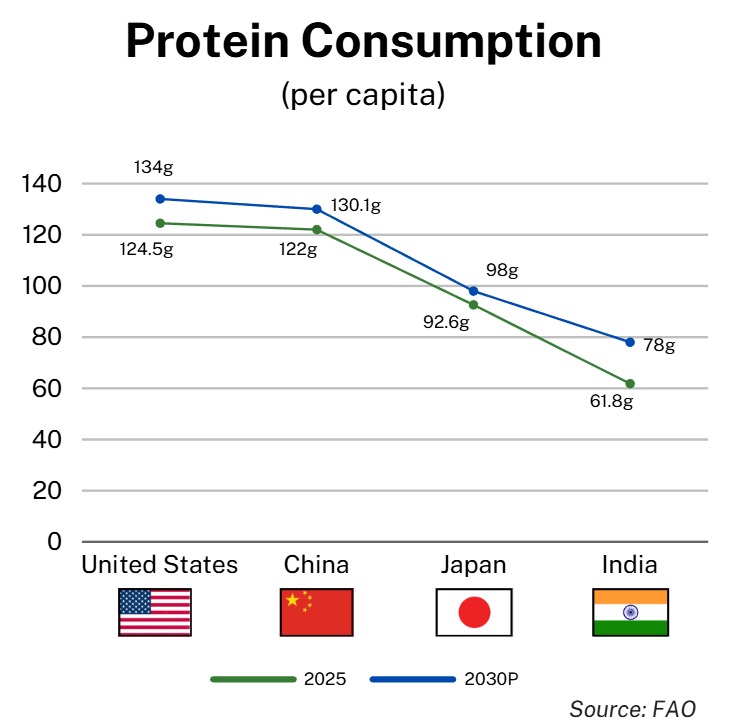
So, India’s per capita protein consumption stands at around 61.8 grams per day, significantly under the global average of approximately 77-78 grams per day. Surveys indicate 73% of Indians experience protein deficiency, driven by cereal-heavy diets contributing 60% of protein but low quality and limited animal protein access, especially among vegetarian.
The Protein Pinch and the Cereal Trap
A major factor contributing to this imbalance is an over-reliance on low-quality protein sources:
- Cereal Dominance: Cereals alone supply nearly 50% of protein in the average Indian diet, far exceeding the 32% recommended by the National Institute of Nutrition (NIN).
- Quality vs. Quantity: Despite meeting volume targets, these cereal-based proteins have low-quality amino acid profiles and poor digestibility.
- Economic Divide: In the poorest deciles, protein intake is minimal; for example, individuals in India may consume around 2-3 glasses of milk per week compared to 8-9 glasses in the richest deciles.
Why Whey is the Superior Solution
Whey protein is uniquely positioned to address these gaps due to its high efficiency and complete profile:
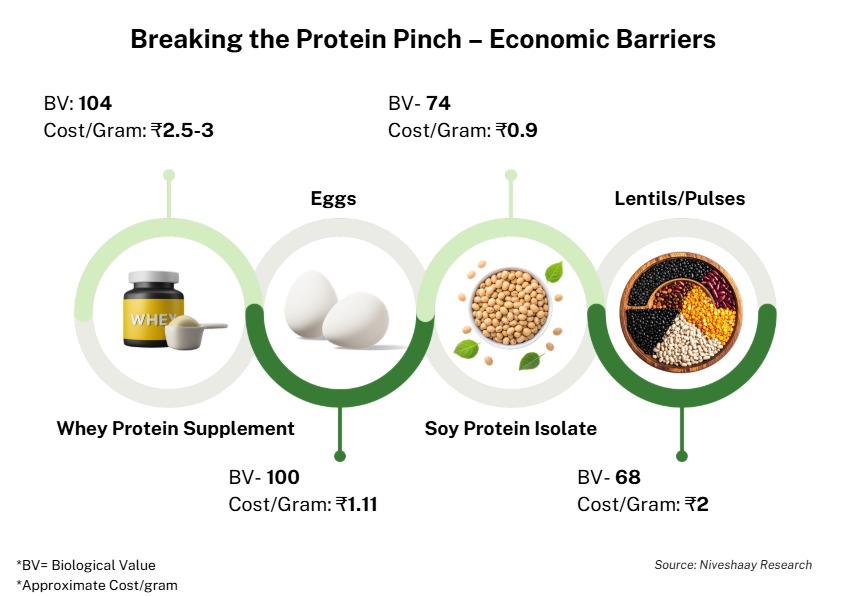
- Maximum Assimilation: Whey has a Biological Value of 104, surpassing the reference standard of eggs around BV of 100. This measures how efficiently the body utilizes the protein.
- Complete Profile: It provides all nine essential amino acids that the body cannot produce internally.
- The Leucine Catalyst: Whey is particularly rich in Branched-Chain Amino Acids (BCAAs), specifically Leucine, which acts as the primary catalyst for triggering muscle protein synthesis.
The Science of Purity – Why the Source Matters
Whey, once a discarded byproduct of cheese-making, is now the gold standard of nutrition because it is a “complete protein”. The industry categorizes whey based on how much extra fat and lactose is filtered out:
- Whey Protein Concentrate (WPC): The Volume Leader. Containing 70–80% protein, rest 20-30% is fat and lactose. Making it the most affordable entry point for the mass market.
- Whey Protein Isolate (WPI): The Purity Standard Through microfiltration, it achieves 90%+ purity. It is critical for Indians, where many struggle with lactose intolerance. By removing lactose, WPI mitigates the myth hold by 70% of Indian mothers—that protein is hard to digest.
- Whey Protein Hydrolysate (WPH): The Pre-digested Tier. It uses enzymes to break proteins into tiny peptides for ultra-rapid absorption, making it ideal for clinical nutrition mostly athletes use WPH due to its properties.
The Contenders – Plant-Based vs the “New Boy” (Yeast)
The modern consumer is increasingly looking for dairy-free alternatives, but the report highlights significant trade-offs:
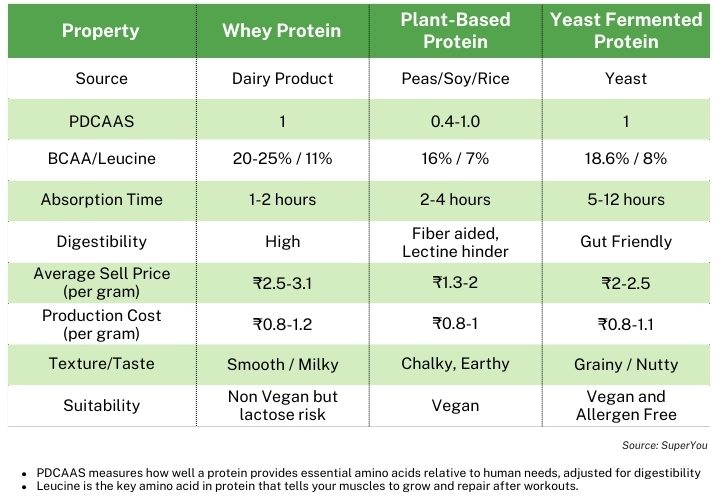
- The Plant-Based Struggle: While popular, plant proteins (pea, soy) often have lower PDCAAS scores (0.4–1.0) compared to whey’s perfect 1.0. Consumers often complain of a chalky or gritty texture caused by larger particle sizes and hydrophobic properties.
- Yeast Fermented Protein: The latest disruptor. Produced via precision fermentation, it is vegan, eco-friendly, and offers a complete amino acid profile. With 18.6% BCAAs, it rivals whey’s quality while being gentler on the gut and supporting immune function via beta-glucans. It is one of the most resource-efficient protein sources available today.
Market Snapshot: Leaders in India
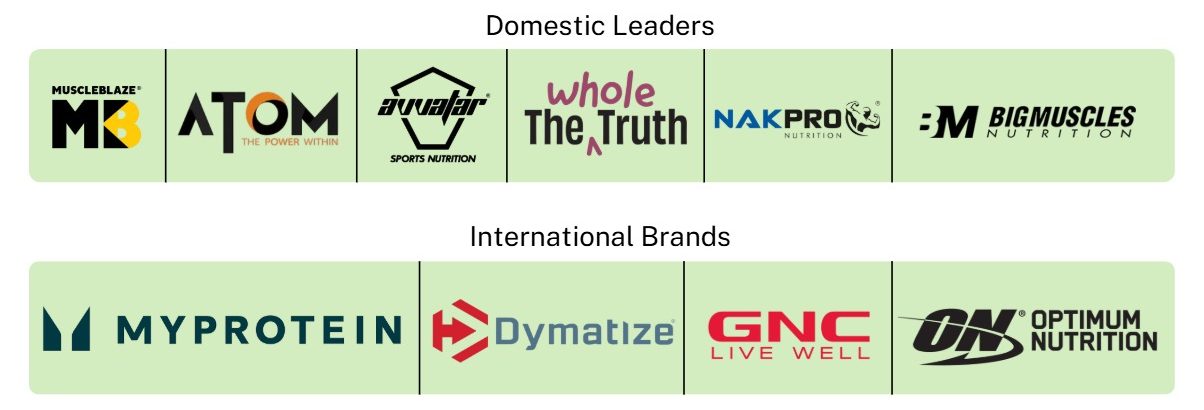
As awareness grows, several key players are establishing themselves in the Indian market:
Breaking the Protein Pinch – Economic Barriers
The most significant hurdle to adoption in India is the “Protein Pinch”
- The Cost Factor: Standard whey supplements are the most expensive common protein source in India, costing roughly ₹2.5-3 per gram of protein. This high cost is the primary barrier preventing adoption in low-income segments where deficiency is most acute.
- The Perceptual Barrier: Seven out of ten Indians are unaware of their daily protein needs, often mistaking carbohydrates for protein sources. This “functional illiteracy” leads families to prioritize vitamins and carbohydrates over protein.
- The Trust Gap: Cost-sensitive consumers often fuel the demand for counterfeit products. Brands that offer traceability—showing exactly which farm the milk came from—are the ones winning consumer trust.
The Future – The GLP-1 Wave & Market Leadership
GLP-1 Drug has been nothing short of a medical revolution in the United States. What started as a niche diabetes treatment has exploded into a multi-billion dollar weight management phenomenon.
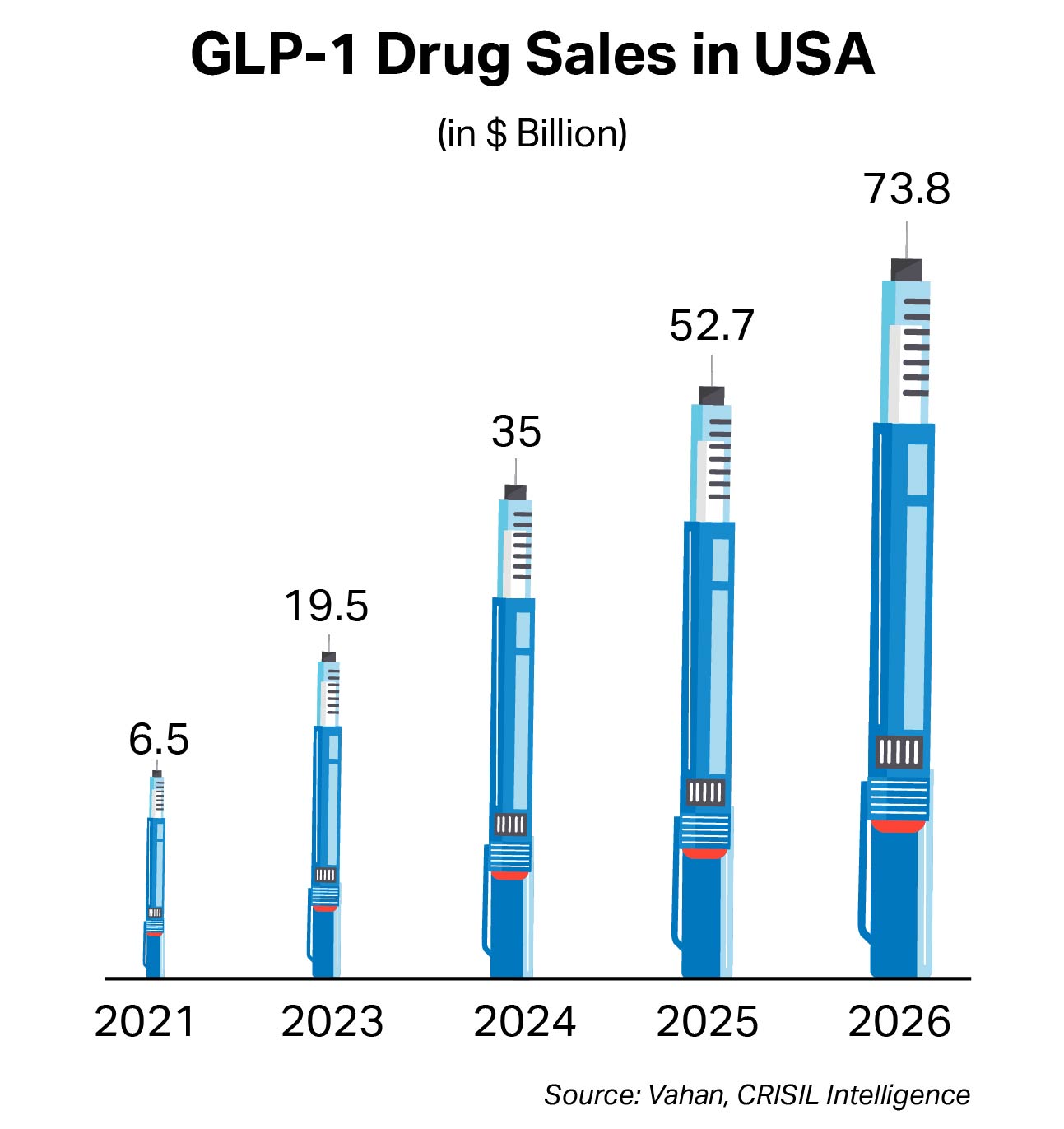
The most unexpected growth driver for whey protein is the rise of weight-loss drugs like GLP-1 agonists.
- These drugs reduce appetite significantly, which can lead to rapid weight loss and muscle depletion. Doctors are now increasingly prescribing high-protein shakes (20–30g per meal) to preserve lean mass during treatment.
- Prices are expected to drop by 60% to 70% once generics flood the market in India. Current branded monthly costs (approx. ₹8,800–₹14,000) could eventually settle closer to ₹3,000–₹5,000, making them accessible to India’s burgeoning middle class.
The Perfect Fitness Stack
The modern Indian consumer is no longer just looking for gym fuel—they are looking for functional snacks that fit into a busy, urban lifestyle.
- The Desk-Friendly Solution for Professionals: As consumers move from a gym bro mentality to an Active Nutrition lifestyle, the protein bar serves as a convenient, desk-friendly snack. It allows busy professionals to hit their protein targets and maintain strength goals without the social stigma or hassle of using a shaker bottle in an office environment.
- Creatine Absorption Unlocked by Protein –Creatine’s primary job is to rapidly replenish Adenosine Triphosphate (ATP), which is the immediate currency of energy for your cells. This doesn’t just help with heavy lifting; it provides short bursts of energy that can help you push through high-intensity moments in your daily life or at the gym. Scientific evidence suggests that creatine is absorbed more efficiently when consumed with proteins and carbohydrates because they trigger an insulin response.
Why Parag Stands Alone in the Domestic Whey Market
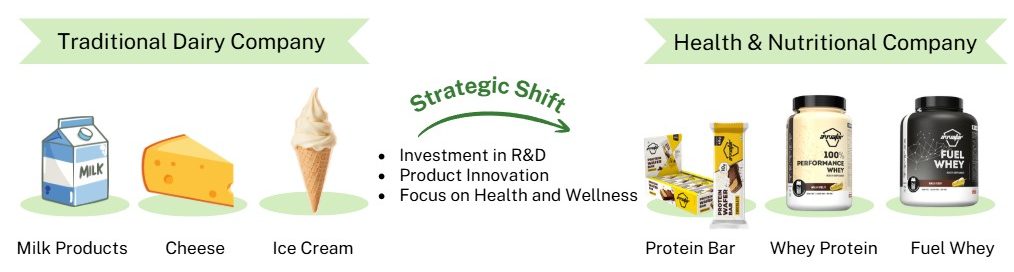
Parag Milk Foods has solidified its position as the domestic manufacturer in India’s sports nutrition market that produces whey protein directly from its own cheese-making process with Amul
- Parag Milk Foods are positioning themselves for this future by doubling cheese capacity (to 120 MT/day) and investing ₹300 Crore in a whey filtration plant, they aim for a 20-25% market share by FY28.
- Plans are underway to expand the Avvatar brand into protein shakes, protein bars (already launched in chocolate/coffee wafer variants), and protein-fortified snacks.
Conclusion
India’s protein challenge is no longer about availability it is about awareness, absorption, and accessibility. As dietary habits evolve, protein is shifting from a fitness accessory to a daily nutritional essential. Whey protein, with its superior bioavailability and complete amino acid profile, is emerging as a practical solution to bridge chronic dietary gaps. The rise of active nutrition formats like bars, RTDs, and functional snacks is making protein intake effortless and routine. Medical trends such as GLP-1 therapies are further reinforcing protein’s role in muscle and metabolic health.
At the same time, consumers are demanding greater trust, traceability, and purity from brands. This convergence of science, convenience, and credibility signals a decisive move toward a protein-first future.

 AIF Investor Charter


NIVESHAAY INVESTMENT ADVISORS
508, SNS Platina, Near Someshwara Enclave, Vesu, Surat, Gujarat-395007
(+91) 7859870559
research.smallcase@niveshaay.com (Equity Baskets)
NIVESHAAY INVESTMENT MANAGEMENT PRIVATE LIMITED
610, SNS Platina, Near Someshwara Enclave, Vesu, Surat, Gujarat-395007
(+91) 7836915478
contactaif@niveshaay.com (AIF)
SEBI Registration No. : INH000017338, IN/AIF3/24-25/1571, IN/AIF2/24-25/1607, INP000009506 | BASL Membership ID: 6276
Disclaimer:
Investment in Securities Market are subject to market risks. Read all related documents carefully before investing.
Registration granted by SEBI and certification from NISM in no way guarantee performance of the intermediary or provide any assurance of returns to investors.
The securities quoted are for illustration only and are not recommendatory
NIVESHAAY INVESTMENT ADVISORS © . All Rights Reserved., NIVESHAAY INVESTMENT MANAGEMENT PRIVATE LIMITED © . All Rights Reserved.Smart ODR