







This Industry Has Almost Zero Competition.
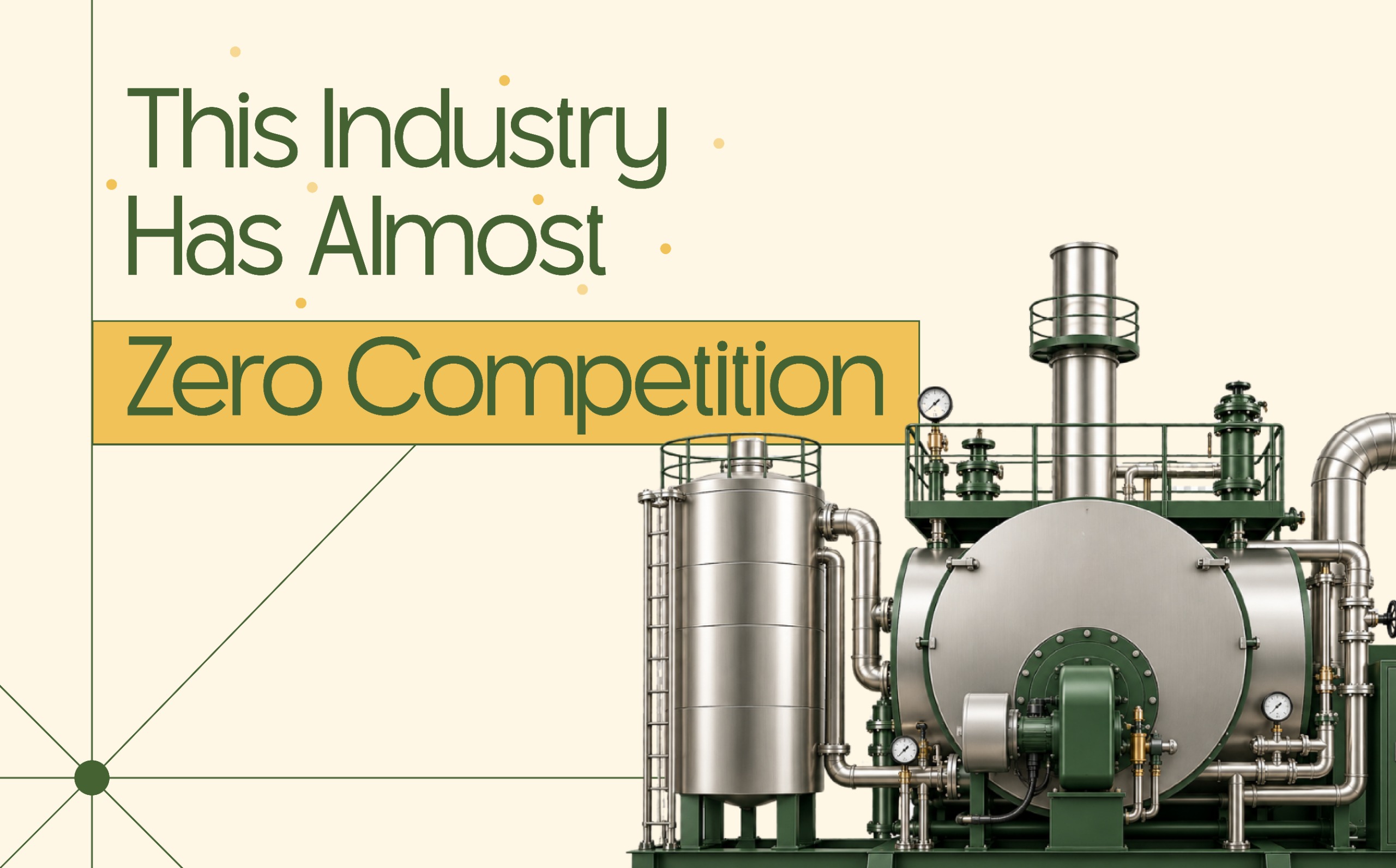
Ten years ago, walk into a chemical or pharma unit in Vapi, Ankleshwar or Sarigam, and you’d have found a boiler sitting somewhere on the plot – a squat, coal-fed structure behind the main building, with its own coal yard, its own ash pit, and its own file of paperwork for the boiler inspector. The plant made its own steam because there was no other way to get it.
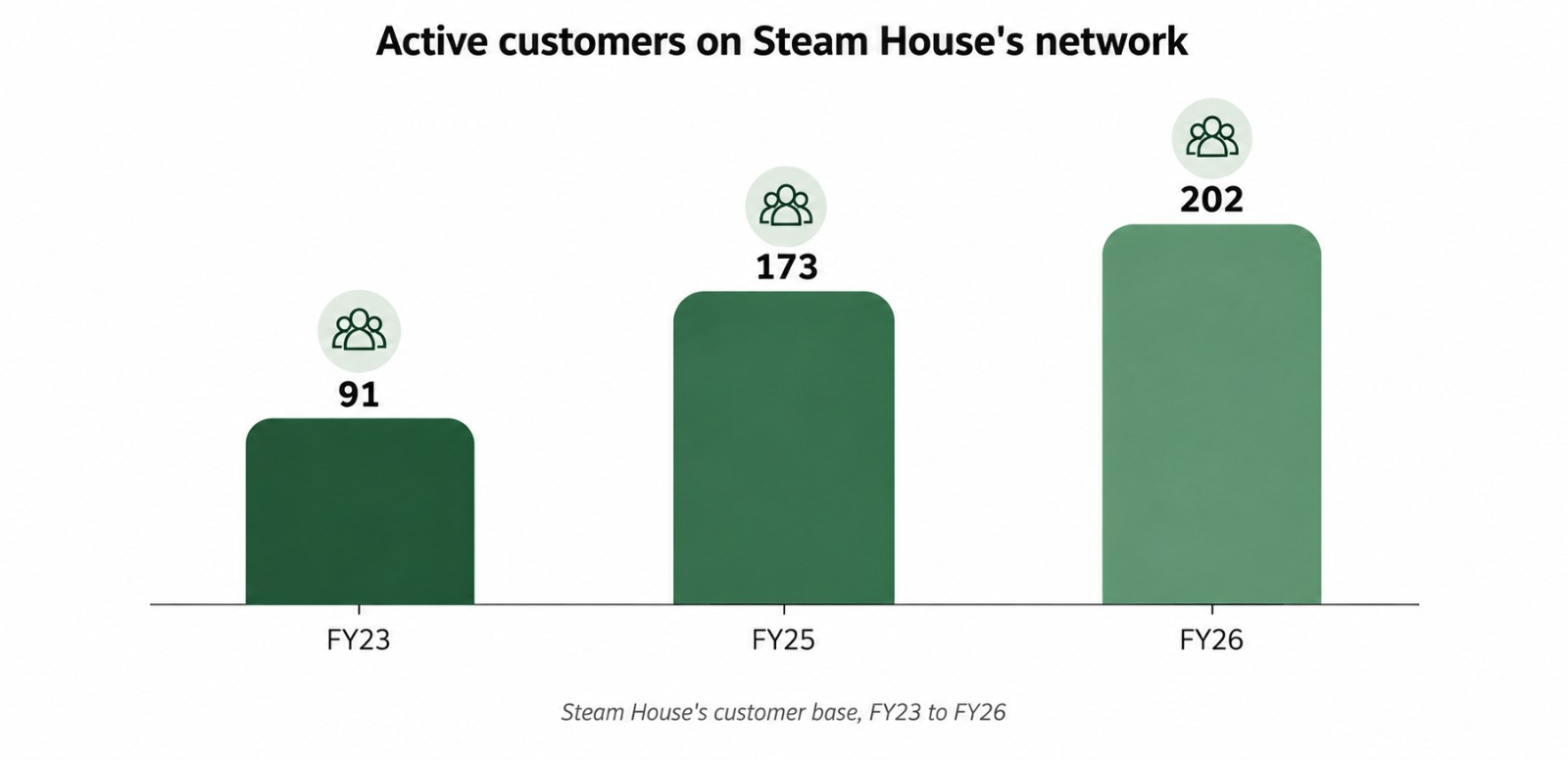
Today, walk into 202 of those same factories, and the boiler is gone. The steam still arrives – hissing through a pipe that enters from outside the compound wall, metered at the gate like electricity or water.
Every one of those pipes traces back to the same company. Not because a licence bars competitors. Because in ten years, nobody else has managed to lay a second one.
That’s the strange part worth sitting with. Steam is about as basic a product as industry makes – hot water, essentially. There is no patent on it, no rare ingredient, nothing exotic. And yet an entire industrial region in Gujarat gets it from exactly one supplier, and pays that supplier 30 to 45 percent more than it used to cost them to make it themselves.
This is the story of how a commodity turned into something only one company could sell – and why that’s about to matter well beyond Gujarat.
What’s Actually Being Sold
Steam sounds unglamorous because it is unglamorous – water, heated under pressure, piped somewhere and used to run a reactor, dry a fabric, or sterilise a vial.
But it is also non-negotiable.
Pharma companies cannot sterilise without it. Textile units cannot dye without it. Food plants cannot pasteurise without it.
In FY26, India’s factories needed roughly 2,03,472 tonnes of steam every hour, a number expected to climb at a 9.4% yearly pace to cross 3,20,000 TPH by FY31.
Three industries drive most of that need:
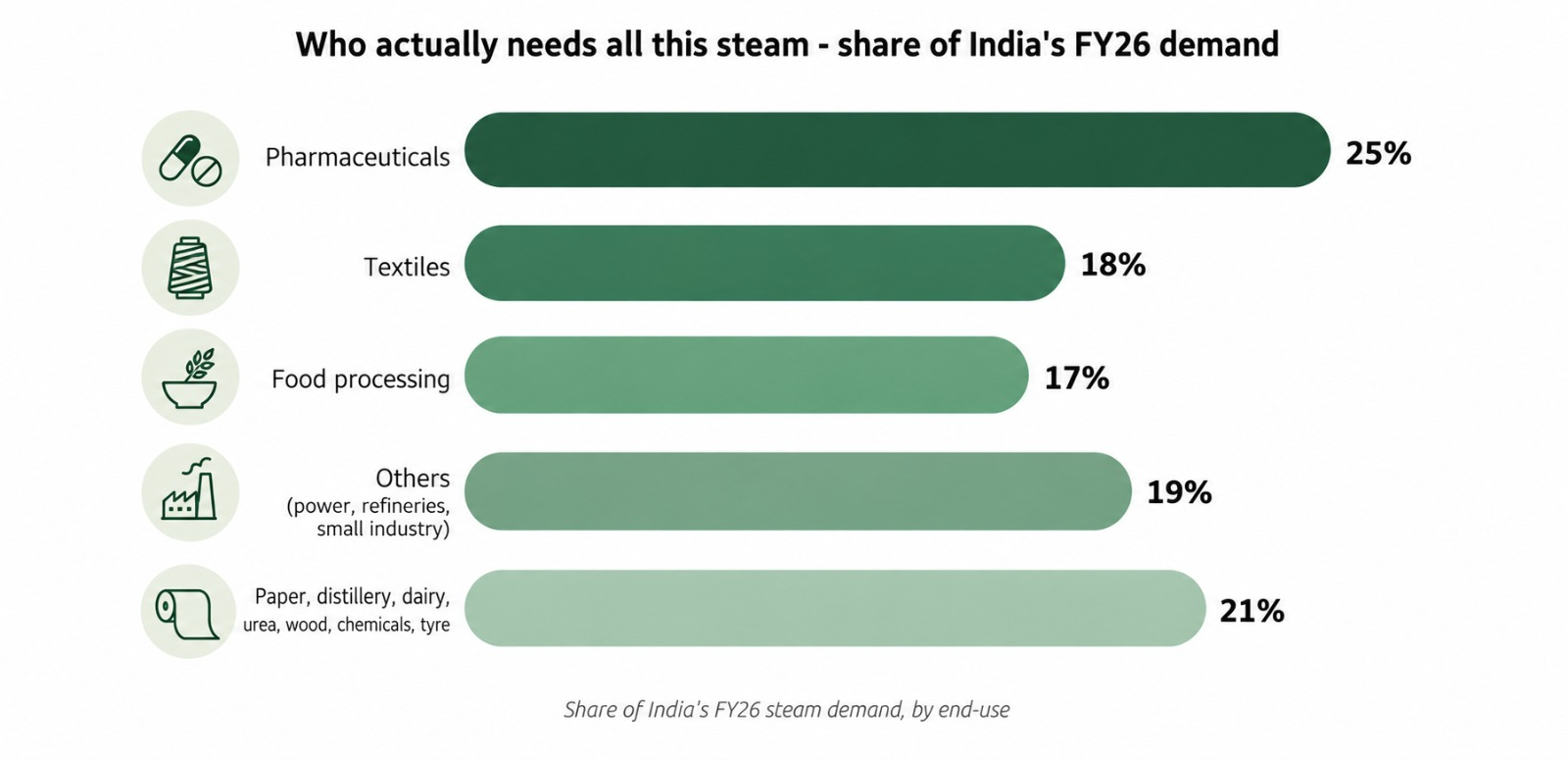
Somebody has to generate all of that steam. Historically, that somebody was the factory itself. Since 2014, a company called Steam House India has been building a case that it shouldn’t be.
Its founder spent close to three decades in industrial operations before betting that boilers – like power or water – could be run as a shared utility instead of two hundred separate, badly-utilised private ones.
A decade on, Steam House runs seven community boilers and two trading units, supplying 202 factories across seven Gujarat industrial estates through a dedicated 57-kilometre pipeline – up from 91 customers just three years ago, with over 90% of its revenue now coming from repeat buyers.
That kind of loyalty is unusual for a supplier charging above-market prices. Which brings us to the part of this story that doesn’t add up on first read.
The Premium Nobody’s Hiding
A factory that used to burn its own coal pays Steam House roughly Rs 3.30-3.80 for every kilogram of steam – against the Rs 2.30-2.80 it used to cost them to make it in-house. That’s 30 to 45 percent more, for the identical output. A factory that used to run on gas, by contrast, pays the same Rs 3.30-3.80 – but was previously paying Rs 4.80-6.25, so for them it’s a straightforward saving.
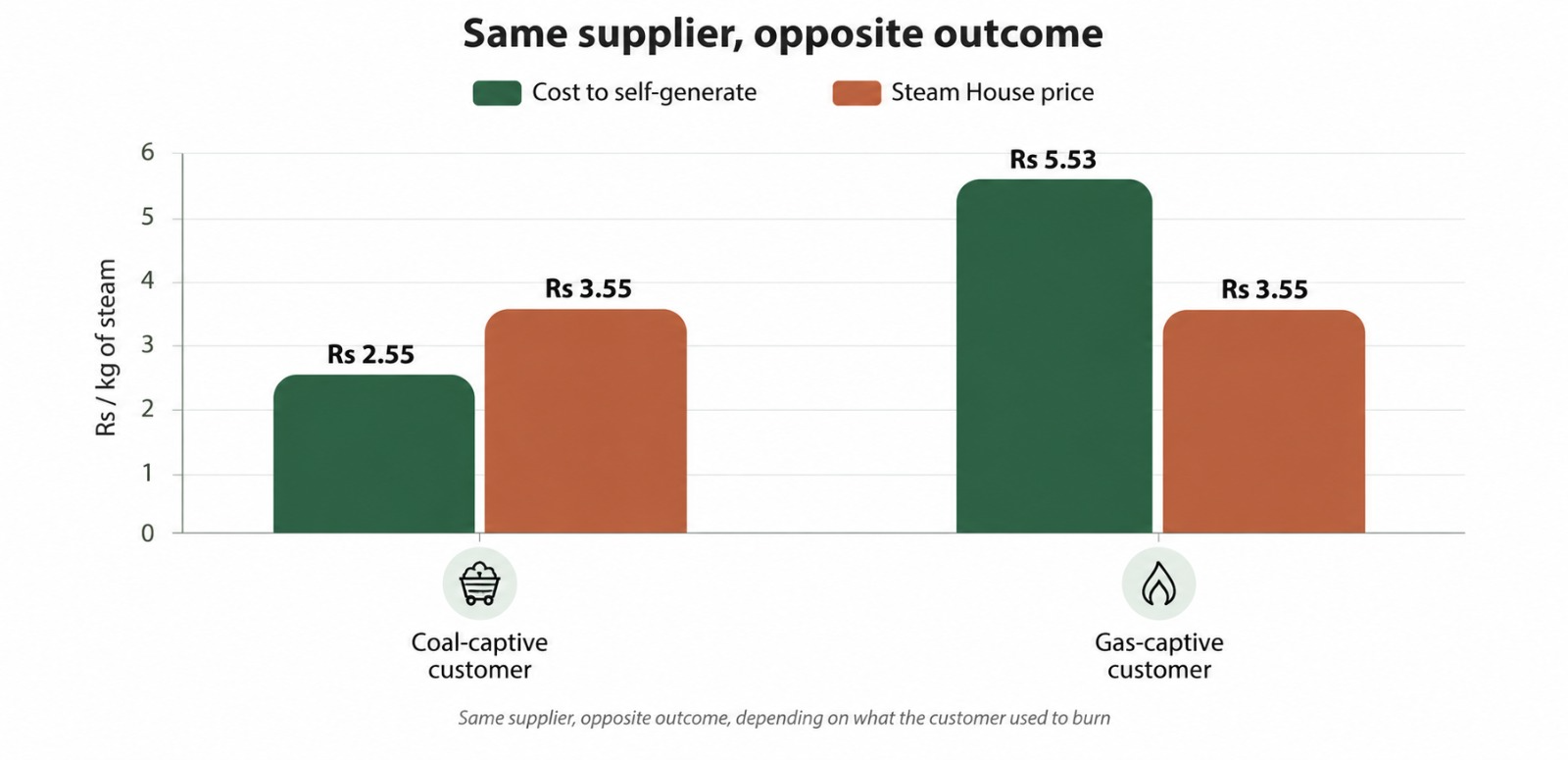
The gas-fired factory’s decision is easy – cheaper steam, no debate. The coal-fired factory paying a premium is the more interesting case, and the bigger one: coal-route steam alone makes up close to three-quarters of the company’s revenue.
So if the coal-fired customer isn’t switching to save money, what exactly is it buying with that extra 30 to 45 percent?
What The Premium Is Actually Buying
Run a captive coal boiler yourself, and the steam price on your own ledger is the smallest part of the real cost. Ownership quietly hands you six other jobs you never signed up for:
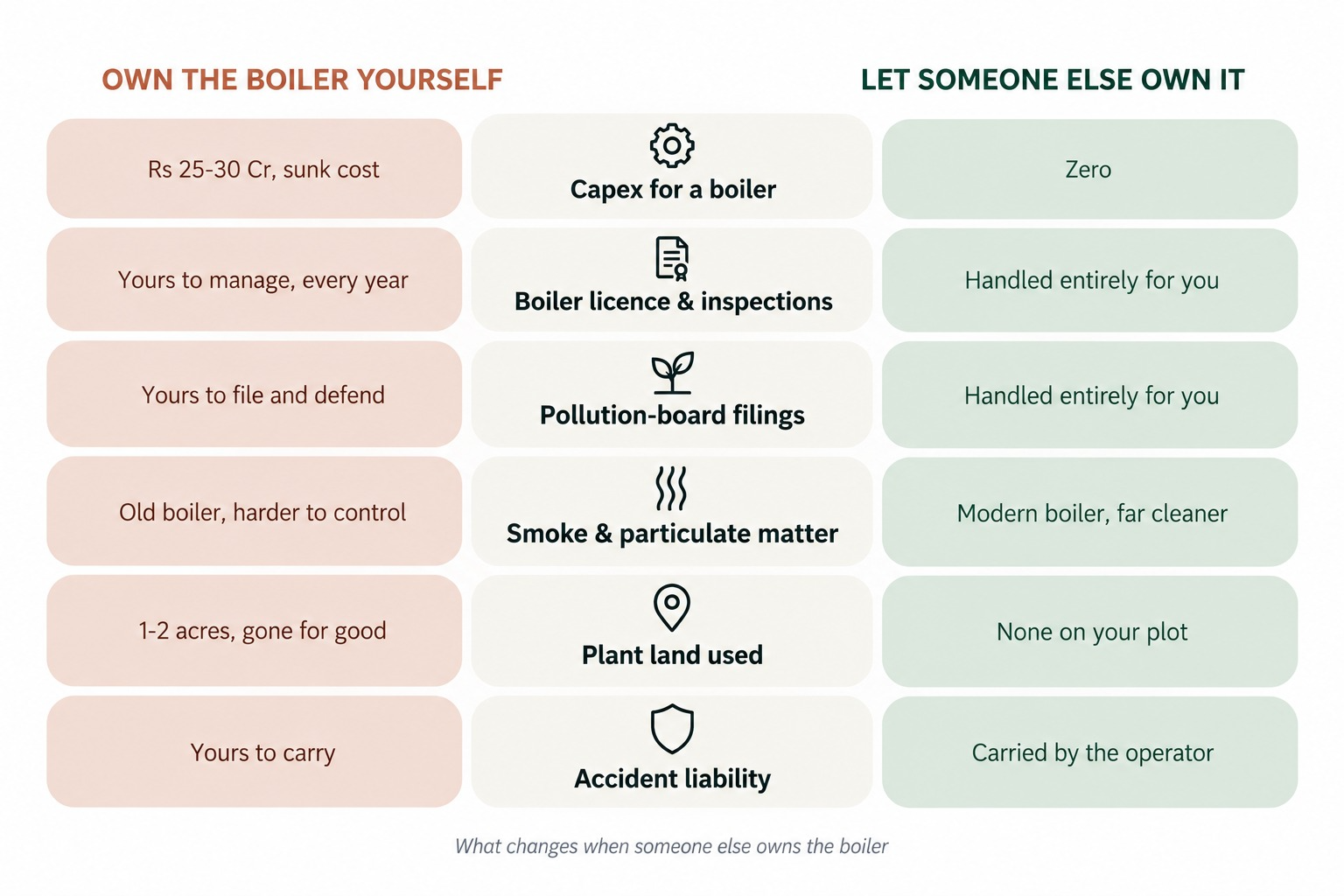
Line up all six of those rows, and the invoice a coal-fired factory receives every month stops looking like a steam bill. It starts looking like an exit fee – the price of no longer being, in effect, a boiler company on the side of whatever it actually manufactures.
Regulation has been quietly pushing in the same direction. Surat’s own clean-air plan and the National Clean Air Programme now list community boilers explicitly as an approved pollution-mitigation route, and any factory exporting to the EU or US is increasingly required to disclose its emissions – numbers a captive coal boiler makes considerably worse.
None of this explains, though, why a rival can’t simply set up next door and undercut the premium. That answer sits underground.
The Real Barrier to Entry
No licence or rule is keeping rivals out. It’s simply not a business you can buy your way into – there’s little spare capacity to trade, and not much room to undercut on price. Getting in seems to mean clearing the same three hurdles, factory by factory, that took Steam House the better part of ten years. That’s what a barrier to entry can look like: not a wall someone built, but years of unglamorous work nobody else has put in yet.
Strip the business down to its value chain, and the shape of the moat becomes obvious:
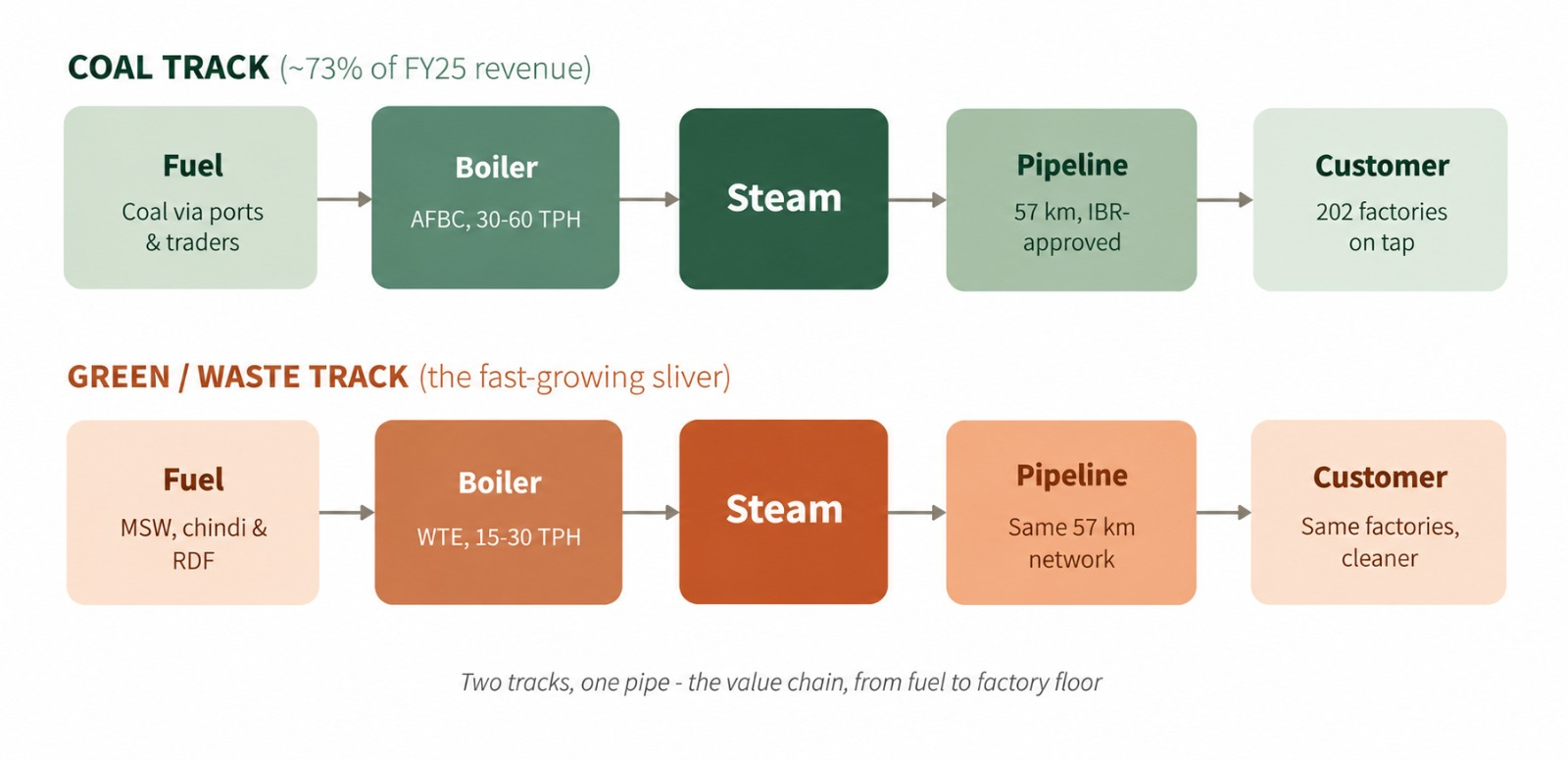
Steam itself – the middle box – is the commodity link. Anyone with capital can boil water. Everything hard sits in the pipeline that follows it. Every one of those 57,041 metres required a Right-of-Use clearance from the industrial estate – crossing plant boundaries, drainage corridors, roads – an approved pressure-vessel design signed off by a statutory inspector, and a physical landing inside a working factory.
A rival trying to copy this doesn’t just need capital. Copying it means clearing three hurdles, one after another:
- A fresh right-of-way cycle through an already-saturated estate – usually onto whatever corridors are left, which tend to be the worse ones.
- A fresh certification loop for every new stretch of pipe, before a single metre can carry steam.
- Permission from the customer to lay a second pipe onto its premises at all – and most factories won’t grant that, for straightforward safety and insurance reasons. Nobody wants two live steam lines running through one plant.
Ten years, five sequential cluster builds – Vapi in 2017, Ankleshwar in 2018, Ankleshwar Phase-2 with Sarigam in FY23, Nandesari in FY24, Panoli in FY26 – and a fast, repeatable connection process built on an in-house pipeline design team and a dedicated fabrication workshop.
That head start isn’t something a well-funded new entrant can shortcut simply by writing a bigger cheque. It’s the quiet reason this market has one real player instead of several – not a rule keeping others out, just physics and paperwork that reward whoever got there first.
A moat like that only matters if there’s a bigger pond to build it in next. And that’s exactly what’s under construction.
Building The Next Decade
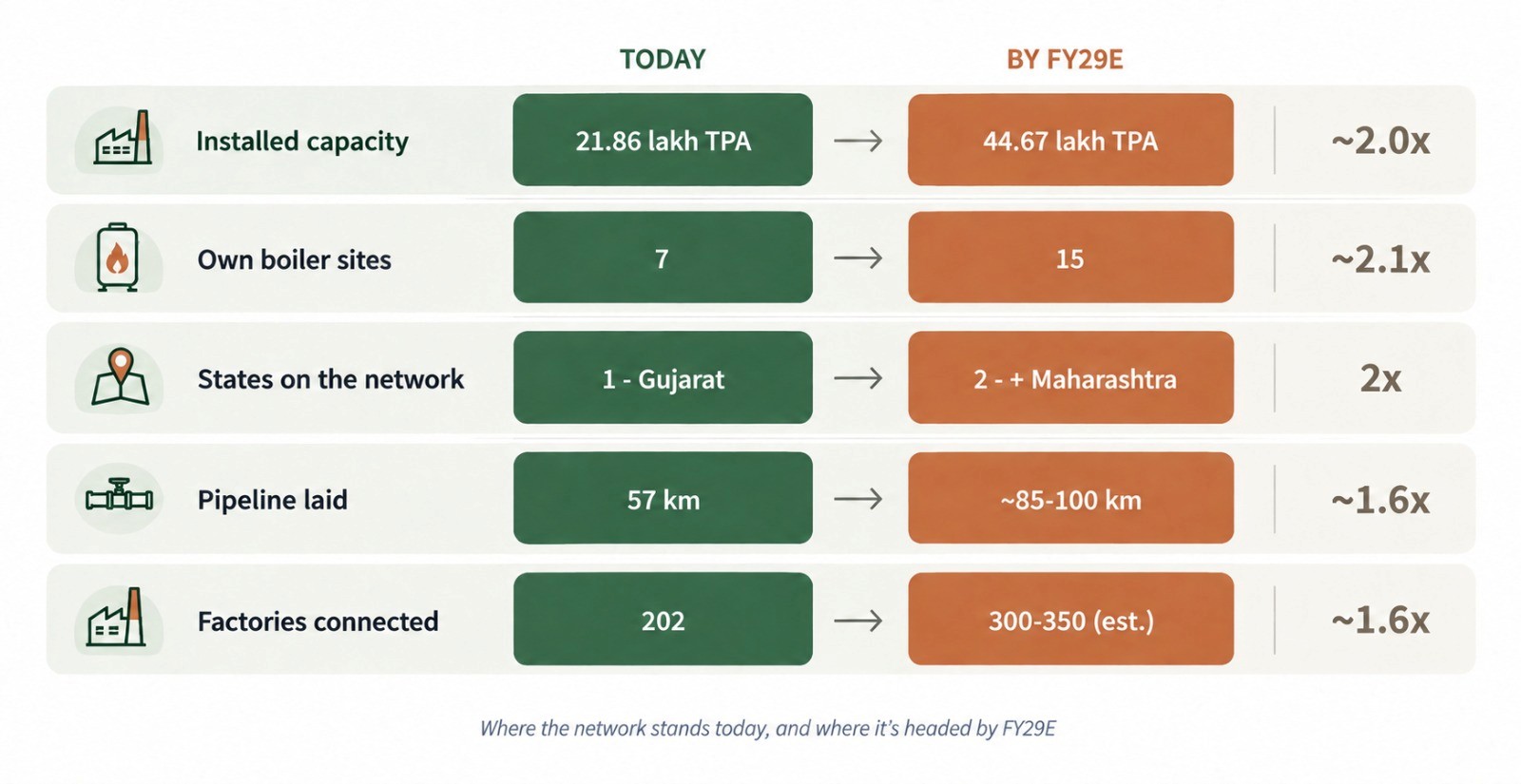
This build-out isn’t happening in a policy vacuum. Government programmes are increasingly writing the community-boiler model directly into how new industrial infrastructure gets designed – textile parks, bulk drug parks and industrial corridors are now being planned with a shared boiler as a default feature, not an afterthought, backed in Gujarat by a capex subsidy of 35-50% on every new unit.
This isn’t an abstract policy tailwind.
On 13 June 2026, the Himachal Pradesh Bulk Drug Park at Una floated a public tender for exactly this model: a 300 TPH boiler steam generation and distribution system, an estimated project cost of about Rs 3 crore, and a 24-month build window. It’s the same common-utility-boiler blueprint Gujarat has run for a decade – now being tendered out in a state where Steam House doesn’t operate yet.
Roadmaps and tenders point to how far this could travel. What’s worth asking next is how far it’s already proven – and where the model could still stumble.
What Could Slow This Down
None of this is a one-way story, and it’s worth saying plainly where it could go wrong. Utilisation across Steam House’s own facilities has historically stayed on the lower side, which means a slowdown in chemicals demand shows up quickly in how efficiently the network is used. Several new plants still have to be built and ramped up over the next few years – a meaningful share of the growth story sits in capacity that doesn’t exist yet.
Customer contracts here are also structurally lighter than the take-or-pay agreements typical of regulated utilities; cluster density makes switching expensive for any one factory, but a single large customer walking away can still be felt. And the regulatory playbook perfected over a decade in Gujarat – right-of-way permits, approval timelines, road-crossing rules – has to be relearned from scratch in Maharashtra, and wherever the next Bulk Drug Park or textile park tender leads.
The Reframe
Nobody in this story is really buying steam. The coal-fired factory is buying an exit from owning a boiler’s compliance and liability. The gas-fired factory is buying a cheaper input. The pollution board is buying a lower emissions number it can report upward. And in the middle of all three sits a company that spent a decade laying pipe that nobody else has managed to lay beside it.
The steam story belongs to Gujarat today.
The blueprint – compliance handed over, capex avoided, land freed up, a government subsidy attached – is now being tendered out state by state, industrial park by industrial park. The interesting question from here isn’t whether community boilers work. It’s whether the next state gets a second player – or the same answer Gujarat did.
Niveshaay Investment Management Private Limited
SEBI Reg No: IN/AIF3/24-25/1571, IN/AIF2/24-25/1607, INP000009506
Registered Office: 610, SNS Platina, Vesu, Surat – 395007
Investment in securities market are subject to market risks. Read all the related documents carefully before investing. Registration granted by SEBI, and certification from NISM in no way guarantee performance of the intermediary or provide any assurance of returns to investors. The securities quoted are for illustration only and are not recommendatory.

 AIF Investor Charter


NIVESHAAY INVESTMENT ADVISORS
508, SNS Platina, Near Someshwara Enclave, Vesu, Surat, Gujarat-395007
(+91) 7859870559
research.smallcase@niveshaay.com (Equity Baskets)
NIVESHAAY INVESTMENT MANAGEMENT PRIVATE LIMITED
610, SNS Platina, Near Someshwara Enclave, Vesu, Surat, Gujarat-395007
(+91) 7836915478
contactaif@niveshaay.com (AIF)
SEBI Registration No. : INH000017338, IN/AIF3/24-25/1571, IN/AIF2/24-25/1607, INP000009506 | BASL Membership ID: 6276
Disclaimer:
Investment in Securities Market are subject to market risks. Read all related documents carefully before investing.
Registration granted by SEBI and certification from NISM in no way guarantee performance of the intermediary or provide any assurance of returns to investors.
The securities quoted are for illustration only and are not recommendatory
NIVESHAAY INVESTMENT ADVISORS © . All Rights Reserved., NIVESHAAY INVESTMENT MANAGEMENT PRIVATE LIMITED © . All Rights Reserved.Smart ODR