





Niveshaay Take on India AI Impact Summit 2026
The India AI Summit in New Delhi marked a decisive shift in India’s technology narrative — from ambition to execution. Over five days, the event brought together global policymakers, founders, Big Tech leaders, and investors to formalise capital commitments, sovereign AI frameworks, and large-scale infrastructure plans. What emerged was clear: India is no longer positioning itself as just a talent hub for global AI, but as a serious architect of compute, governance, and population-scale deployment.
Day 1: India’s AI Play Goes Public
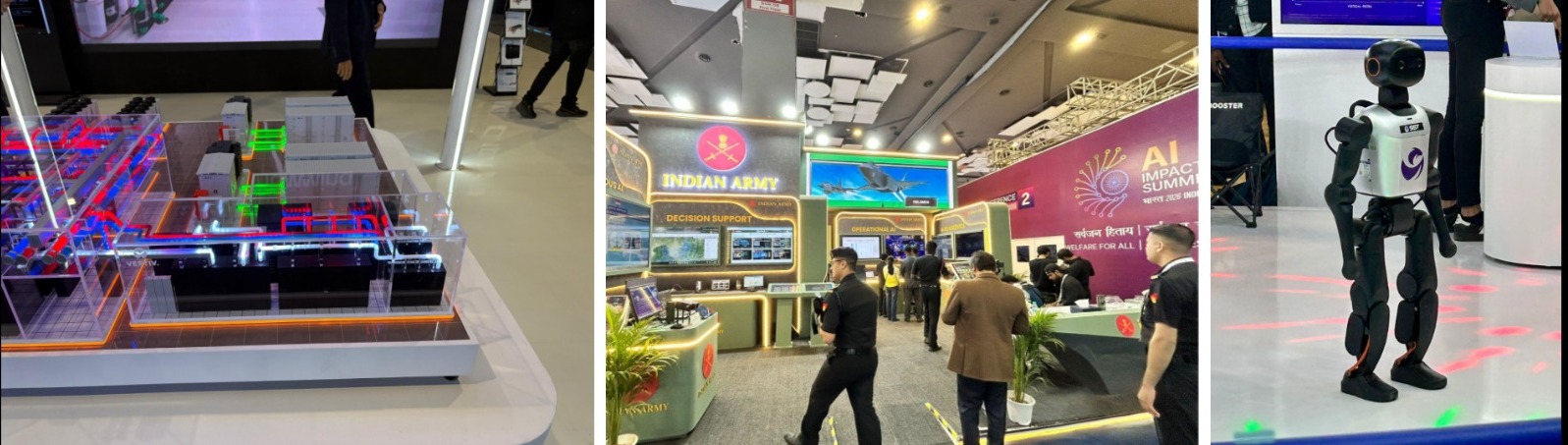
• The first global AI summit in the Global South opened at Bharat Mandapam, 600+ startups, 300+ pavilions, 13 country delegations. PM Narendra Modi toured booths from Sarvam AI, HCLTech, and Jio.
• Big launch: India’s sovereign AI models arrived. BharatGen unveiled Param2 (17B parameters, 22 languages, MoE architecture). MahaGPT is already deployed with the Maharashtra government.
• Sarvam doubled down on vernacular AI with Sarvam Vision, Bulbul V3 and Sarvam Arya, signaling India’s AI future is voice-first, not English-first.
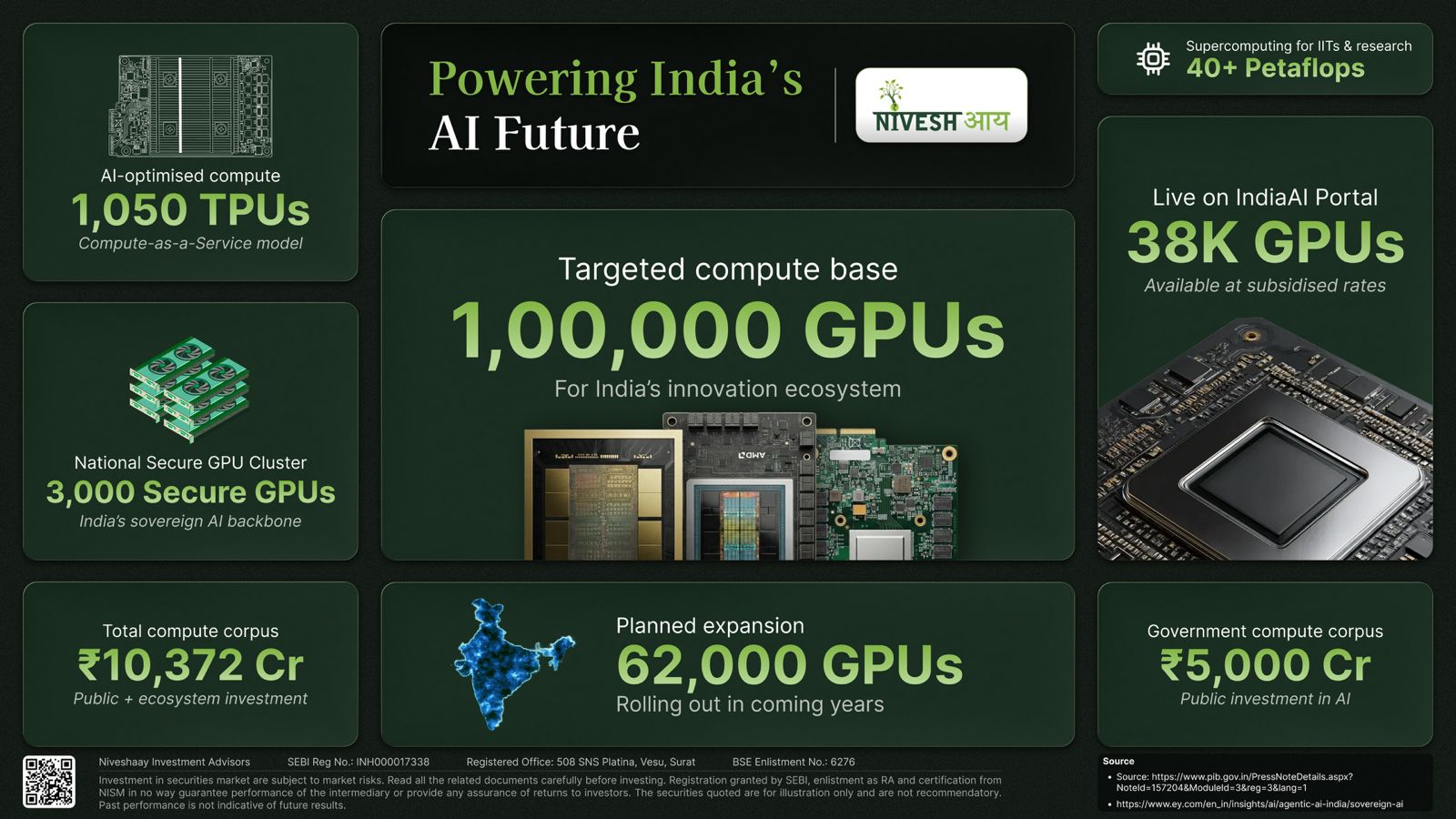
• Compute momentum is real. Yotta has deployed ~10,000 GPUs, with more expected alongside Nvidia.
• The sharp takes:
Vinod Khosla: IT/BPO may “almost disappear” in 5 years
HCL’s Vineet Nayar: AI won’t generate jobs
Info Edge’s Sanjeev Bikhchandani: Learn 10- 15 AI tools or fall behind
• Global players are leaning in: Anthropic opened its India office now its #2 market, AMD partnered with Tata Consultancy Services, and Qualcomm pitched hybrid AI deployment.
• The floor wasn’t theory, it was execution, precision farming, sign-language gloves, AI for special education, digital safety, and rural empowerment.
India’s AI thesis isn’t about building GPT-5. It’s about deploying AI at population scale across 22 languages, for problems global models never designed for.
Day 2: Capital, Compute, Conviction
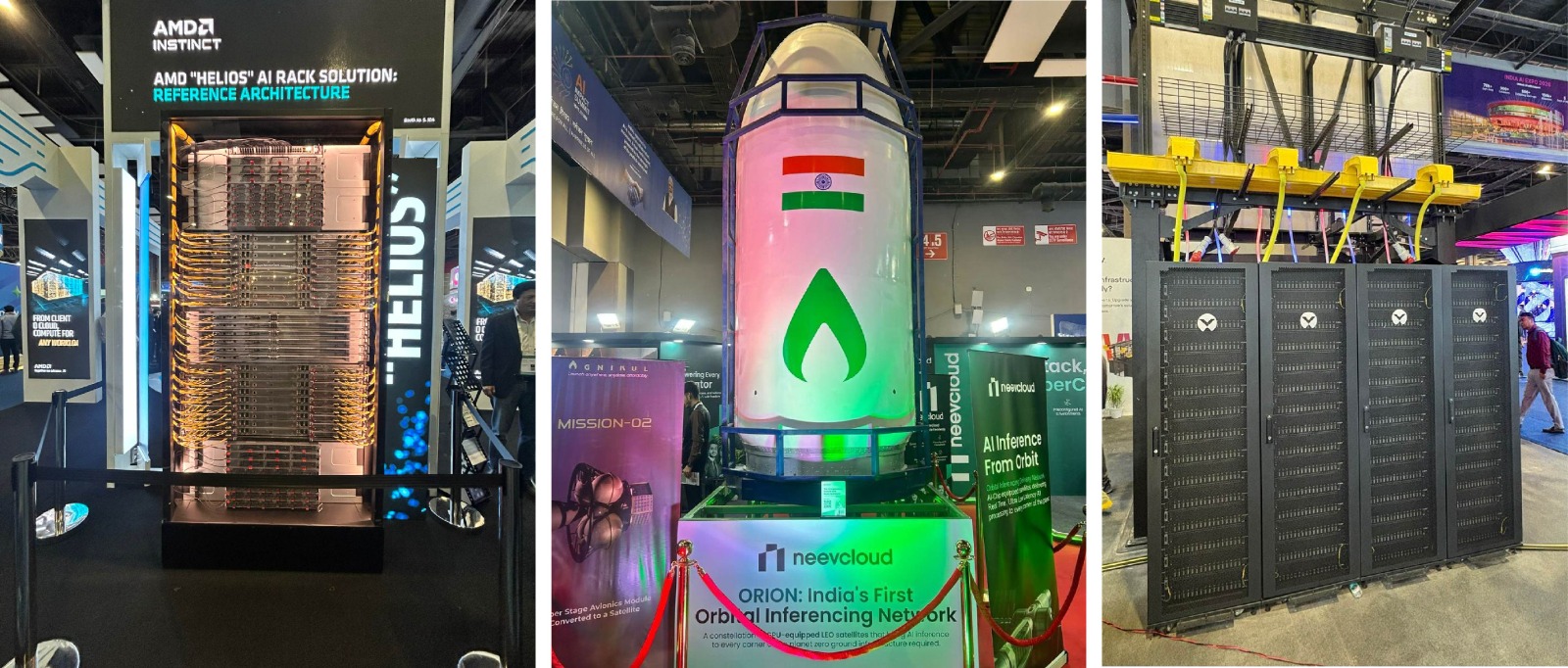
• IT Minister Ashwini Vaishnaw announced $200B in infra commitments and $17B in VC funding. 20,000+ GPUs being added to India’s 38,000 base. AI Mission 2.0 previewed. Clean energy at 51% of generation, a structural edge for AI infra.
• Adani Group committed $100B toward renewable-powered data centres by 2035 (Target: 5GW). Partnerships with Google and Microsoft already live. Spillover of $150B expected across server manufacturing and sovereign cloud.
• PM Narendra Modi wore Sarvam Kaze, Made-in-India smart glasses with real-time voice interaction in 10+ languages, fully on-device (Launch: May 2026). India’s consumer AI moment.
• Infosys × Anthropic is official. Claude-led enterprise deployments begin with telecom. Infosys disclosed AI revenue at 5.5% of total first public marker.
• Products that stood out:
Gnani.ai: Inya VoiceOS (5B params, direct audio processing)
Mastercard: India’s first agentic commerce transaction with Axis Bank, Swiggy, Razorpay
Cohere: TinyAya (70+ languages, offline-ready, trained on 64 H100s)
• The sharp takes:
Nandan Nilekani: Coding won’t remain the core tech job.
Sridhar Vembu: India is the most AI-enthusiastic population globally.
Defence Research and Development Organisation: Strategic AI independence is non-negotiable.
Day 2 wasn’t about demos. It was about money, scale, and geopolitical positioning.
Day 3: Infrastructure Gets Real
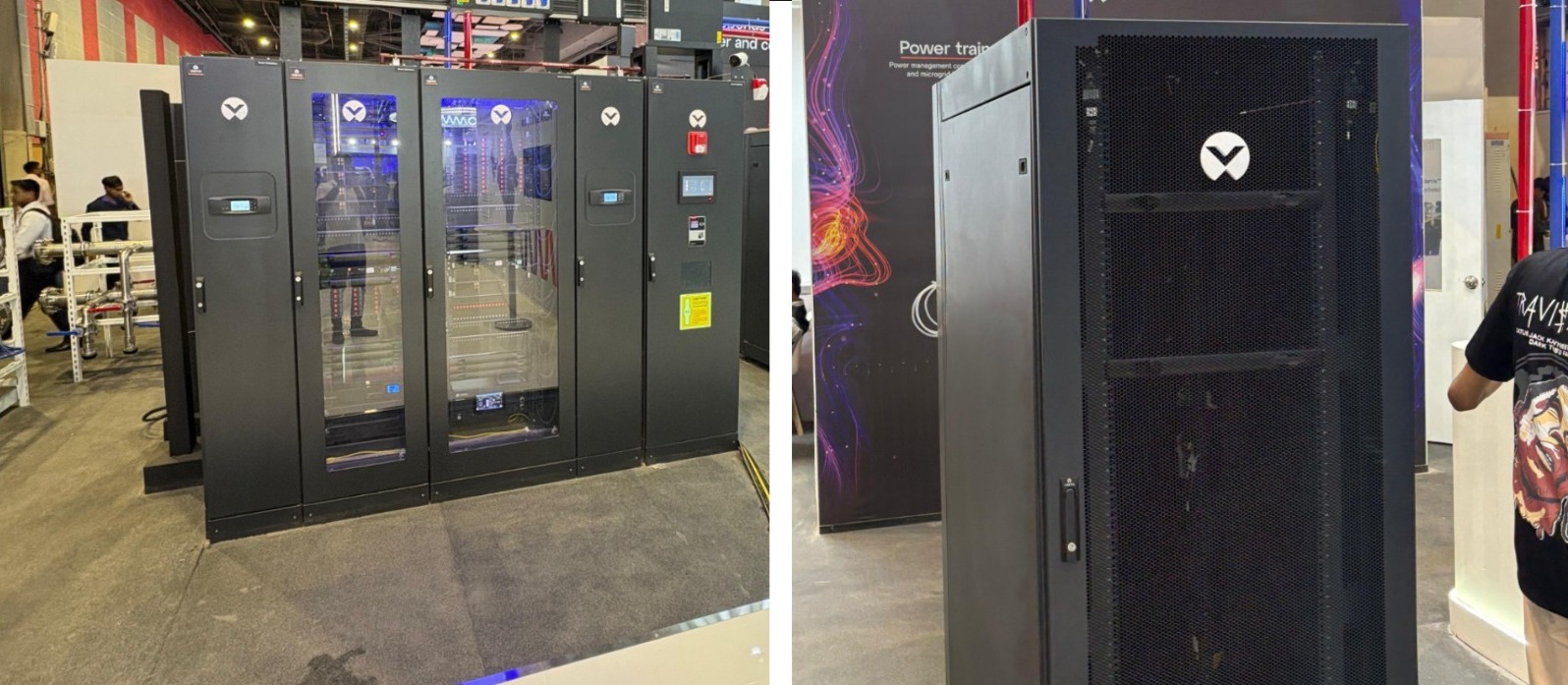
• Yotta × Nvidia: $2B commitment. 20,736 Blackwell Ultra GPUs by Aug ’26. Nvidia to host its own DGX Cloud region in India. That’s sovereign-scale compute.
• Sarvam AI open-sourced two models (30B & 105B) trained fully on Indian data. The standout demo: a ₹1,500 keypad phone running a Bhojpuri AI voice agent. Not a smartphone. A keypad device.
• Sundar Pichai announced a new US–India subsea cable and Google DeepMind open-sourcing models for Indian researchers. His line: “The next Google will be built in India.”
• Yann LeCun dropped in unannounced, spoke to founders. On open source: “Build on closed models and you’re renting intelligence from California.”
• Product momentum:
Ola launched Krutrim Pro (40% cheaper than GPT-4 for Indian languages).
Qure.ai showcased a handheld TB detection device (under 60 seconds).
Paytm turned its Soundbox into a Hindi-speaking AI assistant.
• Guinness World Record: 250,946 students pledged responsible AI use in 24 hours.
Day 4: Capital Gets Specific
The biggest days just wrapped. If you track tech capital flows, the signal here was unusually clear: $200B+ in commitments is one thing, visible ground execution is another.
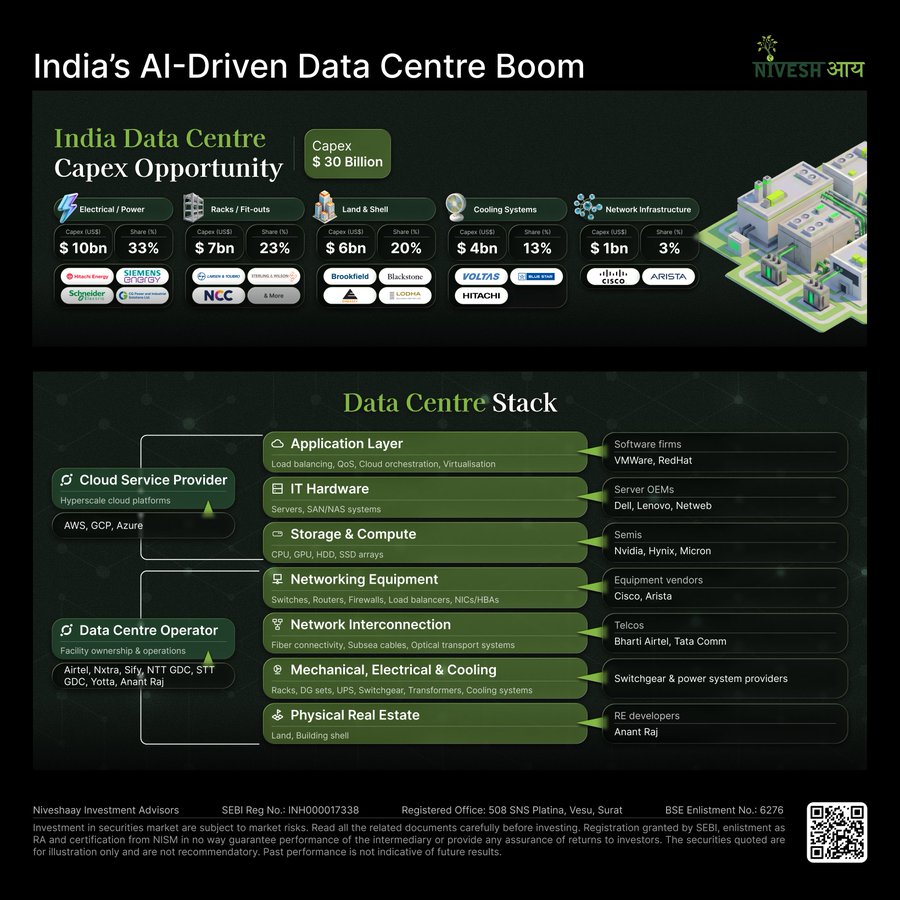
• The Jio Moment for AI: Mukesh Ambani committed $110B over 7 years — gigawatt-scale, green-powered data centres in Jamnagar. The stated ambition: drive down the “cost of intelligence.” That’s a structural challenge to global cloud economics.
• Hard Infra > Cloud Credits: Google is putting $15B into a full-stack AI hub in Visakhapatnam, including a new US–India subsea cable. Microsoft reaffirmed a $50B Global South commitment. This is physical capex- land, fibre, power, not just software scaling.
• Tata × OpenAI Anchor Play: Tata Consultancy Services is building a 100MW data centre (scaling to 1GW), with OpenAI as the first anchor customer. Rolling out ChatGPT Enterprise to hundreds of thousands of TCS employees makes India a serious node in OpenAI’s global infra map.
• Sovereign AI Doctrine: PM Narendra Modi outlined the MANAV framework. Core thesis: “Jiska data, uska adhikaar.” Data sovereignty is no longer philosophical — it’s regulatory and economic.
Day 5: Governance Becomes Architecture
The final day wasn’t built for headlines. It was built for alignment global, regulatory, and capital.
• Delhi AI Declaration Adopted: 86 nations and global institutions endorsed the Responsible AI framework – formalising India’s governance-first positioning. The summit closed with structure, not slogans.
• $270B+ Investment Confidence: Cumulative global interest now exceeds $270B across AI infra, data centres, semiconductors, and compute capacity. The capital stack is no longer speculative – it’s directional.
• Governance, Not Hype: Discussions centred on safety, bias mitigation, accountability, and human-centric deployment. Regulatory maturity was the dominant theme.
• AI + Public Infrastructure: The focus moved beyond enterprise SaaS, toward healthcare, agriculture, skilling, and digital public infrastructure. AI as a population-scale utility.
• India as a Neutral Bridge: Under PM Narendra Modi, India positioned itself between US innovation velocity and EU-style regulatory structure, sovereign, but collaborative.
Across the summit, three structural shifts became clear:
1) Capital is committed at infra scale.
2) Governance architecture is being formalised.
3) India is transitioning from AI consumer to AI architect.
The announcements are done. The declarations are signed.
Now execution becomes the only metric that matters.

 AIF Investor Charter


NIVESHAAY INVESTMENT ADVISORS
508, SNS Platina, Near Someshwara Enclave, Vesu, Surat, Gujarat-395007
(+91) 7859870559
research.smallcase@niveshaay.com (Equity Baskets)
NIVESHAAY INVESTMENT MANAGEMENT PRIVATE LIMITED
610, SNS Platina, Near Someshwara Enclave, Vesu, Surat, Gujarat-395007
(+91) 7836915478
contactaif@niveshaay.com (AIF)
SEBI Registration No. : INH000017338, IN/AIF3/24-25/1571, IN/AIF2/24-25/1607, INP000009506 | BASL Membership ID: 6276
Disclaimer:
Investment in Securities Market are subject to market risks. Read all related documents carefully before investing.
Registration granted by SEBI and certification from NISM in no way guarantee performance of the intermediary or provide any assurance of returns to investors.
The securities quoted are for illustration only and are not recommendatory
NIVESHAAY INVESTMENT ADVISORS © . All Rights Reserved., NIVESHAAY INVESTMENT MANAGEMENT PRIVATE LIMITED © . All Rights Reserved.Smart ODR