From Titan's origin story to five years of export data - a data-led look at the three speeds driving India's Watch Market.

The sequel to Titan’s origin story isn’t streaming anywhere. It’s sitting in five years of export data
Bombay, 1978. The Indian watch market runs almost entirely on smuggled Swiss pieces, a state-run watchmaker no one trusts, and a Tata Group executive named Xerxes Desai who’s just been handed a near-impossible brief.
Build a watch India can be proud of, from a country nobody believes can build one. That’s the opening act of Amazon MX Player’s Made in India: A Titan Story, and it’s worth the six episodes.
But every origin story runs out of episodes. This one’s sequel never aired on TV.
It’s been playing out quietly instead – in Swiss customs filings, company reports, and shipment data from the last five years.
And it’s a stranger story than the one on screen. Not one industry, but three – each moving at its own pace.
That’s the story this piece actually tells. Not through one growth number – through three.
Ask five analysts how fast India’s watch market is growing and you’ll get answers anywhere between 5% and 19%.
Nobody’s lying – they’re each looking at a different layer of the same market, and each layer moves at a genuinely different speed:
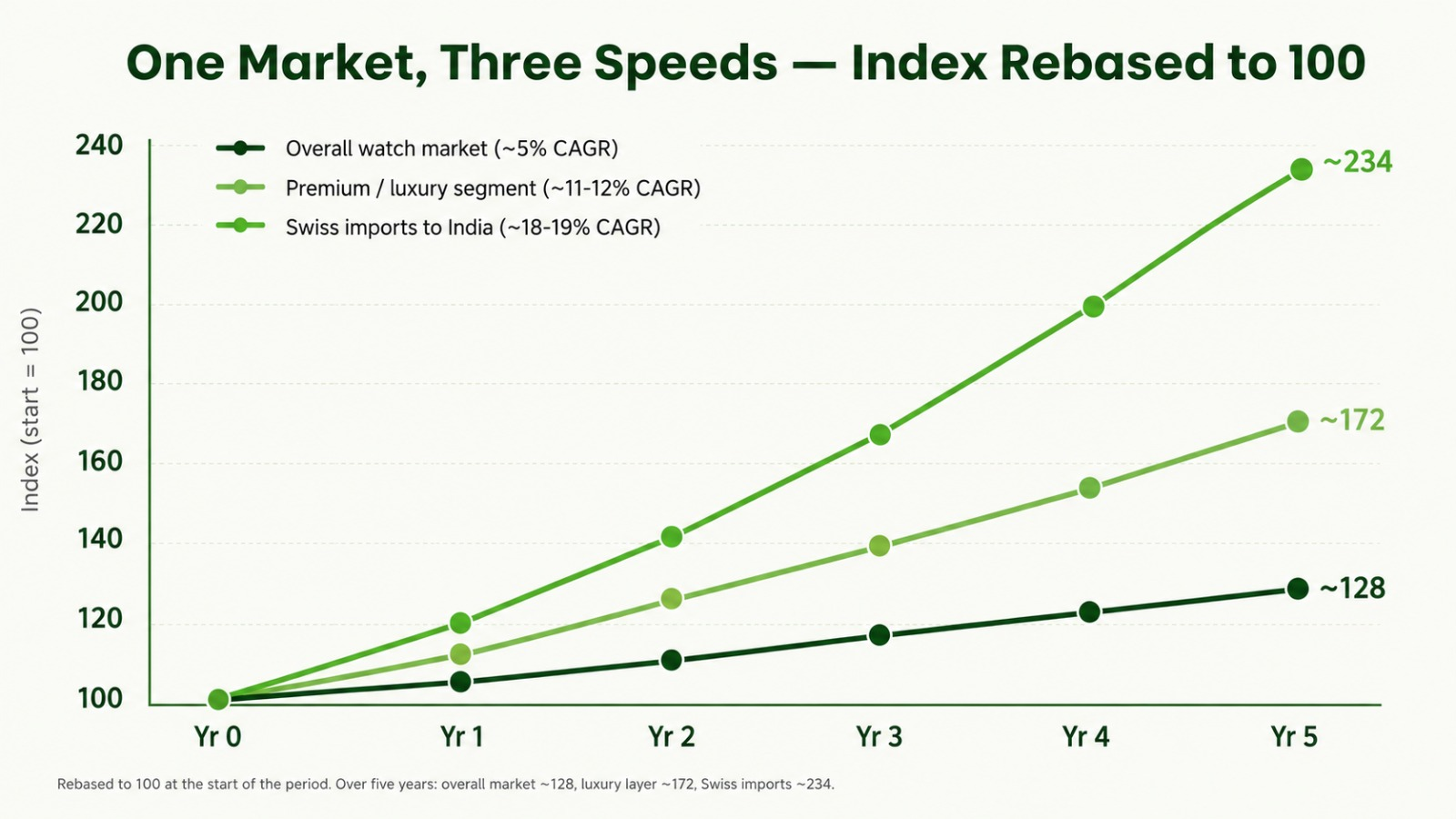
Growth rates alone can be misleading. The clearer proof is in how the market’s own composition has shifted.
Five years ago, premium and luxury watches made up less than half of what Indians spent on watches. They don’t anymore.
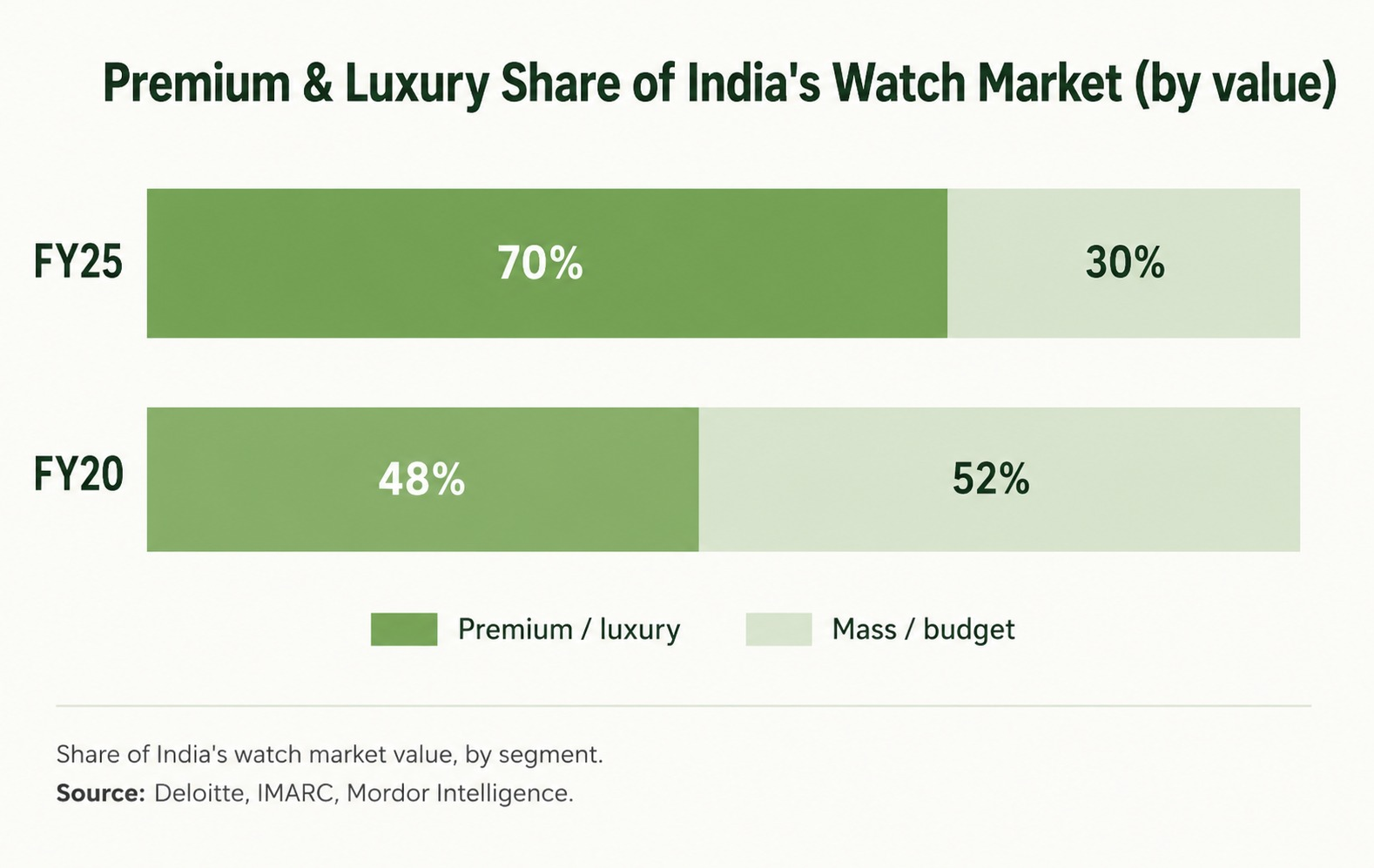
A single “market growth rate” hides more than it reveals here – it averages three markets that barely resemble each other in speed.
This is also, quietly, why two earlier drafts of this same research disagreed with each other – one citing ~10.2% (a wristwatch-specific series), the other ~5% (a broader market series). Neither was wrong. They were just standing on different floors of the same building.
If the premium layer is where the real growth is hiding, three listed companies are the closest thing to a scoreboard for who’s actually capturing it.
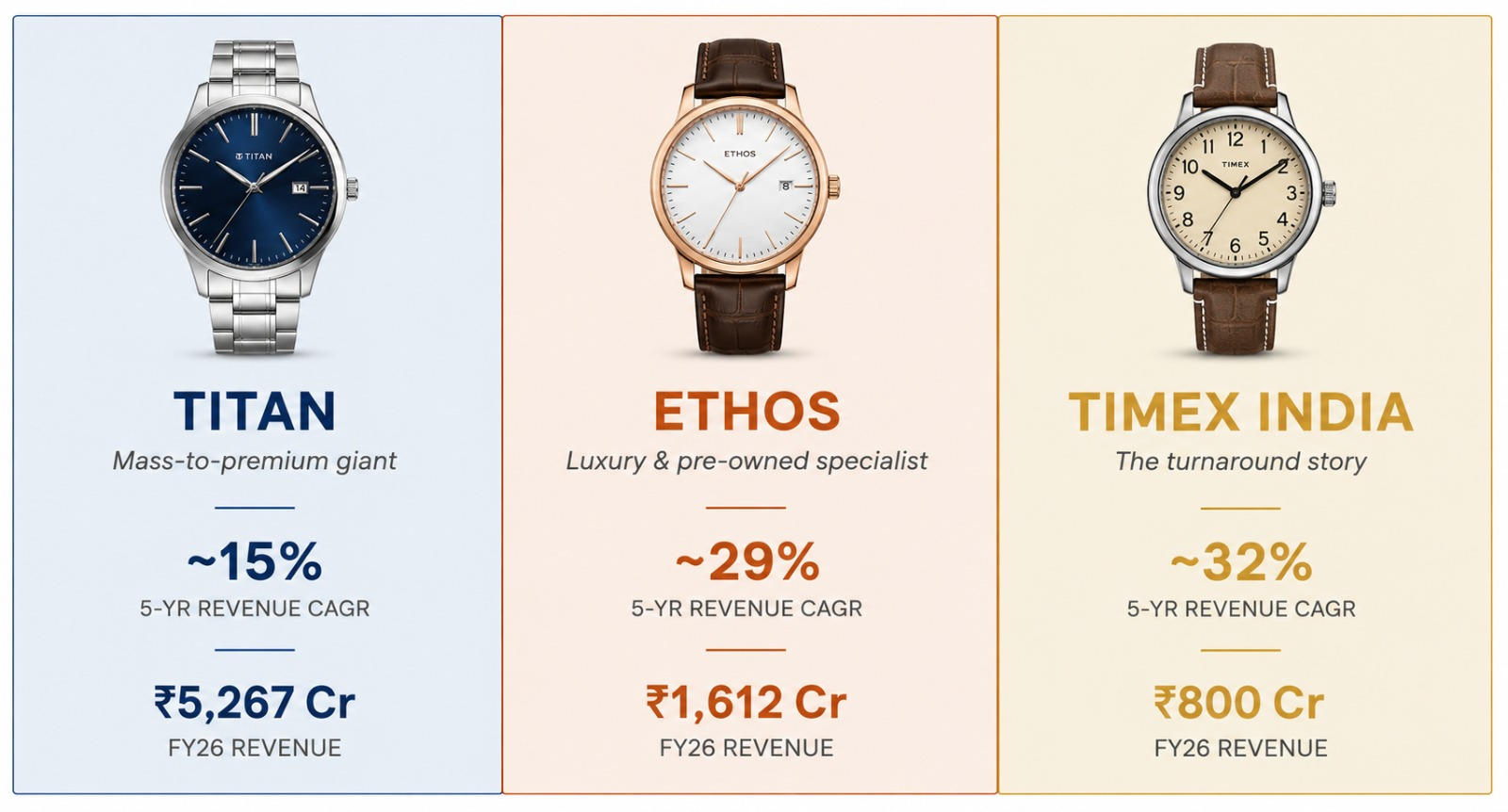
Timex – the quiet turnaround
Ethos – betting on luxury and the second-hand market
Titan – the giant, recalibrating in real time
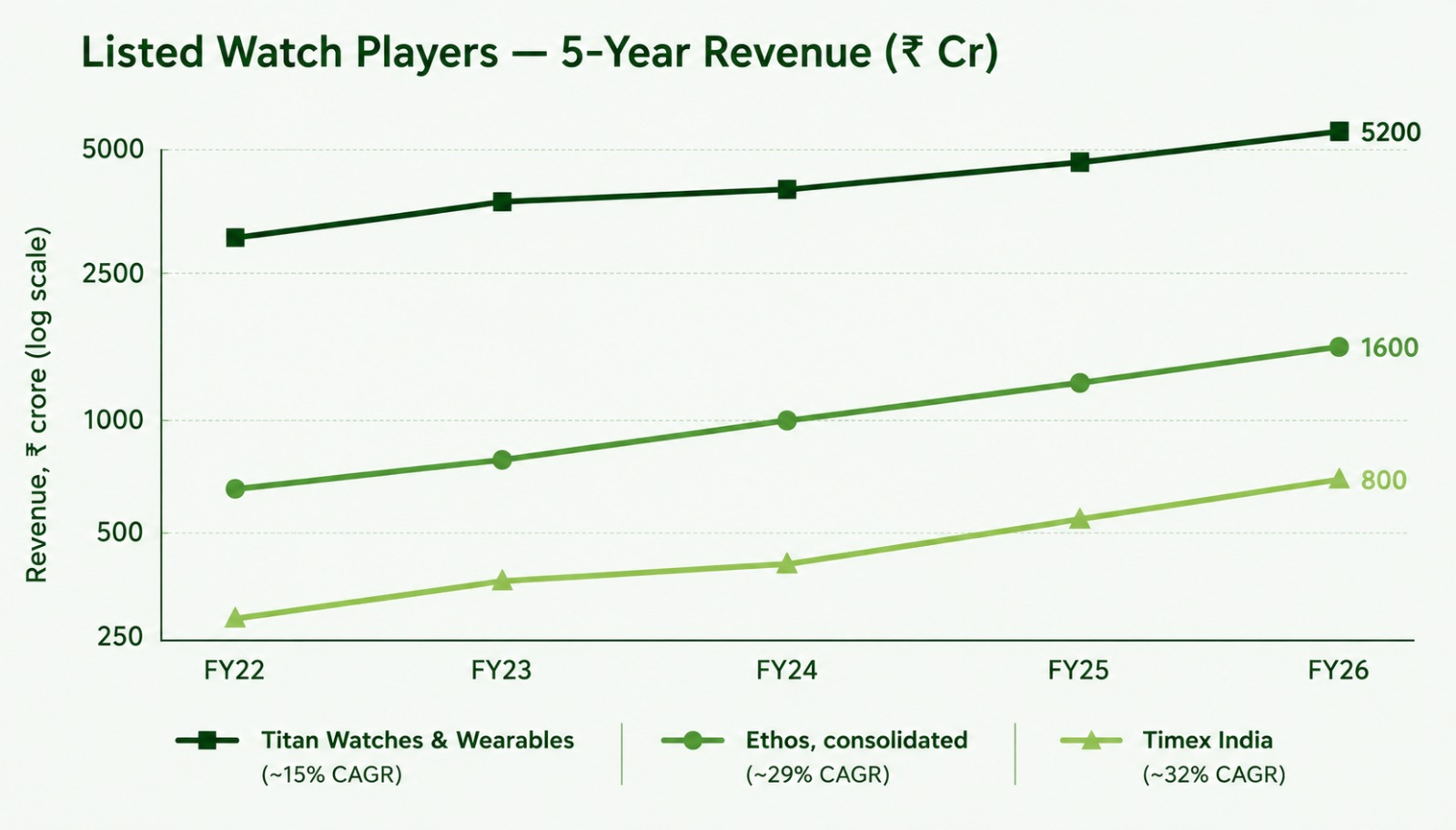
Ethos and Timex outgrow the headline market because they capture organised, premium share within it – not because the market itself accelerated.
That’s the view from inside India. The clearest outside confirmation comes from Switzerland’s own trade data.
Switzerland keeps meticulous books on where its watches go, which makes Swiss export data the easiest of the three layers to fact-check.
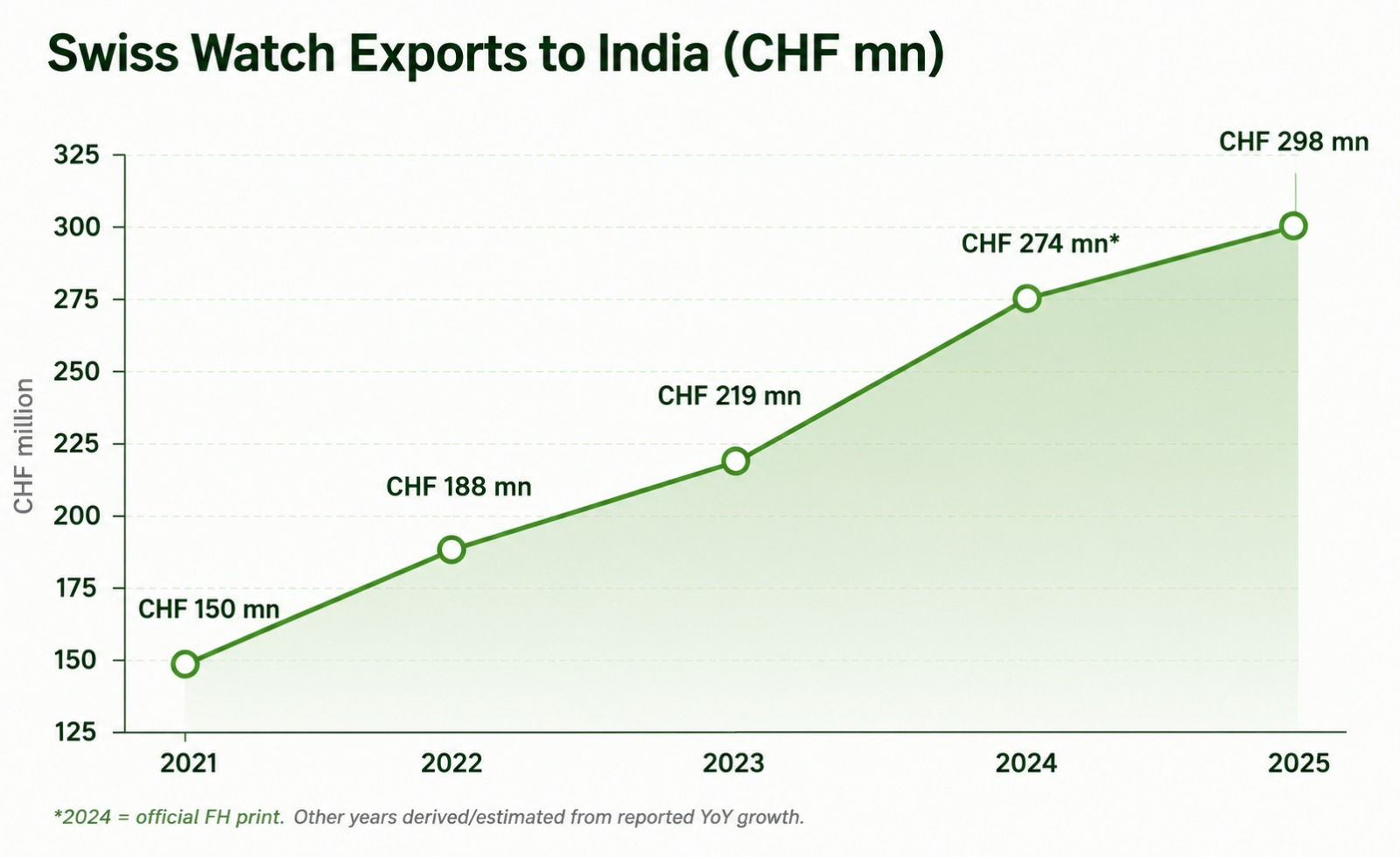
The Federation of the Swiss Watch Industry confirmed CHF 274 million of exports to India in 2024.
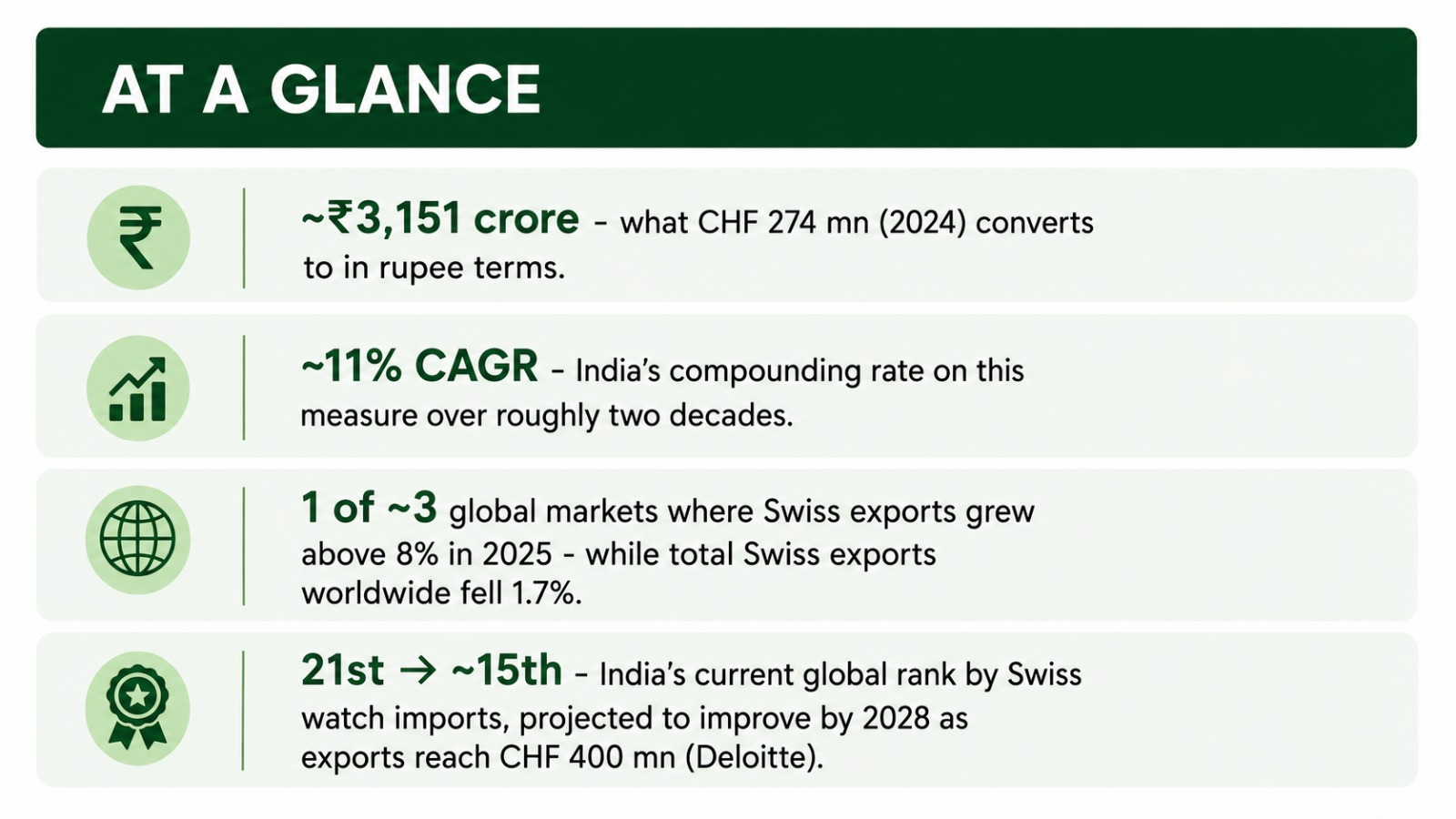
India is still a minor character on the world stage – 21st, by this measure. But it’s one of a small handful of markets still growing while the rest of the world’s Swiss watch trade shrank. Being early to a trend and being unimportant to it are two very different things, and the data says India is the former.
Long before quarterly results confirmed any of this, the infrastructure had already started moving. A sample of what’s on record:
Perhaps the best line on all this came from a veteran retailer, quoted via Europa Star, who put the required temperament simply:
“India is not a market for short-term thinkers.”
Fittingly, that’s also the whole moral of Xerxes Desai’s watch.
Every good story needs a reversal, and this one arrived in the segment everyone thought was the future: smartwatches.
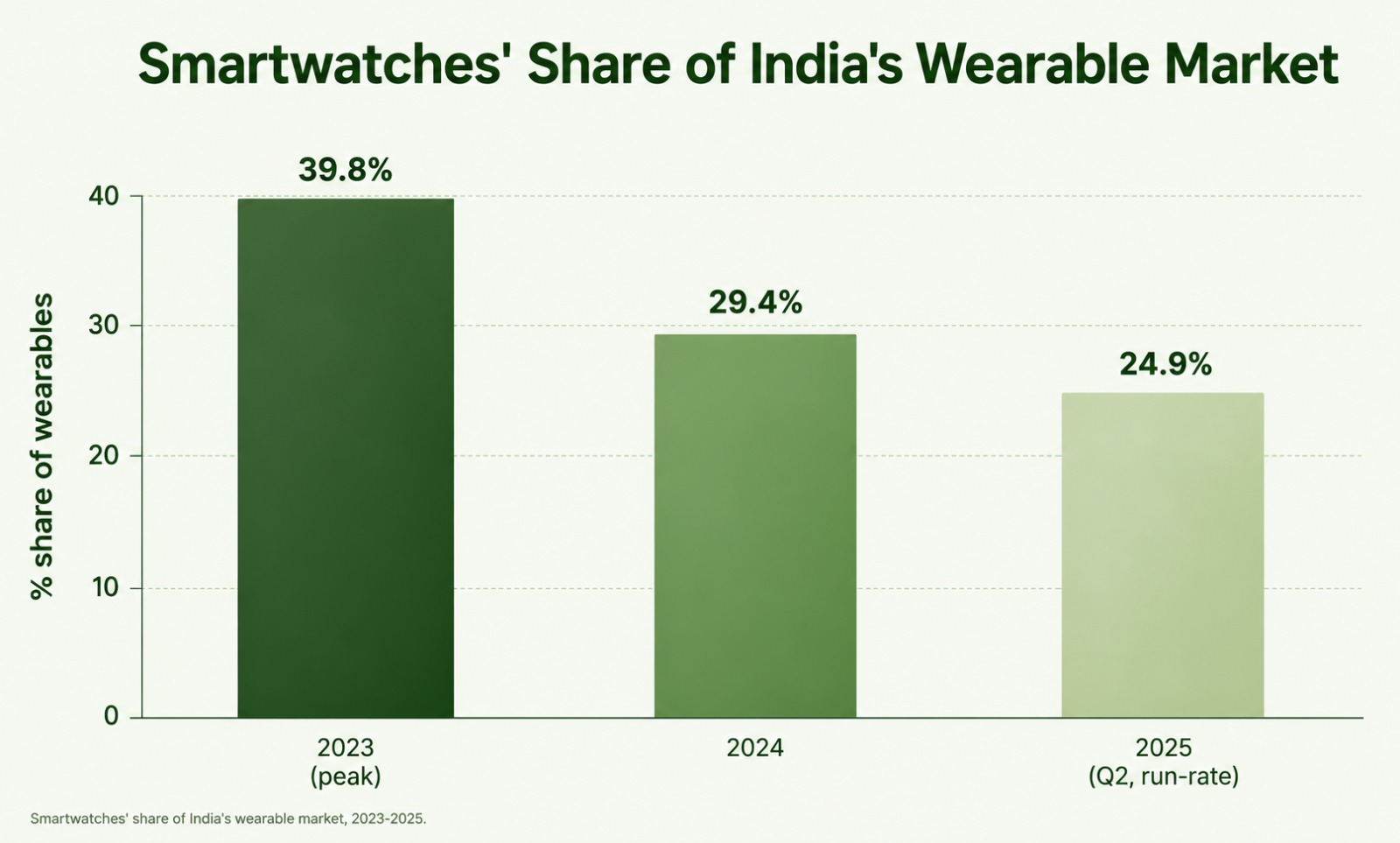
Titan’s own numbers make the trade-off almost too neat: analog watches grew 15% in FY26 at a 16.2% EBIT margin, while its wearables business fell roughly 50%.
Budget-digital fatigue and an analog-plus-premium comeback turned out to be the same story, told twice.
The MX Player version of this story wraps up with Titan finally shipping a watch India could be proud of.
The data’s version doesn’t have a finale – it’s still airing, three episodes a year, at three very different speeds:
None of this is a stock recommendation, and five years of data is not a script for the next five.
It’s simply a reminder that the number worth remembering depends on which layer of the market you’re asking about – and that conflating them is how two honest analysts end up quoting two very different growth rates for the same industry.