





From Cyber Cafes to AI: Four Waves of India’s Digital Revolution
Remember the era of cyber cafés with “Net ₹20 per hour” boards, the slow dial-up modems loading pages line by line, and the pride when you got your first internet-enabled phone? In less than 30 years, India has sprinted forward. We’ve gone from dial-up tones and SMS packs to UPI QR scans at the neighborhood kirana (corner store); from queuing up for recharge coupons to topping up in seconds; and from waiting hours to download a single song to streaming HD movies even in places that once had only one patchy network bar.
Today, that leap is visible everywhere. India had nearly 954 million internet subscribers as of March 2024 (up from 881 million a year prior), and internet usage soared from single-digit penetration in 2010 to well over half the country by 2022. The IMF even recognizes India’s UPI as the world’s largest real-time payments system by volume, with about 49% of global instant payment transactions running through this Indian platform.
But this story isn’t just about flashy apps or one visionary founder. It’s about a full-stack transformation – public digital rails (like UPI and Aadhaar), built on hard infrastructure (fiber-optic cables, mobile towers, data centers, power grids), and scaled through software that made digital services simple, cheap, and trustworthy for the everyday Indian. And at each wave of adoption, investors who spotted the shift early saw outsized wealth creation across IT services, telecom, internet platforms, fintech, and the infrastructure backbone that quietly powered it all.
In this blog, we’ll walk through four waves of India’s digital transformation – from the early IT outsourcing boom, to the telecom revolution, to the rise of consumer internet platforms, and now the India Stack & AI era. Along the way, we’ll see how infrastructure and software together created compounding value, and how a thematic investment approach (like the Niveshaay TechStack) aims to participate in this mega-trend — one wave at a time.
Wave 1 – IT Exports: Laying the Digital Foundation (1990s–2000s)
The first wave of India’s internet journey didn’t put a smartphone in every hand – it put Indian tech talent on the global map. In the late 1990s and 2000s, as the internet spread worldwide, India became the “back office of the world.” Companies like TCS, Infosys, and Wipro led an IT outsourcing boom, delivering software services and business-process support to global clients. They harnessed early internet connectivity (even when dial-up was painfully slow) to work remotely for Western firms, turning India into a technology outsourcing powerhouse. This era was about exporting tech services, not mass domestic internet usage – but it laid critical groundwork:
- Tech Infrastructure & Talent: The success of IT services drove investments in connectivity (undersea internet cables, satellite links) and built a skilled tech workforce. By 2010, India had a robust base of IT engineers and a fledgling internet backbone ready for the next stage of growth.
- Wealth Creation: The IT outsourcing wave didn’t grab headlines like today’s consumer apps, but it created enormous wealth for early investors. Several Indian IT companies emerged as exceptional long-term performers (stocks multiplying in value many times over) as global Y2K and offshoring demand translated into decades of growth for these firms.
However, on the home front, internet access remained limited through the 2000s – often confined to urban cyber cafés and slow broadband for a privileged few. By 2010, only around 7–10% of Indians were online. The stage was set: India had proven tech companies and an emerging network infrastructure. The spark for mass domestic internet adoption would come next, igniting Wave 2.
Wave 2 – Cheap Data & Big CapEx: The Telecom Boom (2010s)
Wave 2 was a turning point that made the internet a utility for hundreds of millions of Indians. In the 2010s, a perfect storm of factors — aggressive telecom investment, plummeting data prices, and affordable smartphones — brought mass connectivity to India’s doorstep.
It started with telecom operators pouring billions of dollars into spectrum and infrastructure. Companies built nationwide 4G networks, laid fiber-optic backbones, and installed thousands of cellular towers across the country. By 2023, over 95% of India’s population had access to a 4G signal, and 5G rollouts were reaching even remote areas. This dramatic expansion of coverage went hand-in-hand with a collapse in data costs.
Figure: Internet penetration vs. data cost. The average cost of mobile data in India plummeted from around ₹226 per GB in 2015 to under ₹10 per GB by 2019, making it one of the cheapest data markets in the world. This freefall, largely sparked by Reliance Jio’s entry in 2016 and the ensuing price wars, brought millions of new users online each month. India’s total internet connections surged from about 25 crore (250 million) in 2014 to over 83 crore (830 million) by 2021 – a 230% jump in seven years. Cheap data effectively democratized the internet in India, turning mobile broadband into a basic necessity on par with electricity or highways.
On the investment front, telecom and infrastructure players benefited enormously from this wave. The major telecom operators – Reliance Jio (via RIL), Bharti Airtel, and (earlier) Vodafone Idea – gained hundreds of millions of subscribers and saw data usage per user explode (from mere megabytes to many gigabytes per month). After a brutal price war, the surviving players saw average revenue per user (ARPU) stabilize and then start rising, rewarding those companies with stronger balance sheets. Over the full cycle, telecom stocks delivered exceptional long-term returns as they transformed from voice-call providers into data utilities (though not without bouts of volatility due to fierce competition and regulatory twists).
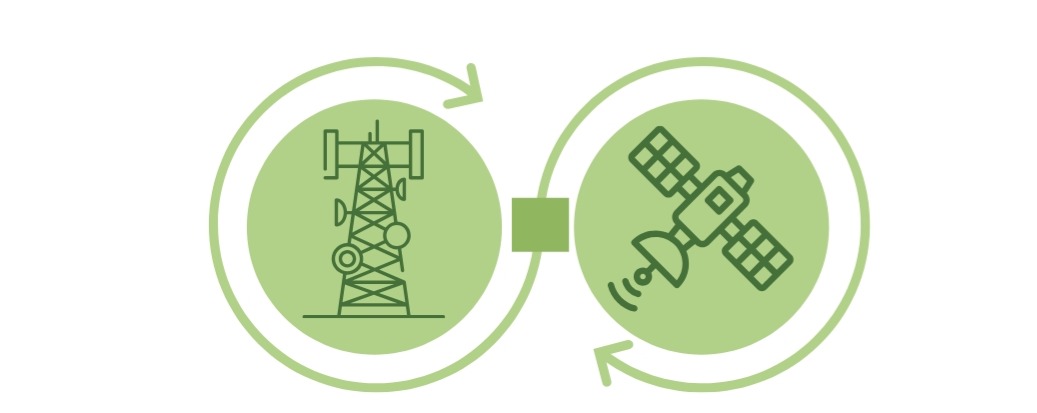
Importantly, it wasn’t just the mobile operators that prospered. A whole ecosystem of physical infrastructure companies scaled up alongside them: tower leasing firms, fiber network owners, and data center providers. Many of these were part of listed telecom groups or infrastructure trusts. Investors who recognized that the “Digital India” story rested as much on concrete, steel, and spectrum as on apps profited from steady, long-term plays in this space. Wave 2’s big lesson was that building the pipes and power for the internet could be just as lucrative as building the apps. With the highways of cheap data now laid, what followed was an onrush of online services riding on them.
Wave 3 – Platforms & Digital Consumption: India’s Online Marketplace (late 2010s–2020)
Once affordable 4G and smartphones became ubiquitous, the front-end of India’s internet economy – consumer apps and digital platforms – took center stage. If Wave 2 built the highways, Wave 3 saw all kinds of vehicles zooming down them, delivering everything from meals and groceries to jobs and entertainment. This was the era when “there’s an app for that” became reality for India’s masses, and the way Indians shopped, traveled, and amused themselves changed forever.
Some of the biggest winners of this wave were the online platforms that became part of daily life. For example, in the late 2010s:
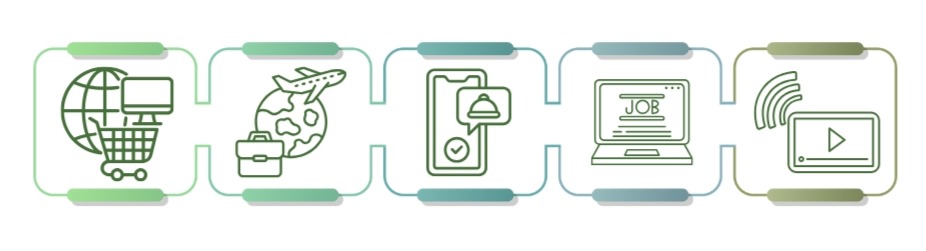
- E-commerce marketplaces (Amazon India, Flipkart) – brought the mall to your doorstep.
- Travel portals (MakeMyTrip, IRCTC) – made booking train or plane tickets a breeze.
- Food delivery apps (Zomato, Swiggy) – redefined convenience for dining.
- Job portals (Naukri.com by Info Edge) – moved job classifieds and recruiting to the cloud.
- Digital entertainment (YouTube, Netflix, Hotstar) – turned mobile screens into the new TV.
In most categories, one or two players emerged as market leaders – often scaling up thanks to network effects, brand recognition, and troves of user data. Several of these pioneers eventually listed on the stock markets, turning into household names for investors. Others remain private unicorns, but all of them rode the foundational fact that by 2020, 600–700 million Indians were browsing and transacting online, compared to barely tens of millions a decade prior.
Yet behind every “digital” experience in Wave 3 lurked a formidable physical backbone. E-commerce wouldn’t work without massive warehouses, fulfillment centers, and last-mile delivery fleets. Food and grocery apps rely on complex logistics, cold storage, and armies of delivery riders on bikes. Even digital content requires data centers and content delivery networks quietly humming in the background. This wave taught investors that the multi-baggers aren’t only the flashy consumer-facing apps you see on your screen – they’re also the less-glamorous logistics, retail, and infrastructure firms enabling the digital economy. Indeed, some of India’s listed logistics companies, warehouse REITs (Real Estate Investment Trusts), and tech-driven retailers saw strong growth and compounding in this period, fueled by rising e-commerce penetration and the formalization of supply chains.
A key example of this digital-meets-physical synergy was the rise of UPI (Unified Payments Interface) during this time. Launched in 2016, UPI removed the friction from everyday transactions, allowing even a street vendor to accept a smartphone payment in seconds. This turbocharged online consumption and brought millions of small businesses into the formal digital payments network.
Figure: The explosive growth of UPI. UPI’s adoption has been nothing short of spectacular – from just 6.3 million transactions in FY2017 to 13.4 billion in FY2024. By 2023, this real-time payments network was processing ₹14–20 lakh crore (i.e. trillions of rupees) in payments annually. The IMF and World Bank hail UPI as the world’s largest fast-payments system, carrying nearly half of all global instant payment transactions. Crucially, UPI made digital payments nearly ubiquitous and cost-free, fundamentally changing consumer behavior – people who once hesitated to enter their card details online now seamlessly scan QR codes to pay ₹50 for a chai. In turn, this has opened up new opportunities for fintech platforms, payment banks, and even traditional banks (thanks to increased transaction flows), many of which have rewarded investors with strong growth.
Wave 3, therefore, was about platforms and digital consumption – and it proved that India’s digital gold rush would have multiple winners. Yes, some app-based companies struggled or failed to monetize, but those that cracked the code (or dominated their niche) created immense value. Often, for every famous app you heard about, there was a less-heralded infrastructure or service company also profiting in the shadows.
Wave 4 – India Stack & AI: The Next Frontier (2020s)
We are now in the midst of Wave 4, where India’s digital journey is entering an advanced phase powered by public digital infrastructure and emerging technologies. On one hand, the India Stack – a set of government-enabled digital public goods – has matured. On the other, new trends like AI and cloud computing are triggering another investment cycle in tech infrastructure. Let’s break down this wave:
- India Stack & Fintech Rails: Over the past few years, India has rolled out a unique digital public infrastructure known as the India Stack — a suite of open digital rails including Aadhaar (universal digital ID), e-KYC (electronic Know-Your-Customer verification), DigiLocker, and the Account Aggregator framework. These are essentially plug-and-play platforms that any startup, bank, or enterprise can use for instant identity verification, paperless document exchange, and consent-based data sharing. The result? New-age businesses can scale faster without having to build every piece from scratch. For example, today a fintech app can let you open a bank account, get a loan, buy insurance, or invest in stocks entirely online in minutes by leveraging Aadhaar-based e-KYC and digital signatures, instead of weeks of manual paperwork. Similarly, DigiLocker enables secure one-tap sharing of official documents (e.g. your driver’s license or graduation certificate), and Account Aggregators allow individuals to securely share their financial data with lenders or fintech apps to get tailored financial products. All this has dramatically lowered the cost-to-serve and allowed companies to reach massive user bases in smaller Tier-2 and Tier-3 cities that were previously uneconomical to cover. Many such fintech and digital-first financial services firms have now gone public, often showing 30–40% annual revenue growth with improving profitability as they scale – early evidence that India Stack can spawn listed companies with compounding growth trajectories.
- AI & Cloud – A New CapEx Cycle: Just as affordable 4G data triggered a capex super-cycle for towers and fiber in the 2010s, the 2020s wave of AI, cloud computing, and data localization is spurring heavy investments in next-generation infrastructure. India is witnessing a boom in building data centers – both hyperscale facilities and decentralized edge data centers – equipped with high-density server racks, advanced cooling systems, and reliable (often green) power backups. Tech giants and Indian conglomerates alike are pouring money into these data centers to meet exploding cloud demand and to ensure data residency within India’s borders. At the same time, the push to embed AI in everything from banking to healthcare is driving up demand for computational power – benefiting companies in power infrastructure (especially renewable energy providers), specialized chip makers, and networking equipment suppliers. Several listed players in India (for example, firms that construct data centers, provide power solutions, or offer cloud services) are positioned to ride this emerging trend. In short, a “digital infrastructure 2.0” wave is now underway, adding a new layer to the investment landscape atop the existing telecom networks.
In Wave 4, the synergy of public digital rails and cutting-edge tech is once again unique to India’s story. Few countries have anything comparable to the India Stack (the UPI+Aadhaar-enabled ecosystem) that seamlessly connects government, businesses, and citizens. And few large economies still have so much headroom for internet growth – even at roughly 70% internet penetration, India’s per capita data consumption and digital service usage can grow for years to reach developed-market levels. This suggests that the opportunity for investors is far from over – in fact, it may be entering a new phase with a different set of winners. Wave 4 is already creating its own next generation of growth companies, and will likely continue to do so as AI adoption and digital public goods reshape the market.
Key Takeaways: The Digital Stack and Wealth Creation
Looking across these four waves, a few clear lessons emerge for investors:
- Adoption Curves Drive Wealth: The biggest investment gains followed real user adoption curves, not just hype cycles. Whether it was businesses worldwide embracing India’s IT services in the 2000s, or Indian consumers adopting mobile internet and UPI in the 2010s, sustained growth in users and usage translated to sustained revenue and profit growth – and hence strong stock returns. It pays to focus on where the next 100 million users (or the next 10× increase in usage) will come from, rather than the next flashy app that’s just grabbing headlines.
- Every Wave Has Different Winners: Each phase of India’s digital evolution rewarded a different part of the tech ecosystem. In Wave 1 it was the exporters (IT service giants). Wave 2 enriched the pipes and towers (telecom operators and infrastructure firms). Wave 3 saw consumer platforms and tech-enabled retail/logistics thrive. Wave 4 is elevating fintech rails and cloud/AI enablers. Investors should recognize that “tech” is not monolithic – as technology matures, the baton of value creation passes from one subsector to the next.
- Physical Infrastructure Matters: It’s not all about apps and software. Often the less-glamorous physical infrastructure – towers, fiber networks, data centers, power grids – provides the stable, long-duration backbone that underpins the digital economy. Many such companies have quietly compounded in value over the years. Ignoring the infrastructure layer in a digital theme means missing half the story (and many steady compounders).
- Policy Platforms Lower Risk: India’s approach of building public digital platforms (UPI, Aadhaar, etc.) has reduced friction for businesses and made the boom more broad-based. Digital growth in India isn’t dependent on one or two private companies controlling the market; instead, common rails allow many players to flourish. This can make thematic investing in “Digital India” less risky than in markets where a single app or platform dominates the whole narrative.
These insights shape how we think about investing in the Digital India theme. Instead of chasing one-off fads or the newest hot IPO, a smarter approach is to map the entire value chain of the internet economy and invest in a basket that covers all the key layers. This is where the idea of the Niveshaay TechStack comes in.
Investing in India’s Digital Revolution: Where the Niveshaay TechStack Fits
India’s tech adoption is not a single-sector story. It’s a full-stack compounding cycle – from the pipes that carry data, to the rails that move money and identity, to the software that secures and orchestrates digital activity, to the platforms that convert attention into transactions, and finally to the hardware that powers the next wave of computing.
That’s exactly why the Niveshaay TechStack is structured around five complementary sub-sectors. You’re not “betting on one trend” – you’re participating in the entire ecosystem that benefits from Digital India. The five pillars of this basket are:
- Digital Infrastructure & Connectivity: This is the backbone layer – where every extra gigabyte of data, every new user online, and every shift to cloud services creates new demand. (Includes exposure to telecom networks and service providers, fiber and broadband expansion, data center infrastructure, and the supporting systems that keep the internet running reliably.)
- Fintech & Digital Public Rails: This is the transaction layer – the pipes for moving money and onboarding users. India’s digital public infrastructure (e.g. UPI, digital identity, consent-based data sharing frameworks) turns financial distribution into a software-driven model at scale. (Includes exposure to payments ecosystems, financial companies benefiting from UPI and other payment rails, and businesses that grow with increasing digital transactions, QR code payments, card usage, and the formalization of finance.)
- Software, Data & Cybersecurity: This is the trust and intelligence layer – the less visible part of the stack that becomes non-negotiable as India digitizes. As data volumes grow, so does the need for security, compliance, analytics, and enterprise software. (Includes exposure to cybersecurity providers, risk-tech and reg-tech companies, software/SaaS firms riding the cloud adoption wave, and data analytics or enterprise software players enabling digital transformation.)
- Platforms & Digital Consumption: This is the habit layer – where internet usage turns into real consumer spending. As users move from “using the internet” to “living on the internet,” platforms monetize attention via e-commerce, digital content, education, gaming, and online services. (Includes exposure to listed consumer platforms in e-commerce, media, etc., as well as the enabling ecosystems – such as logistics or digital advertising – that grow as online consumer spending expands.)
- Electronics, Hardware & Deep-Tech: This is the compute and manufacturing layer – the next leg of the story. AI, cloud data centers, edge computing, and India’s push for tech self-reliance (e.g. electronics manufacturing initiatives) create structural tailwinds for hardware and deep-tech. (Includes exposure to electronics manufacturing and design, semiconductor components, hardware enablers, and deep-tech supply chain players aligned with India’s rising demand for computing power and local production.)

By investing in the Niveshaay TechStack, you essentially get a strategic slice of all the key drivers of India’s digital economy, rather than placing all your chips on one segment. This diversification is crucial because, as history shows, digital themes can be volatile – a policy change or technological disruption can suddenly shuffle the winners and losers. A basket approach allows us to express a high-conviction view (that India’s digital trajectory will continue upward) while mitigating single-stock risk. In essence, instead of trying to predict the one next giant, the basket lets you own the wave itself.
Another important aspect is how we construct and manage this basket. We follow a disciplined, rules-driven process:
- Define the universe: Start with a clear universe of listed companies that are direct beneficiaries of Digital India across the stack (connectivity, fintech, software, platforms, hardware).
- Apply strict filters: We screen for quality and growth durability – companies with consistent revenue/earnings momentum (not just one-off spikes), strong balance sheets (low leverage and healthy cash flows), healthy profitability (solid margins and improving return ratios like ROE/ROCE), and reasonable valuations (we avoid overpaying for pure hype).
- Ensure diversification: Construct the portfolio deliberately across the five sub-sectors so that exposure isn’t unintentionally concentrated in any single pocket of tech. This balanced allocation prevents the basket from becoming, say, all fintech or all telecom.
- Rebalance periodically: We regularly rebalance to manage drift. This means trimming positions that become disproportionately large, exiting names where fundamentals weaken or the thesis breaks, and refreshing the basket with new leaders as the next leg of the digital cycle emerges.
In practice, this strategy delivers three key benefits:
- Thematic breadth: You own the full digital stack rather than a narrow, one-dimensional bet.
- Quality control: By filtering for fundamental strength, you reduce the chances of holding fragile, hype-driven stocks.
- Risk-managed growth: You stay invested through the inevitable volatility of the tech sector, allowing long-term compounding to play out, instead of getting derailed by short-term market swings.
This is why the Niveshaay TechStack is designed with a multi-year horizon (around 3–5 years or more). India’s digital buildout moves in waves, and the most meaningful returns tend to accrue to investors who remain positioned through the adoption curves, rather than jumping in and out based on short-term cycles.
Conclusion: Riding the Digital Wave – The Time is Now
What started in the dial-up days as a curiosity has evolved into a multi-layered ecosystem that’s driving India’s economy, creating jobs, and reshaping daily life. As we look ahead, it’s clear that India’s digital transformation is still in its early days of compounding. The country’s digital stack – from telecom networks to AI-powered services – will continue to be a game-changer for businesses and consumers alike. Each of the four waves we discussed has already created tremendous investment opportunities, and new waves will undoubtedly emerge as technology advances.
For investors, the message is simple: don’t miss out on India’s digital revolution. Just as the last decade rewarded those who bet on India’s rising consumer class, the coming decade could belong to those who bet on India’s digital and technological prowess. The Niveshaay TechStack offers an exciting, convenient way to get on board with this theme – it lets you own the pillars of India’s digital future in one portfolio. By investing in the key drivers of the digital economy, you position yourself to benefit from long-term growth as the nation scales its digital infrastructure and services.
The momentum is building – from the days of cyber cafés and missed calls to today’s AI-powered apps, India has leapfrogged into an era of unprecedented connectivity and innovation. The opportunity to participate in this growth story is here and now. The train is leaving the station, and with a thoughtful investment approach, you can be on it rather than watching from the sidelines. In investing, as in the internet, catching an S-curve early can make all the difference. India’s digital S-curve is underway – make sure your portfolio isn’t logging in late!
BSE Approval No : BSE/RA/ADVT/04022026-6276/01
Disclaimer:
Investment in securities market is subject to market risks. Read all the related documents carefully before investing.
Registration granted by SEBI, enlistment as RA and certification from NISM in no way guarantee performance of the intermediary or provide any assurance of returns to investors.
The securities quoted are for illustration only and are not recommendatory.
NIVESHAAY INVESTMENT ADVISORS
Trade Name: NIVESHAAY INVESTMENT ADVISORS
SEBI Registered Research Analyst Registration No. INH000017338, BSE Enlistment No. 6276 (Type of Registration- Non-Individual, Validity of Registration- Perpetual)
Website: https://niveshaay.com/
Address: Office no. 508, 5th floor, SNS platina opposite shrenik residency, Near OM Sai Row house Vesu Surat Gujarat 39500
Contact No: 7859870559, Email: research@niveshaay.com
SEBI regional/local office address – SEBI Bhavan, Western Regional Office, Panchvati 1st Lane, Gulbai Tekra Road, Ahmedabad – 380006, Gujarat

 AIF Investor Charter


NIVESHAAY INVESTMENT ADVISORS
508, SNS Platina, Near Someshwara Enclave, Vesu, Surat, Gujarat-395007
(+91) 7859870559
research.smallcase@niveshaay.com (Equity Baskets)
NIVESHAAY INVESTMENT MANAGEMENT PRIVATE LIMITED
610, SNS Platina, Near Someshwara Enclave, Vesu, Surat, Gujarat-395007
(+91) 7836915478
contactaif@niveshaay.com (AIF)
SEBI Registration No. : INH000017338, IN/AIF3/24-25/1571, IN/AIF2/24-25/1607, INP000009506 | BASL Membership ID: 6276
Disclaimer:
Investment in Securities Market are subject to market risks. Read all related documents carefully before investing.
Registration granted by SEBI and certification from NISM in no way guarantee performance of the intermediary or provide any assurance of returns to investors.
The securities quoted are for illustration only and are not recommendatory
NIVESHAAY INVESTMENT ADVISORS © . All Rights Reserved., NIVESHAAY INVESTMENT MANAGEMENT PRIVATE LIMITED © . All Rights Reserved.Smart ODR