







Bharat Tex 2026: On Ground For India's Textile Story
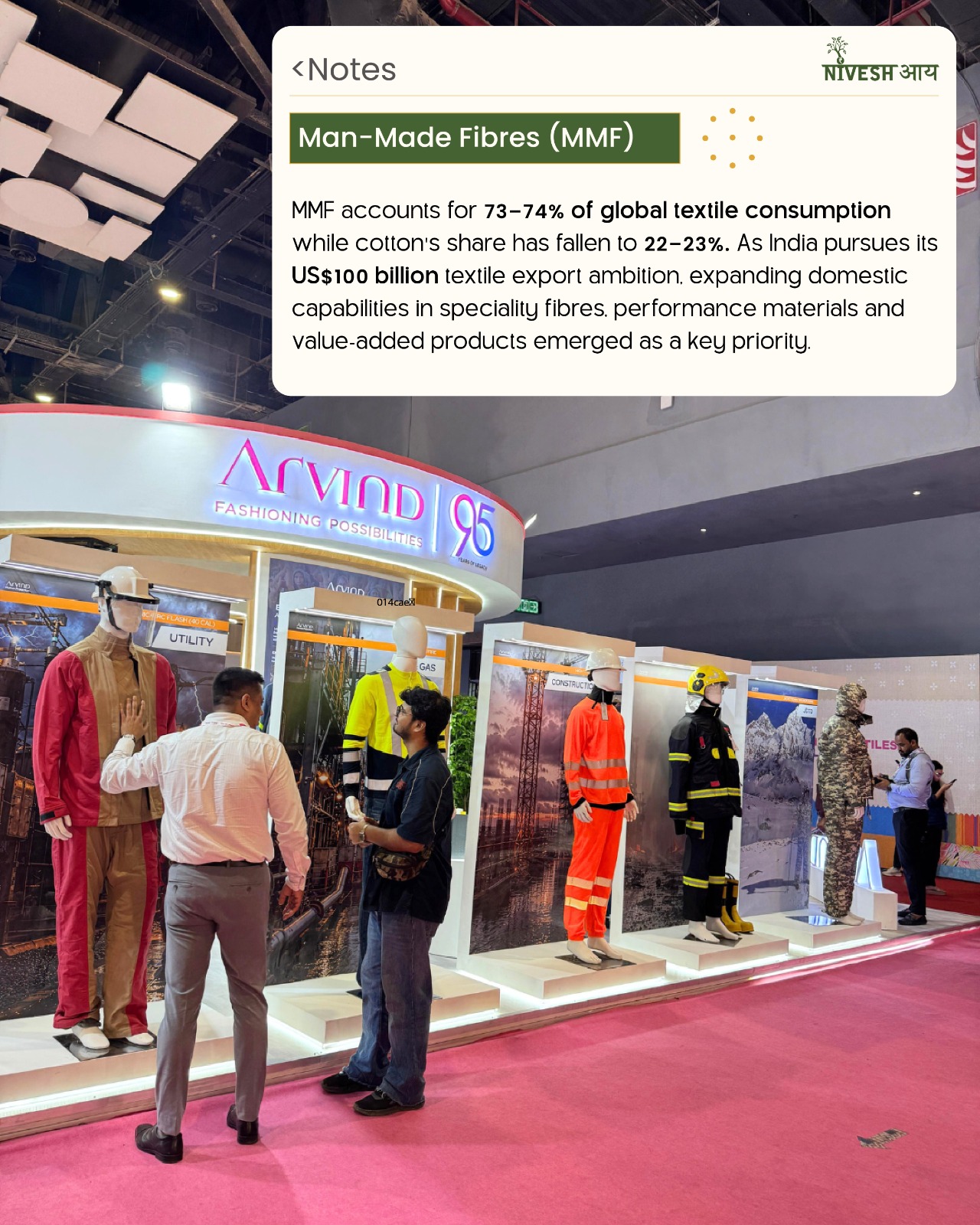
1) Man-Made Fibres (MMF): MMF now accounts for 73-74% of global textile consumption, while cotton’s share has fallen to 22-23%.
As India pursues its US$100 billion textile export ambition, expanding domestic capabilities in speciality fibres, performance materials, and value-added products emerged as a key priority across every session we attended.
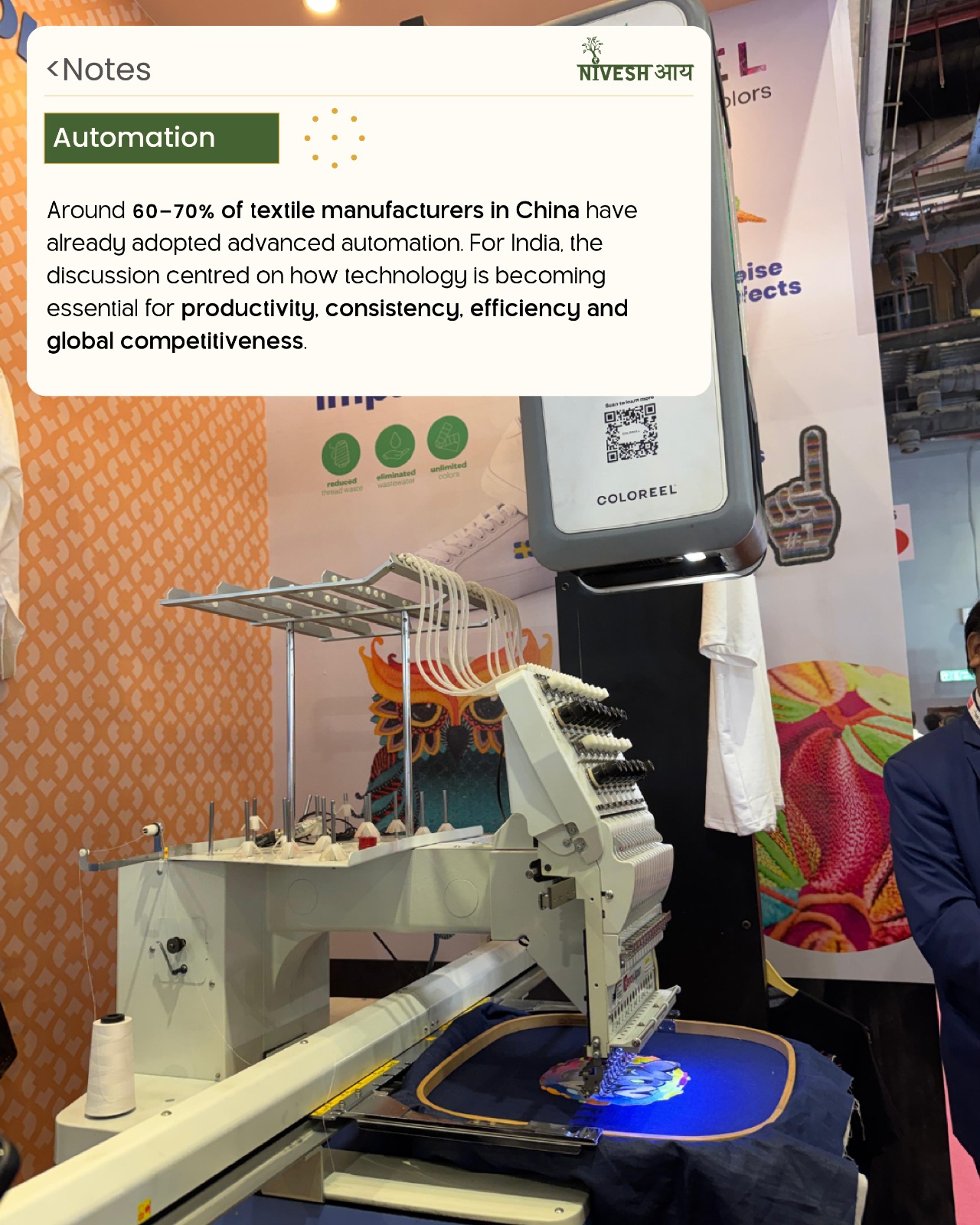
2) Automation: Around 60-70% of textile manufacturers in China have already adopted advanced automation.
For India, the discussion centred on how technology is becoming essential – not optional – for productivity, consistency, efficiency, and staying globally competitive.
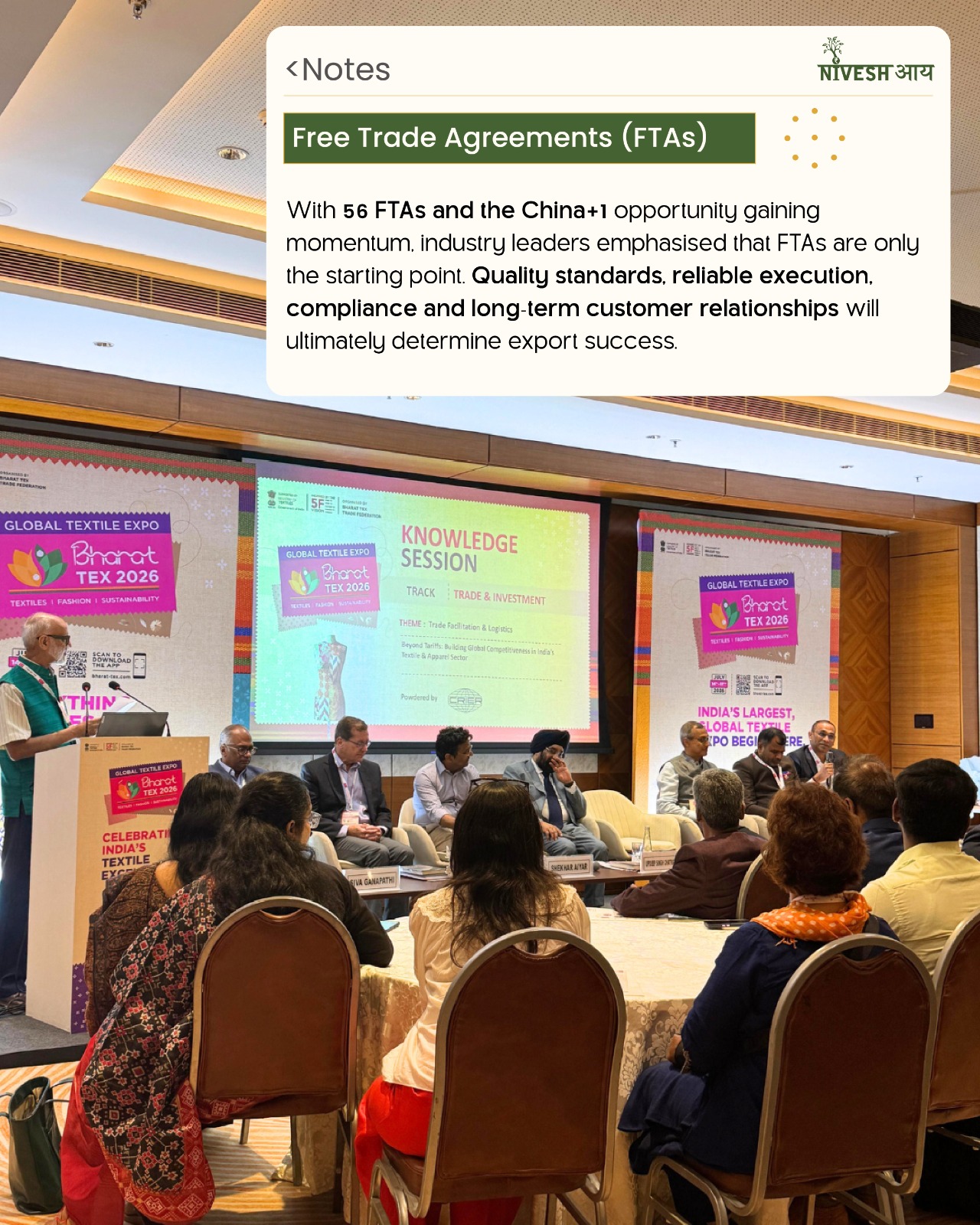
3) Free Trade Agreements (FTAs): With 56 FTAs now in place and the China+1 opportunity gaining real momentum, industry leaders were unanimous on one thing: FTAs are only the starting point.
Quality standards, reliable execution, compliance, and long-term customer relationships will ultimately decide who wins this export race – not tariffs alone.
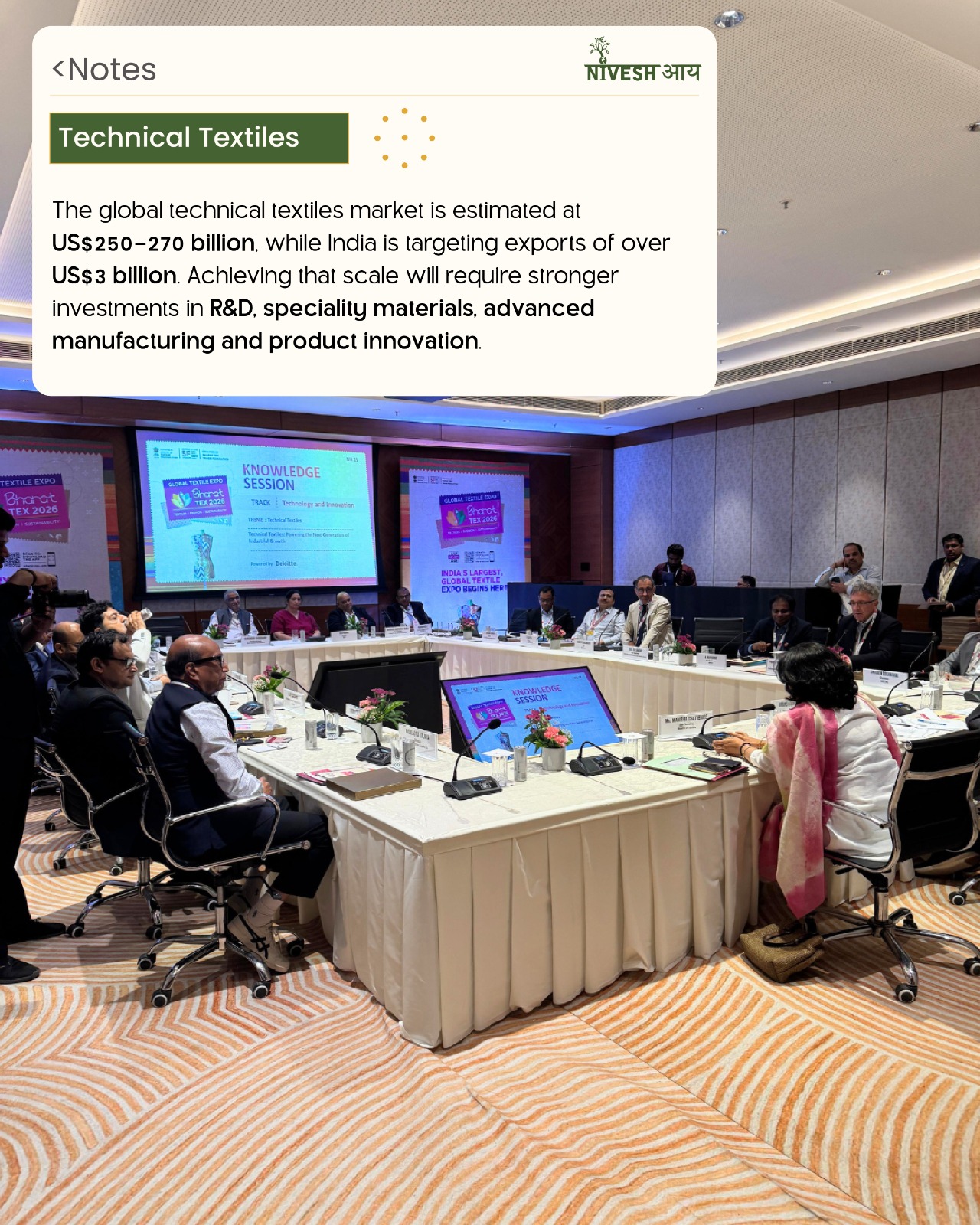
4) Technical Textiles: The global technical textiles market is estimated at US$250-270 billion, while India is targeting exports of over US$3 billion.
Achieving that scale will require far stronger investment in R&D, speciality materials, advanced manufacturing, and product innovation.
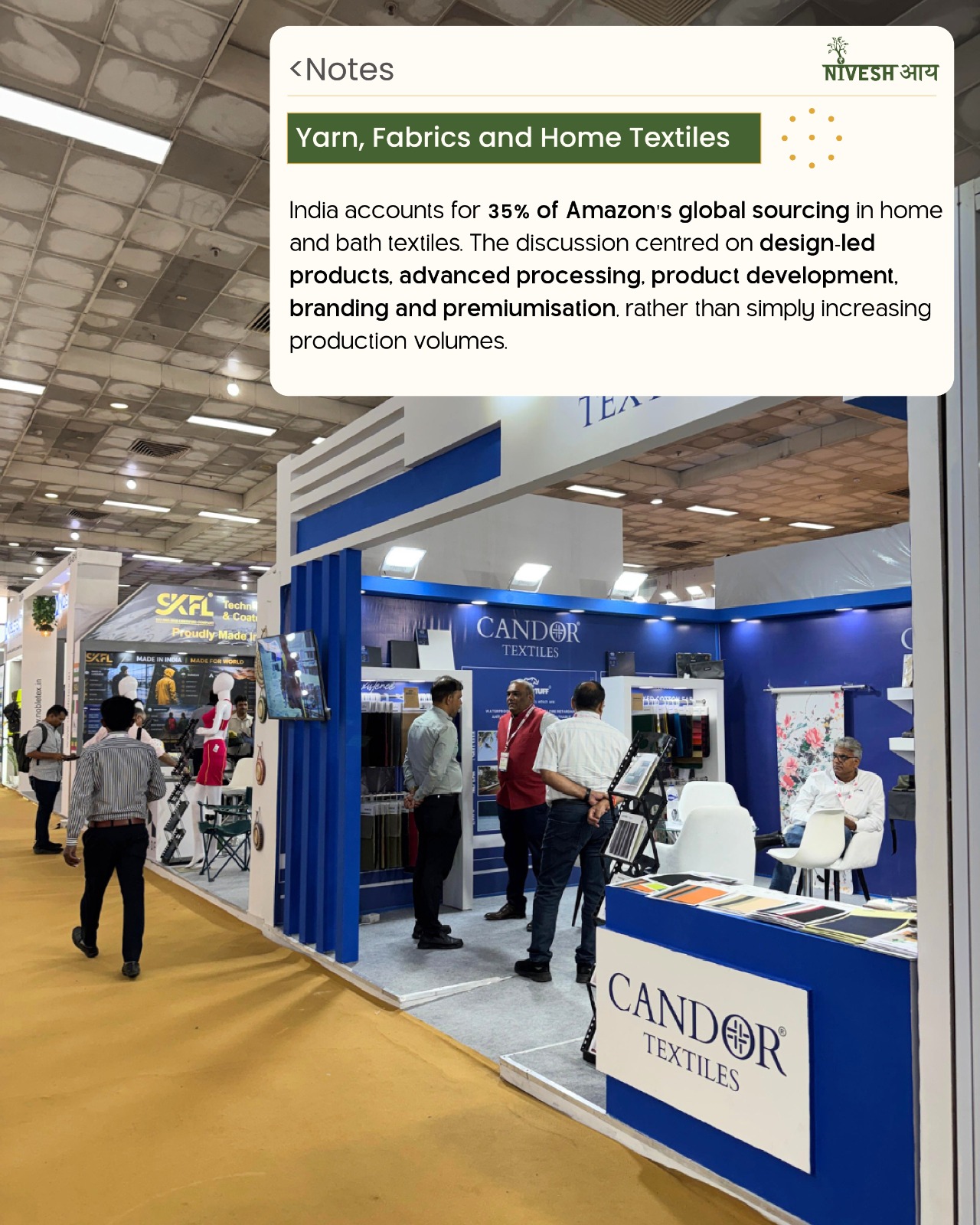
5) Yarn, Fabrics & Home Textiles: India accounts for 35% of Amazon’s global sourcing in home and bath textiles.
But the conversation on ground wasn’t about producing more – it was about design-led products, advanced processing, product development, branding, and premiumisation.
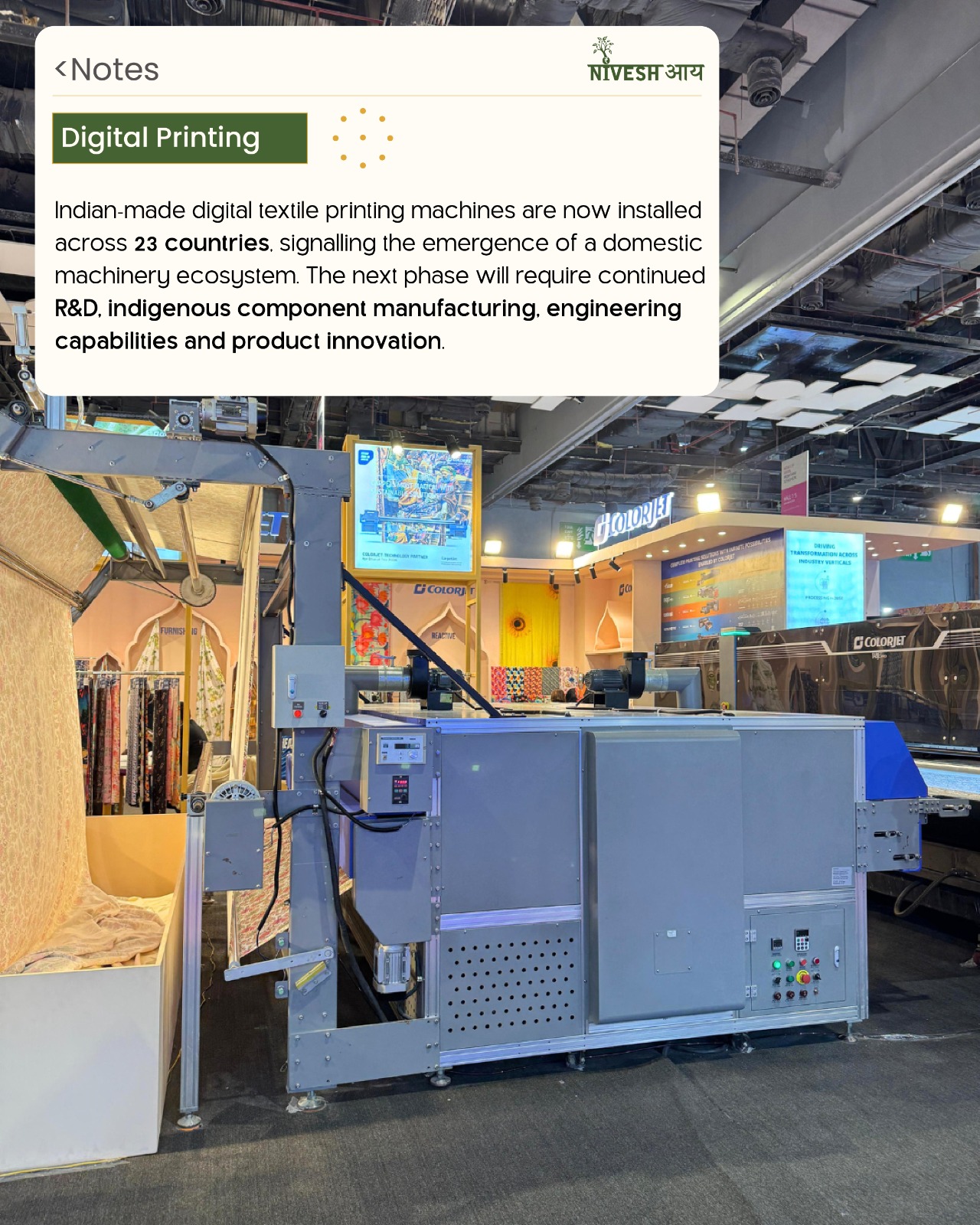
6) Digital Printing: Indian-made digital textile printing machines are now installed across 23 countries, signalling the quiet emergence of a genuine domestic machinery ecosystem.
The next phase will need continued R&D, indigenous component manufacturing, stronger engineering capabilities, and product innovation to sustain this momentum.

 AIF Investor Charter


NIVESHAAY INVESTMENT ADVISORS
508, SNS Platina, Near Someshwara Enclave, Vesu, Surat, Gujarat-395007
(+91) 7859870559
research.smallcase@niveshaay.com (Equity Baskets)
NIVESHAAY INVESTMENT MANAGEMENT PRIVATE LIMITED
610, SNS Platina, Near Someshwara Enclave, Vesu, Surat, Gujarat-395007
(+91) 7836915478
contactaif@niveshaay.com (AIF)
SEBI Registration No. : INH000017338, IN/AIF3/24-25/1571, IN/AIF2/24-25/1607, INP000009506 | BASL Membership ID: 6276
Disclaimer:
Investment in Securities Market are subject to market risks. Read all related documents carefully before investing.
Registration granted by SEBI and certification from NISM in no way guarantee performance of the intermediary or provide any assurance of returns to investors.
The securities quoted are for illustration only and are not recommendatory
NIVESHAAY INVESTMENT ADVISORS © . All Rights Reserved., NIVESHAAY INVESTMENT MANAGEMENT PRIVATE LIMITED © . All Rights Reserved.Smart ODR