







AI Chip Shortage 2026: How DRAM Crisis Is Driving Refurbished Electronics Growth in India
Every gold rush has its miners and its merchants. The AI boom has minted fortunes for chip manufacturers and data center giants, but beneath the surface of this trillion-dollar wave, a far humbler industry is riding the tide to unexpected prosperity.
Refurbished laptops, once dismissed as the budget buyer’s consolation prize, are now having their moment. The question worth asking is why.
The Memory Chip Crisis: AI’s Insatiable Hunger is Draining Global Supply
A quiet crisis is spreading through the global technology supply chain and this time, the usual suspects aren’t entirely to blame.
Voices as prominent as Elon Musk and Tim Cook are sounding the same alarm: a memory chip shortage is quietly hammering profits, derailing product roadmaps, and inflating the price of everything from laptops and smartphones to cars and data centers. And the worst, they warn, is still ahead.
The cause isn’t a natural disaster or a geopolitical skirmish. It’s ambition. The memory industry has pivoted decisively, almost entirely toward, serving AI.
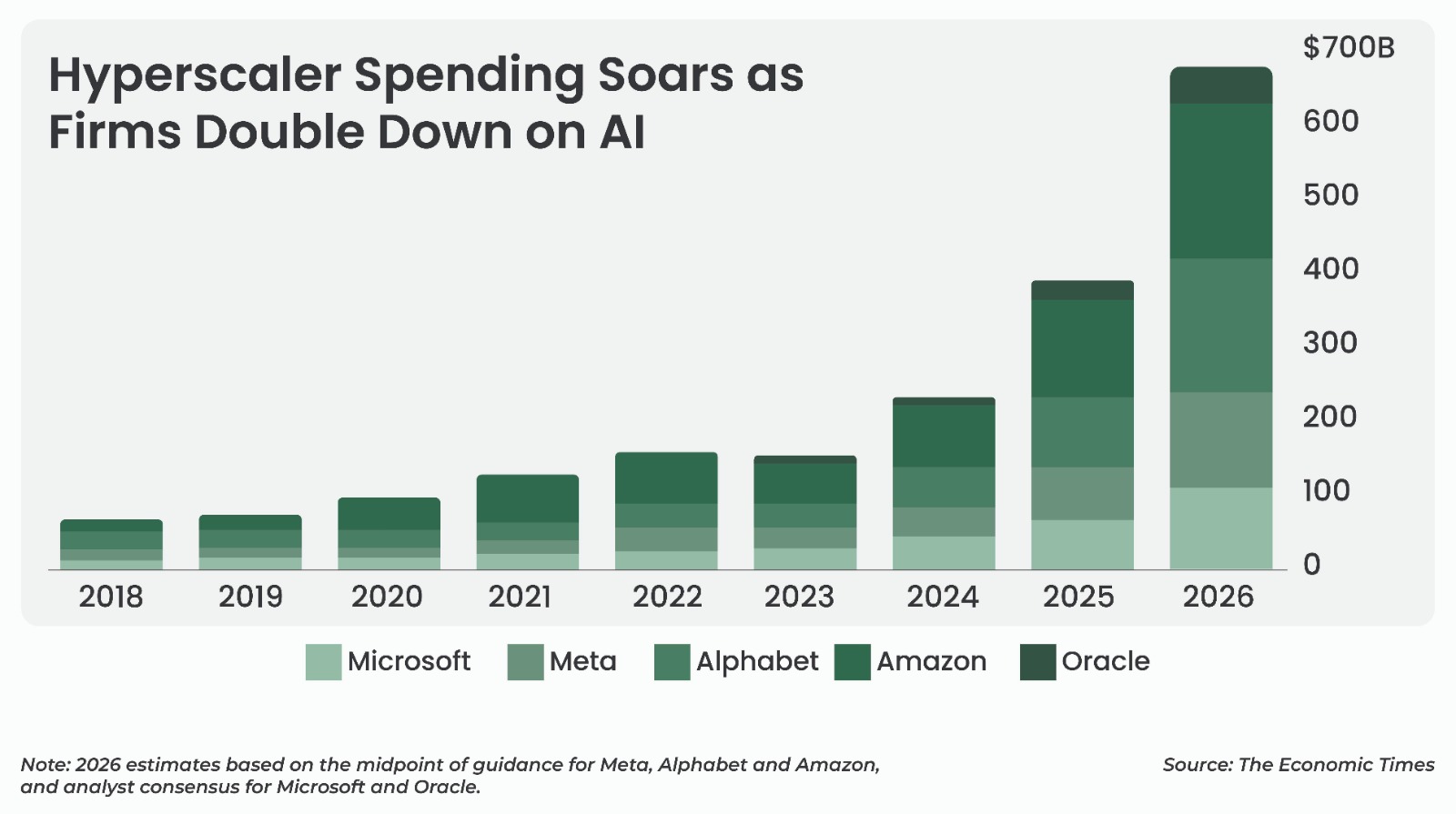
To understand why, follow the money. Hyperscaler spending on AI data centers has compounded at a staggering pace:
- $217 billion in 2024
- $360 billion in 2025
- An estimated $650 billion in 2026
The big four tech firms are outbidding each other and everyone else, for the components, infrastructure, and talent that make AI possible. Every dollar spent by a hyperscaler on AI infrastructure is a dollar pulling memory supply away from the devices sitting in your shopping cart.
Why AI is consuming memory chips at an unprecedented rate?
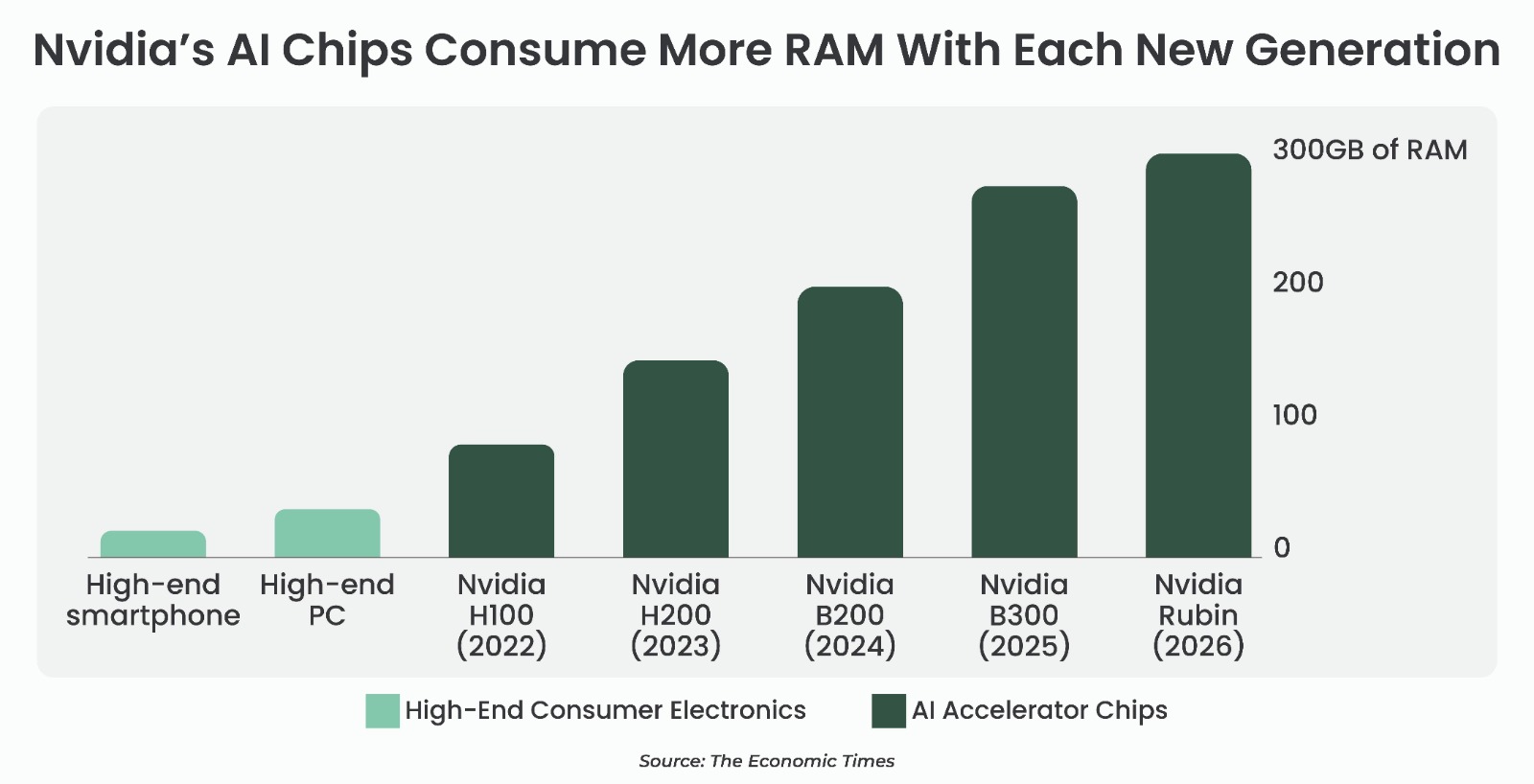
- Every Nvidia AI accelerator chip requires high-bandwidth memory (HBM) to power chatbots and AI-driven applications.
- For an instance, NVIDIA’s latest Blackwell AI chip comes with 192 gigabytes of RAM which is six times the memory that a powerful modern PC would need.
- Companies bulk-buying Nvidia GPUs are simultaneously consuming a disproportionate share of the world’s memory chip supply.
That’s left consumer electronics producers fighting over a dwindling supply of chips from the likes of Samsung Electronics Co, SK Hynix and Micron.
What’s worrying about the trend is that prices are soaring and supplies are running dry even before the AI giants really get going with their data center construction plans.
Alphabet & Amazon’s unprecedented capital expenditure plans for 2026: Alphabet plans to spend $185 billion and Amazon $200 billion – more money than any company in history has poured into capital expenditures in a single year.
Memory chip supply is dangerously concentrated
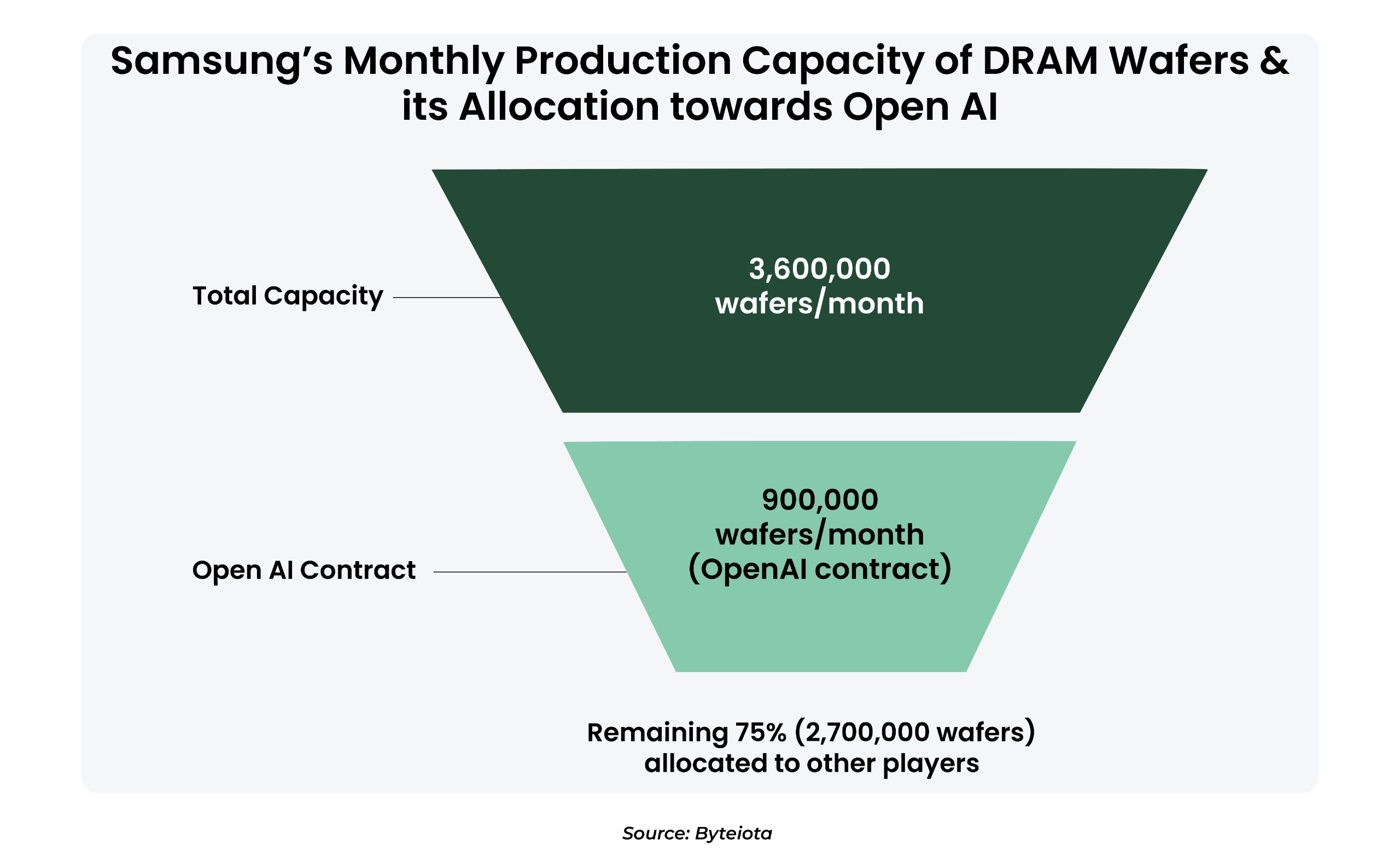
- Just three players: Samsung, SK Hynix & Micron, account for a whopping 93% of the total production of memory chips, and all three have pivoted their limited production capacity toward HBM for AI servers.
That means less plant capacity to make plain-vanilla DRAM for basic electronics like laptops & phones. Samsung’s results of Q4-FY 25 make one thing clear AI memory is where the money is.
- Samsung delivered $65 billion in revenue and $14 billion in operating profit, driven largely by its Memory Business, marking Samsung’s biggest quarter in its history.
- HBM chips became the key profit engine, pushing memory revenues up 33% QoQ.
More importantly, Samsung is no longer chasing volumes it is chasing margins. The strategic pivot toward high-margin AI memory over commoditized DRAM highlights a clear industry shift:
AI demand isn’t just boosting volumes; it’s structurally improving profitability.
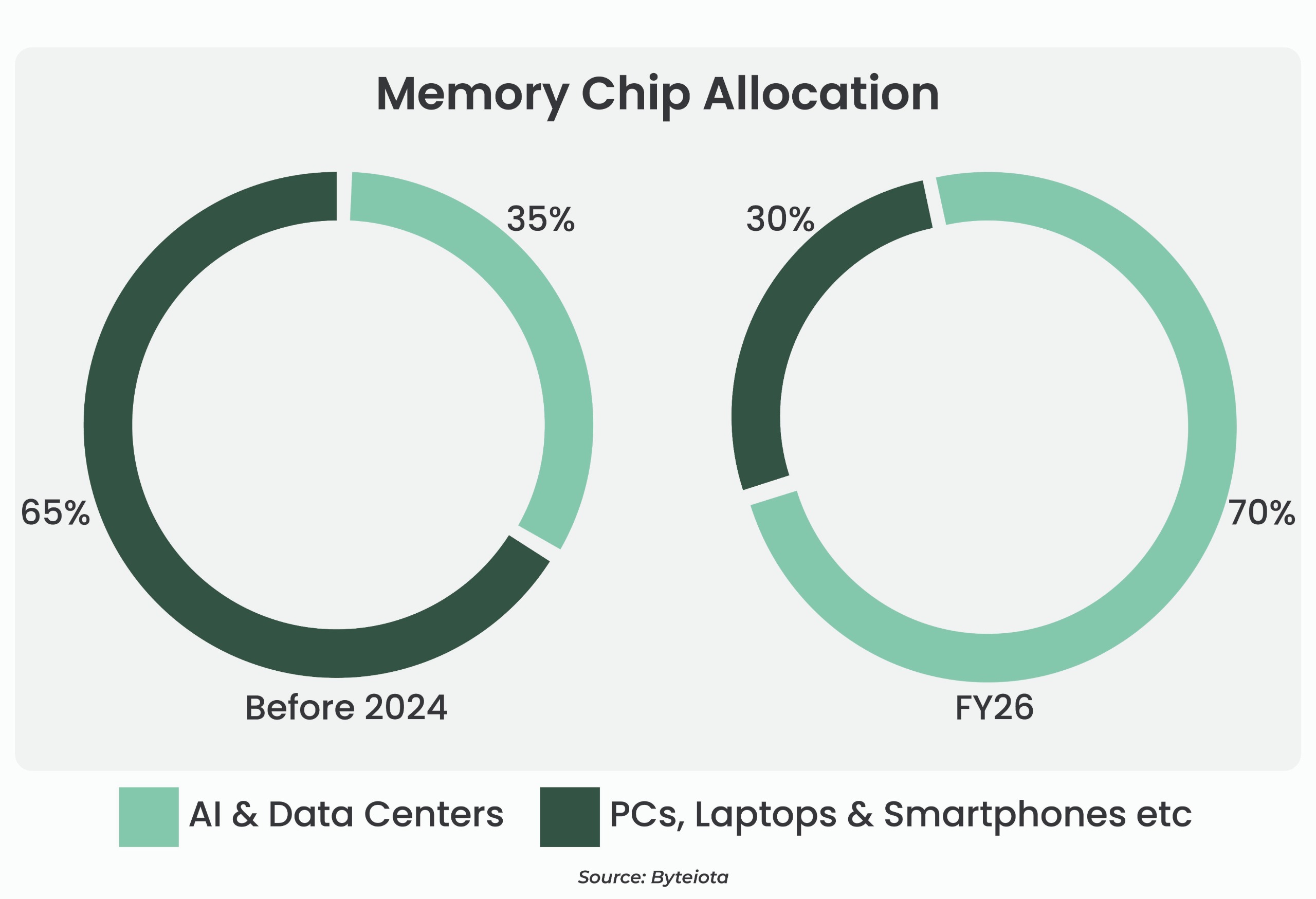
The demand for HBM’s will increase 70% year over year in 2026 alone, Taipei based consultancy TrendForce estimates.
The CEO of the Lenovo Group Yang Yuanqing stated “This structural imbalance between supply and demand is not simply a short-term fluctuation”, as he explained that the crunch will last at least through the rest of the year.
HP’s CEO Bruce Broussard highlighted that the company is witnessing rising input costs, largely driven by increases in DRAM and NAND prices.
He also expects this volatility to persist through FY2026 and likely extend into FY2027. HP stated that Memory now accounts for 35% of PC bill of materials, up from 15-18% last quarter
As per a report from Gartner, the domino effect will be observed directly in the prices of PCs & Smartphones:
- The prices of PCs will increase by 17%. Smartphone cost will increase by 13% by the end of 2026 due to memory cost alone.
- PC shipments will decline 10.4% in 2026, and smartphone shipments will drop 8% – the steepest contraction in over a decade.
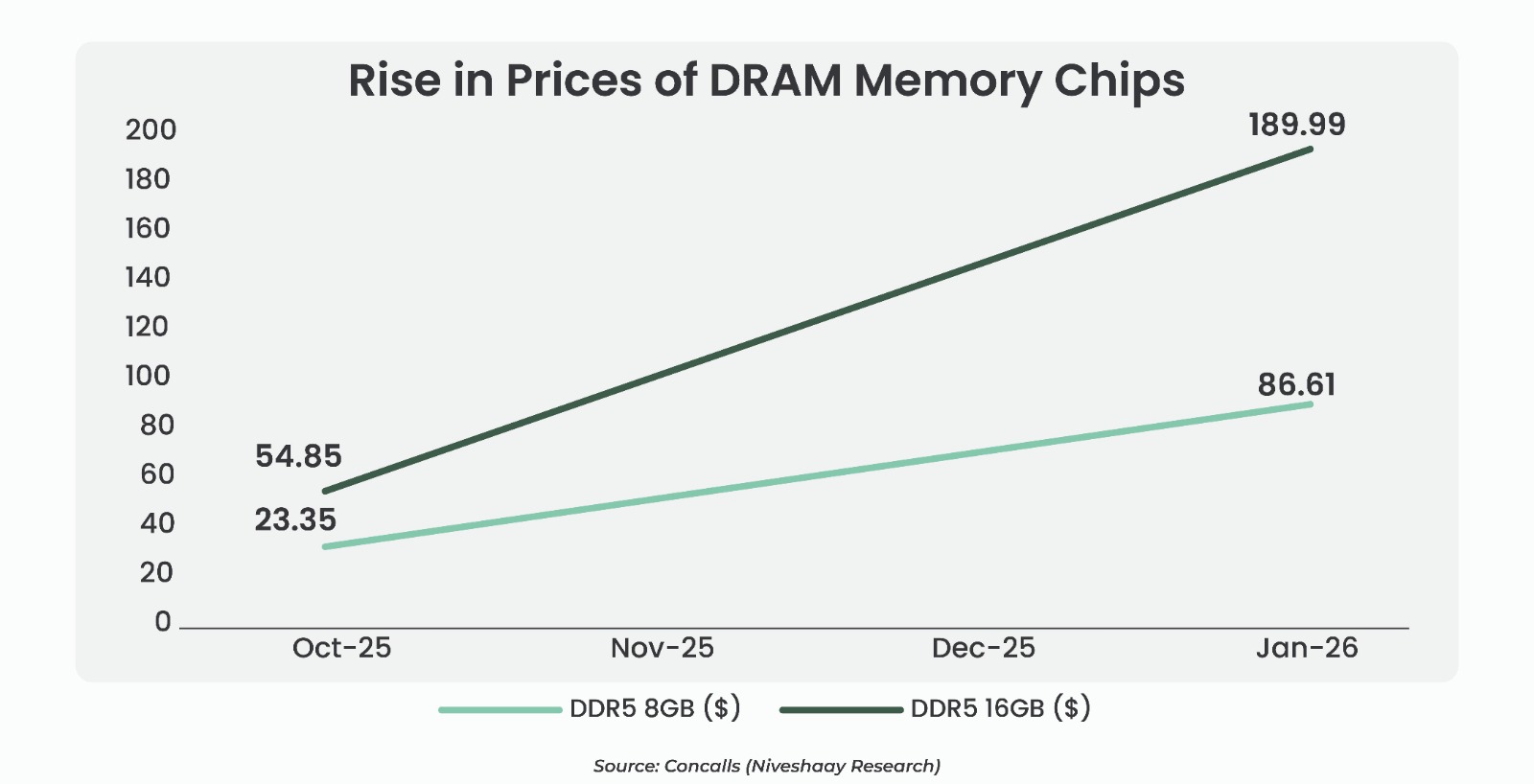
Major corporations including Apple, Lenovo, Dell, HP, Acer & ASUS have all signaled production constraints or warned of 15-20% price hike. The strategic shift has caused a “zero-sum game” where every chip produced for an AI server is a chip denied to a laptop or PC.
When AI Eats DRAM: The Refurbished Surge
The AI infrastructure boom has a hidden casualty: the affordable laptop. With DRAM and NAND flash prices surging 3–4x as chipmakers redirect premium memory toward hyperscaler GPU clusters and high-bandwidth AI accelerators, the sub-₹40,000 laptop, once the backbone of India’s mass-market PC segment, is quietly vanishing from shelves.
But as Churchill once observed, “A pessimist sees the difficulty in every opportunity; an optimist sees the opportunity in every difficulty.” For refurbished electronics players with the right operational infrastructure, this macro dislocation is not a headwind. It is a structural tailwind.
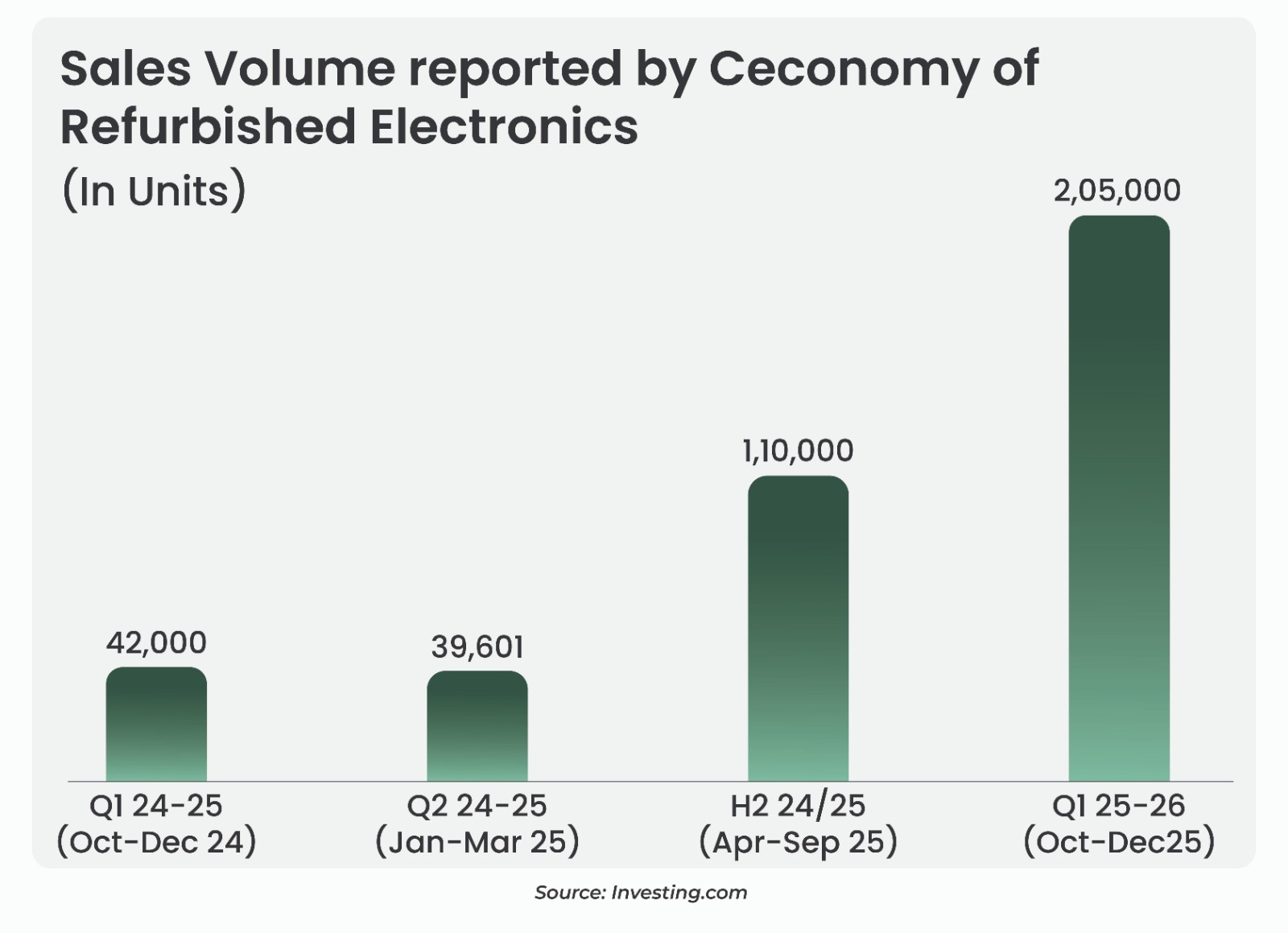
The proof is already in the numbers. Europe’s leading electronics retailer Ceconomy reported refurbished unit sales growth of nearly 400%, a signal too loud to ignore. And recognising where the market is heading, Ceconomy didn’t just watch, it launched its own private label, “Media Markt Refurbished,” in November 2025, moving from a passive marketplace host to an active participant in the refurbished economy.
India: Where the Refurbished Opportunity is Uniquely Compelling
The country’s vast middle class operates on constrained discretionary budgets — and the PC pricing shock hits harder here than anywhere else. An entry-level laptop that cost ₹35,000 – ₹40,000 in 2024 now commands ₹55,000 – ₹60,000+ in 2026.
Faced with that gap, the Indian buyer doesn’t stretch their budget – they either delay the purchase entirely, or they pivot to the refurbished market, which delivers comparable specifications at one third price of the new laptops.
The math is simple. The opportunity is enormous. The Indian refurbished electronics market – the numbers:
- The Indian refurbished electronics market was valued at USD 1,706.4 million in 2024 and is projected to grow to USD 3,097.36 million by 2033.
- Within this, the refurbished laptop segment stood at USD 430.05 million in 2024 and is expected to reach USD 769.21 million by 2033.
- The broader refurbished electronics market in India spans multiple categories: smartphones, laptops, tablets, gaming consoles, and home appliances – highlighting its diversified growth drivers across consumer segments.
GNG Electronics Ltd sits precisely at this intersection, having built a suite of value-added services that transform corporate hardware offloads into a scalable supply chain one that becomes more defensible when the new devices get more expensive to get.
GNG’s focus has been very clear: secure supplies well in advance, execute refurbishment efficiently, and ensure continuity for customers across geographies. Beyond affordability, GNG has significantly enhanced customer confidence by offering a 3-year warranty in India and a 1-year warranty in international markets, a level of assurance virtually unheard of in the electronic refurbishment industry.
“As a result, refurbished PCs are playing an increasingly important role in meeting global computing demand, especially for enterprises and institutions that value faster deployment, reliable performance and cost efficiency. Customers are increasingly recognizing that refurbished systems can meet their needs without compromise.
We’ve seen similar transitions in other industries as well. In mature automotive markets, used car sales are more than twice the volume of new car sales. In smartphones, refurbished devices have grown from a niche segment to a meaningful share of global shipments. The PC market is now following a similar trajectory as devices become more expensive, technologically stable, and longer lasting.”
Like the second-hand automotives market, this extract reflects how the electronics market is transitioning towards the refurbished market.
The pricing shift that is structurally expanding GNG’s addressable market:
- Brand-new computer prices have risen by approximately 20%, significantly expanding the addressable market for refurbished electronics.
- Entry-level Core i3 computers are no longer available in the ₹35,000-₹40,000 range domestically or below USD 375 in international markets as new devices.
- Consequently, any consumer seeking a computing device under these price points will now be compelled to turn exclusively to the refurbished segment.
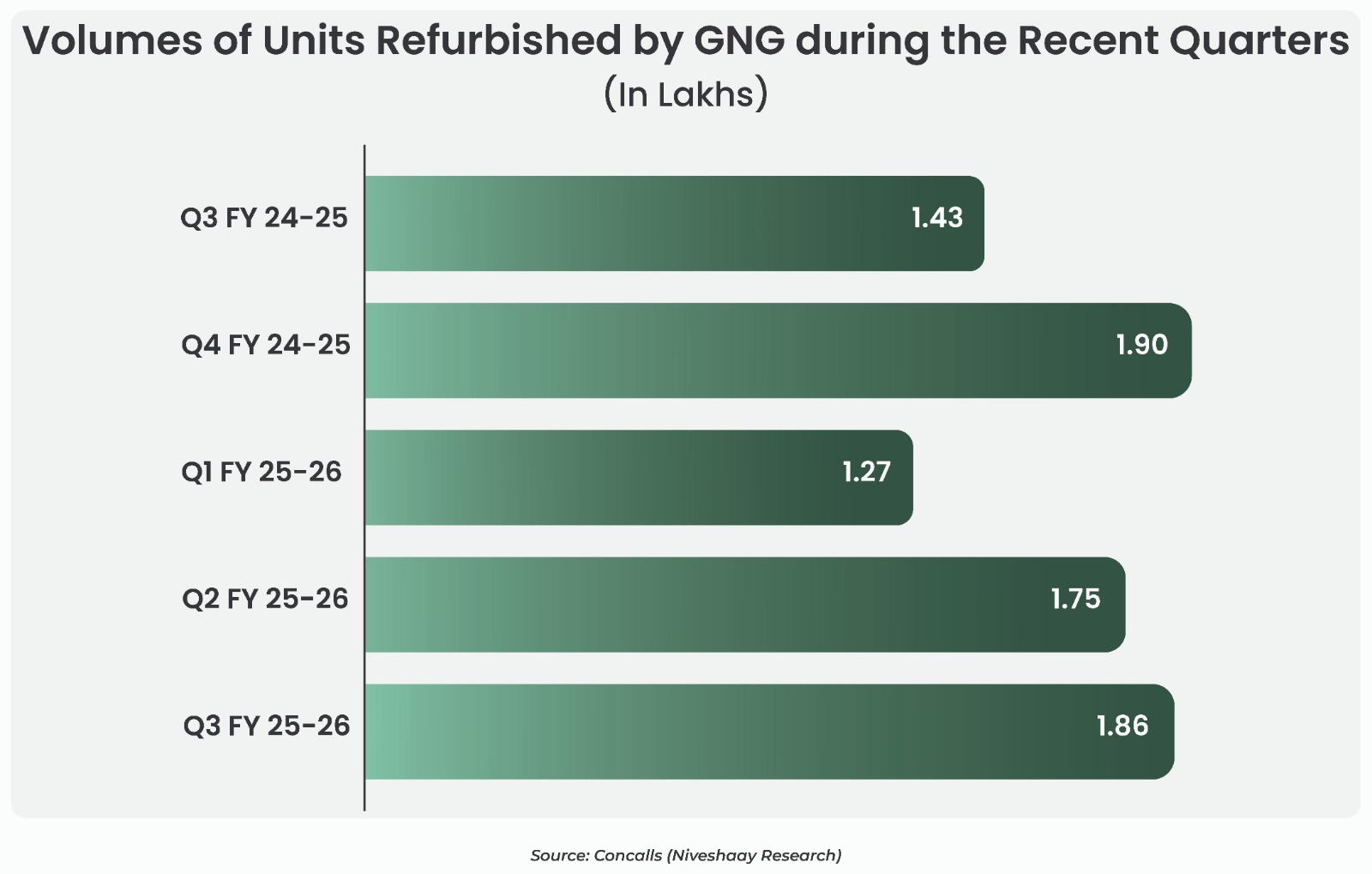
The current tailwind for the refurbished laptops & PC’s market is clearly visible in the results of GNG Electronics Ltd as the sales volume units & the average selling price are on a rise.
“Riding on strong industry tailwinds, the management has revised its guidance on the annual revenue growth rate to 28-30%, up from the previously stated guidance of 25% along with an improvement in profitability of around 150 to 200 basis points compared to the earlier guidance of approximately 75 basis points for the whole year.
Why TurboQuant Won’t Derail the AI Memory Chip Cycle?
A new efficiency oriented innovation has entered the AI hardware conversation: Google’s TurboQuant, a compression algorithm that reduces the working memory (KV cache) requirements of AI systems by up to around 6x.
However, this optimization applies only to the dynamic component of memory usage; the static requirement for high bandwidth memory (HBM) per GPU in an AI system remains structurally unchanged chips still need to store model weights and support baselevel throughput, preserving the core HBM chip demand function.
The macro dynamic, therefore, remains firmly intact.
Conclusion:
As memory supply continues to be absorbed by hyperscalers pursuing everlarger AI infrastructure buildouts, the resulting price inflation in consumer PCs and laptops is unlikely to reverse anytime soon. This is not a cyclical spike that will correct itself over a quarter or two. It is a structural shift in the global hardware value chain, one where memory chips have become a constrained, highvalue input, and where the economics of new devices are being fundamentally repriced upward.
And in every structural shift, value migrates.
Refurbished electronics are emerging as the natural beneficiary of this dislocation, delivering comparable functionality at a fraction of the cost of new devices, precisely when the price gap between new and refurbished has never been wider. For players like GNG Electronics, this is not merely a demand uptick riding a temporary wave. It is a multiyear structural tailwind, underpinned by established sourcing networks, scalable refurbishment capabilities, and customer trust built through industry leading warranty commitments.
In essence, the same technological force that is making new hardware progressively more expensive is simultaneously making refurbished hardware indispensable. AI is not just reshaping the frontier of computing, it is quietly, and permanently, rewriting the economics of access to it.
For details you can visit our website here:
📌https://niveshaay.smallcase.com/
Disclaimer: This is for educational purposes only, and not investment advice. The author may or may not hold positions in the companies discussed. Do your own research before making investment decisions.

 AIF Investor Charter


NIVESHAAY INVESTMENT ADVISORS
508, SNS Platina, Near Someshwara Enclave, Vesu, Surat, Gujarat-395007
(+91) 7859870559
research.smallcase@niveshaay.com (Equity Baskets)
NIVESHAAY INVESTMENT MANAGEMENT PRIVATE LIMITED
610, SNS Platina, Near Someshwara Enclave, Vesu, Surat, Gujarat-395007
(+91) 7836915478
contactaif@niveshaay.com (AIF)
SEBI Registration No. : INH000017338, IN/AIF3/24-25/1571, IN/AIF2/24-25/1607, INP000009506 | BASL Membership ID: 6276
Disclaimer:
Investment in Securities Market are subject to market risks. Read all related documents carefully before investing.
Registration granted by SEBI and certification from NISM in no way guarantee performance of the intermediary or provide any assurance of returns to investors.
The securities quoted are for illustration only and are not recommendatory
NIVESHAAY INVESTMENT ADVISORS © . All Rights Reserved., NIVESHAAY INVESTMENT MANAGEMENT PRIVATE LIMITED © . All Rights Reserved.Smart ODR