







Building Fast, Scaling Faster: India’s PEB Multi-Billion Dollar Opportunity

The future of India’s heavy infrastructure is no longer defined by the slow, unpredictable rhythm of conventional construction sites, but by the precise, controlled pace of the factory floor a fundamental revolution is sweeping through the sector, fueled by an aggressive national drive for industrial and logistical scale.
The future of India’s heavy infrastructure is no longer defined by the slow, unpredictable rhythm of conventional construction sites, but by the precise, controlled pace of the factory floor a fundamental revolution is sweeping through the sector, fuelled by an aggressive national drive for industrial and logistical scale.
Pre-Engineered Building systems represent this structural transition, offering asset owners a strategic imperative for speed, efficiency, and predictability by migrating the complexities of structural fabrication into a quality-controlled environment.
Product Overview
Pre-engineered steel construction has emerged as an innovative building method due to the rapid growth of automation in the construction industry. Furthermore, a shortage of skilled labour, combined with the inherent advantages of these structures in terms of speed, cost-effectiveness, and environmental impact, is significantly propelling their popularity in the construction sector.
There are many different steel structures, to get a better understanding of this product and construction solution let us understand different types of steel structures:
- Pre-cast-These structures are manufactured in factories using concrete components; once cast these components are transported to the construction site and assembled, creating the final building.
- Prefabrication- It is a transformative approach in modern construction, wherein building components such as structural frames, wall panels, floors, and modules are precision-manufactured in controlled factory environments before being transported to the site for erection.
- Pre-engineered steel Buildings – PEB signify an advanced paradigm in structural engineering, leveraging proprietary software for the bespoke design of optimized steel frameworks including rigid primary frames, tapered beams, and secondary members that are fabricated with millimetric precision in dedicated facilities prior to seamless on-site erection.
Components of PEB
- Mainframe or primary frame –This frame is the main load-carrying and support structure of a Pre-engineered building, made of rigid steel frames. The primary structure consists of columns, rafters, and other supporting structures.
- Secondary structure of PEB-The secondary structure consists of purlins, grits, and eave struts, used to support the wall and roof panels. Purlins are employed on the roof, grits on walls, and eave struts at the intersection of the sidewall and roof.
- Roof, wall panels, and insulation: These components are used for sheeting and are generally made of ribbed steel sheets. They are used as roof and wall sheeting, roof and wall liners, partitions, and soft sheeting.
Global PEB Market Overview
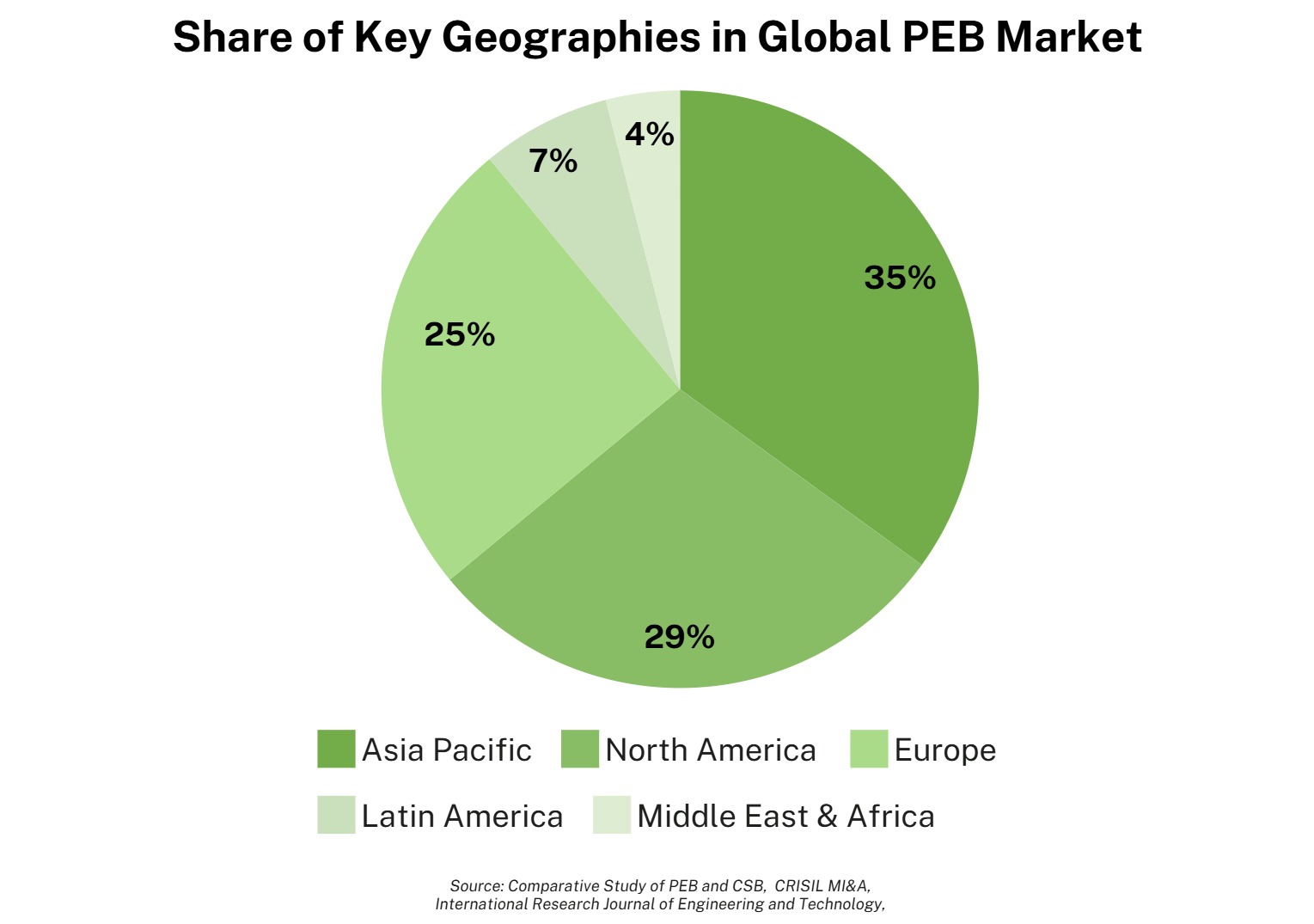
The pre-engineered buildings market is to be valued at USD 23.75 Bn in 2025 and is expected to reach USD 48.08 Bn by 2032, growing at CAGR of 10.6% from 2025 to 2032 with increasing industrial and commercial construction activities across both developed and emerging economies, the demand for pre-engineered buildings is growing significantly.
This trajectory reflects rising demand for cost-effective construction models as organizations confront extended lead times and labour shortages. The sector’s momentum is driven by standardization of high-strength materials, rapid assembly methods, and the adoption of advanced digital tools that increase project accuracy and reduce waste.
Indian PEB Market Snapshot
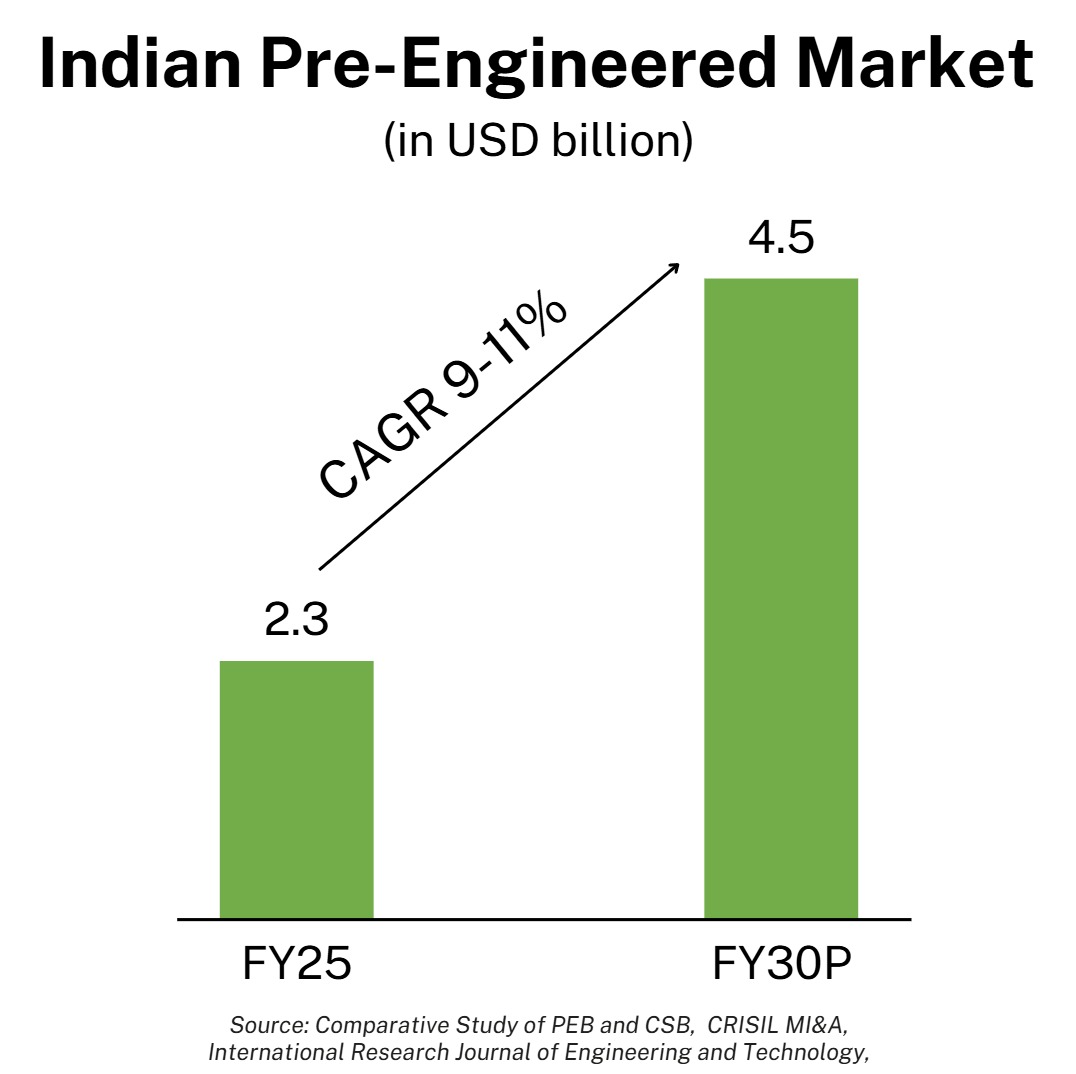
The Pre-Engineered Building (PEB) industry in India is transitioning from a niche construction alternative to a fundamental structural imperative, driven by an accelerating national capital capex cycle. The broader Indian construction sector is projected to grow robustly at 6–8% in fiscal year 2026, largely fuelled by aggressive infrastructure investments. As of FY25, the Indian prefabricated market is around USD 2.3 billion and moving forward, the industry is projected to register a CAGR of 9-11% between FY25-30 and value around 4.5 billion by FY30.
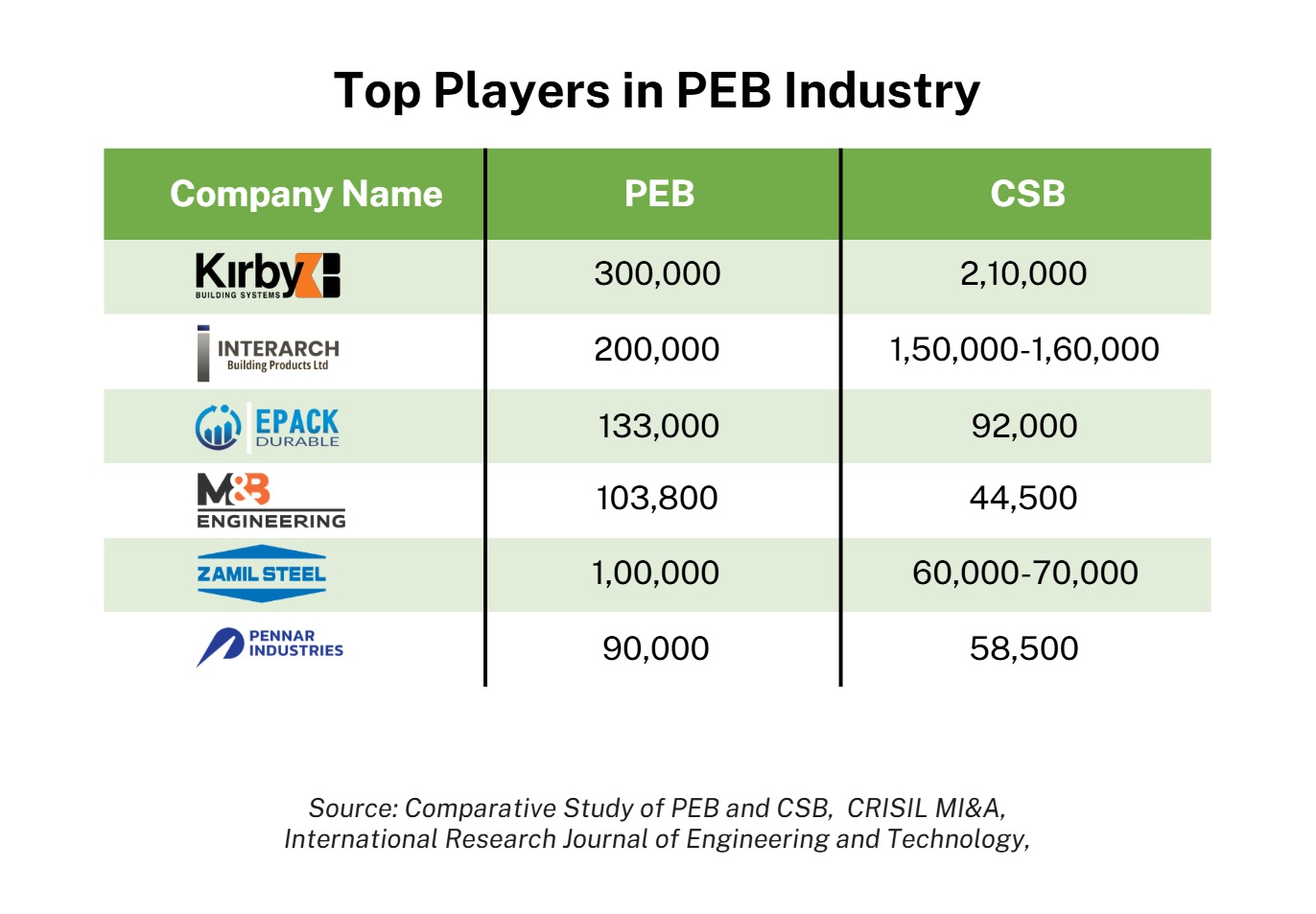
Organised players in India account for about 40-45% of the total PEB market, with the remaining share held by small, unorganised local players. The top six organised players contribute 80-85% of the organised sector’s market share.
Quantifying the Speed and Initial Cost Advantage
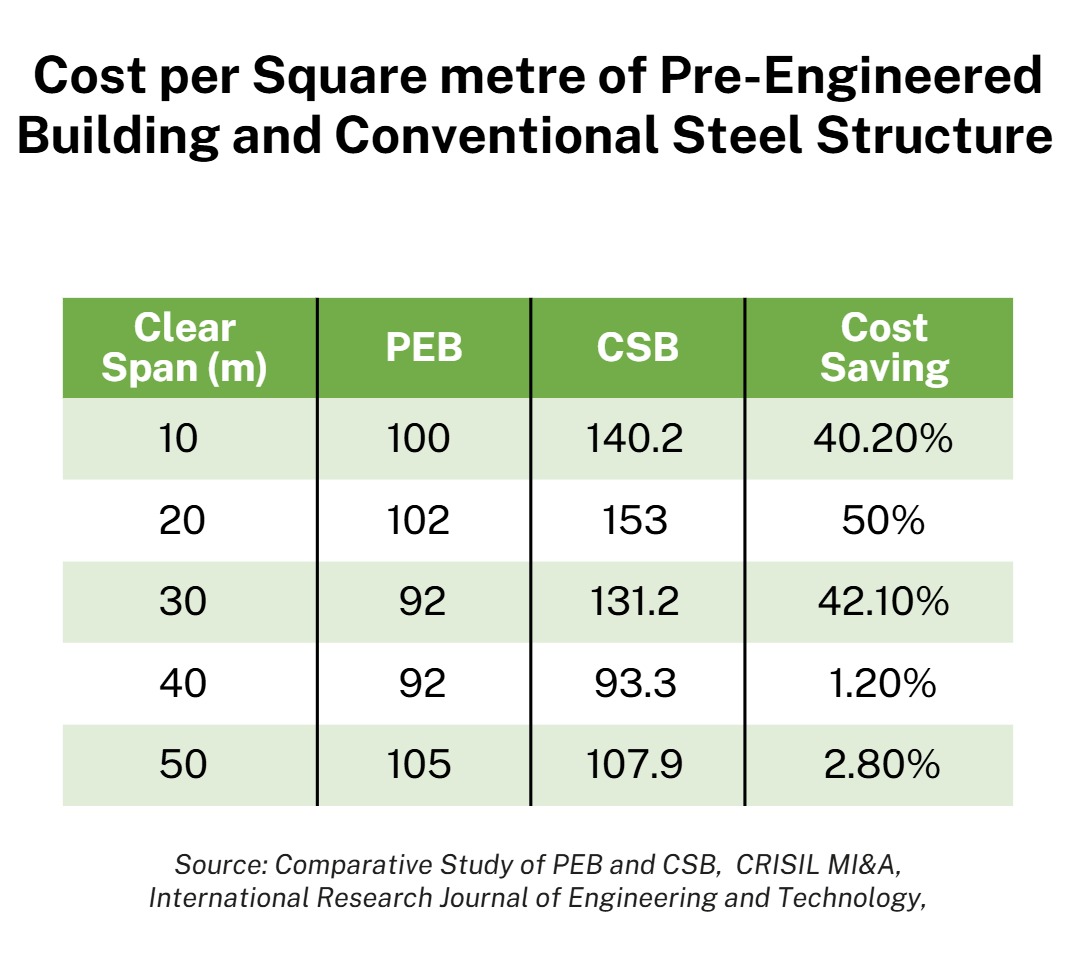
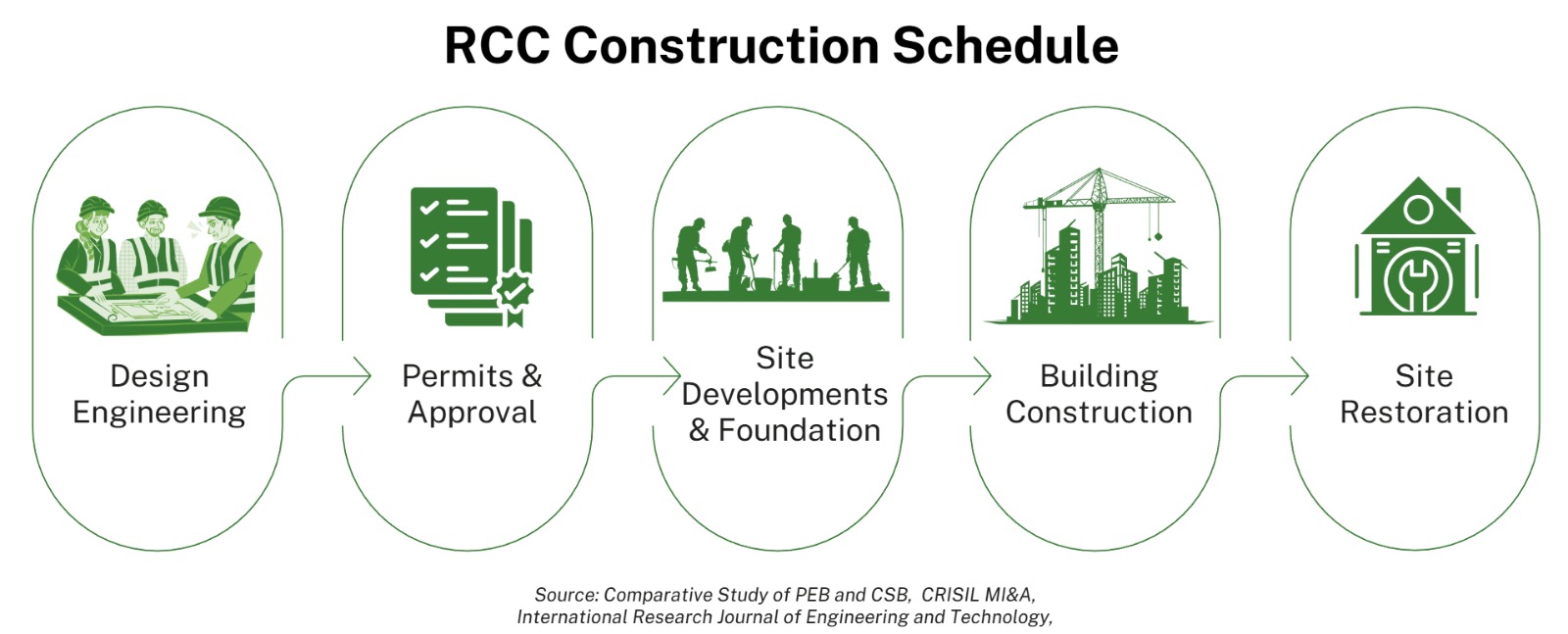
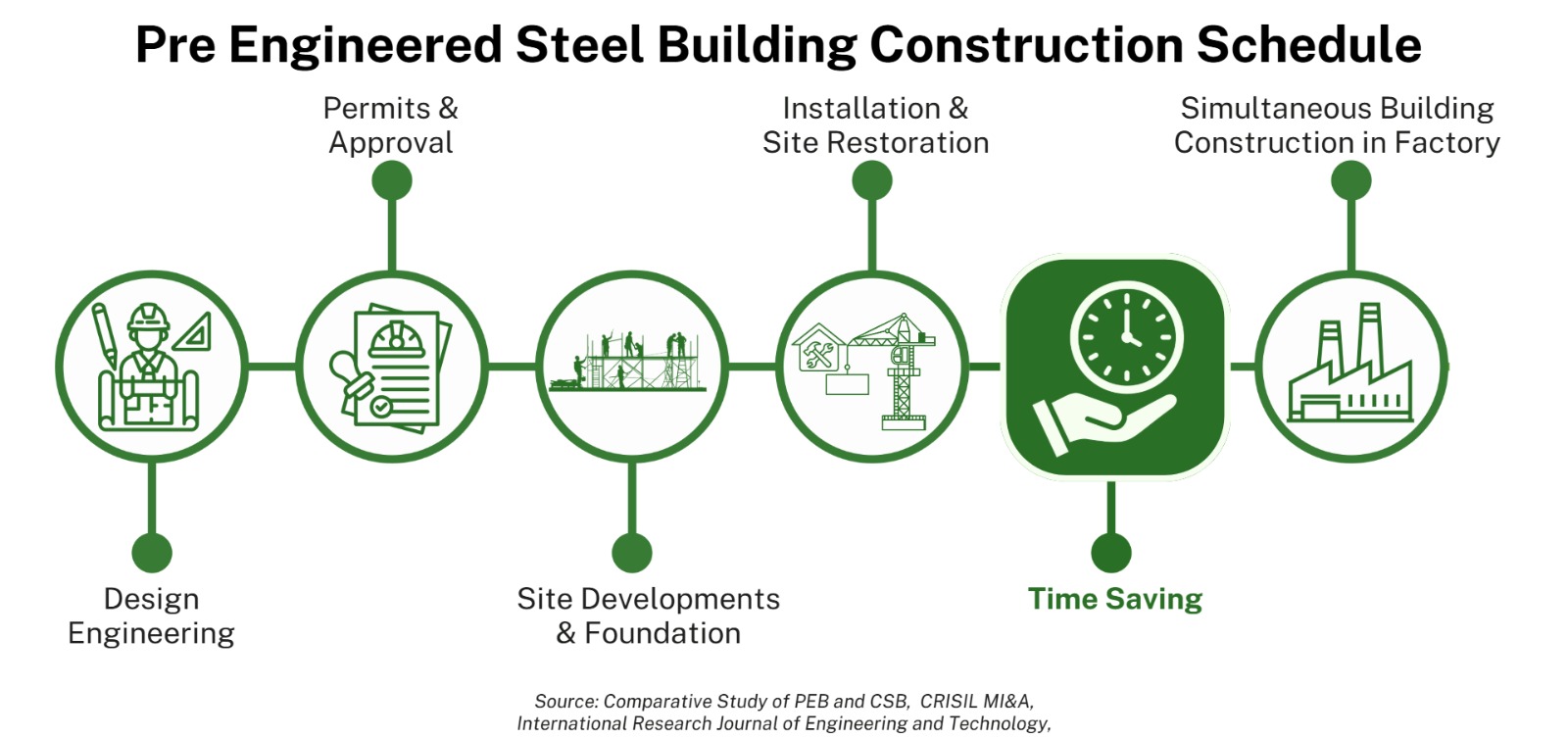
PEB construction methods offer a substantial time-to-market advantage, generally enabling 30–50% faster project execution compared to equivalent RCC structures. For a standard 10,000 square foot warehouse, the PEB method can achieve completion in 2.5 to 3 months, whereas an RCC structure might require six to nine months. Furthermore, for large-scale, low-rise industrial and commercial structures, PEB is often 30–40% cheaper than traditional RCC methods.
Growth Driver and Accelerator for PEB Industry
- The low share of pre-engineered construction in overall construction indicates high growth potential: As of FY25, penetration of pre-engineered construction in the overall construction sector is estimated to be around 3-5 % this will help in increasing the share of pre-engineered construction in overall construction to 9-11 % by FY 2028.
- Low steel consumption in India: The government has also implemented a DM &SP policy for promoting Made in India steel for Government procurement with a budgetary outlay of ₹ 63.2 billion, the scheme is expected to bring in investment of approximately ₹400.0 billion and capacity addition of 25 MT for speciality steel.
- Increased industrial capex and planned capacity expansion to boost PEB sector: Construction investment in the industrial sector is projected at ₹ 4.5-5.5 trillion between FY25-29, compared to ₹ 3-4 trillion between FY20-24. Construction spending across industrial investments in FY25 is seen rising 5-7% driven by expansion in the oil and gas and metals segment.
The rising adoption of green and sustainable buildings, combined with the need for faster project execution and lower material wastage, is accelerating the shift towards Pre-Engineered Buildings (PEBs). This trend is further reinforced by high-growth end-use sectors such as semiconductor fabrication units, hyperscale data centres, cold storage and quick-commerce warehousing, where speed of construction, design flexibility, and scalability are critical.
Conclusion
The structural factors driving the adoption of Pre-Engineered Buildings—namely the need for accelerated construction timelines, verifiable cost savings, and long-term economic superiority over RCC—suggest that the industry transition is largely irreversible. PEB is rapidly moving from an industrial niche to the default solution for logistics, data infrastructure, and large-scale manufacturing facilities.
The path toward the ambitious valuation will be defined by two strategic imperatives. First, organized players must continue strategic investment in advanced fabrication automation and capacity expansion, transforming current scale into a protective moat against competition. Second, success will hinge on the ability to integrate value-added, specialized services—such as smart building technology, advanced insulation, and hybrid structures—to meet the sophisticated, high-specification demands of fast-growing sectors like data centres and advanced manufacturing. The high-capacity, vertically integrated market leaders are optimally positioned to capture the exponential growth driven by India’s infrastructure ambitions.

 AIF Investor Charter


NIVESHAAY INVESTMENT ADVISORS
508, SNS Platina, Near Someshwara Enclave, Vesu, Surat, Gujarat-395007
(+91) 7859870559
research.smallcase@niveshaay.com (Equity Baskets)
NIVESHAAY INVESTMENT MANAGEMENT PRIVATE LIMITED
610, SNS Platina, Near Someshwara Enclave, Vesu, Surat, Gujarat-395007
(+91) 7836915478
contactaif@niveshaay.com (AIF)
SEBI Registration No. : INH000017338, IN/AIF3/24-25/1571, IN/AIF2/24-25/1607, INP000009506 | BASL Membership ID: 6276
Disclaimer:
Investment in Securities Market are subject to market risks. Read all related documents carefully before investing.
Registration granted by SEBI and certification from NISM in no way guarantee performance of the intermediary or provide any assurance of returns to investors.
The securities quoted are for illustration only and are not recommendatory
NIVESHAAY INVESTMENT ADVISORS © . All Rights Reserved., NIVESHAAY INVESTMENT MANAGEMENT PRIVATE LIMITED © . All Rights Reserved.Smart ODR